
Last updated October 16, 2026
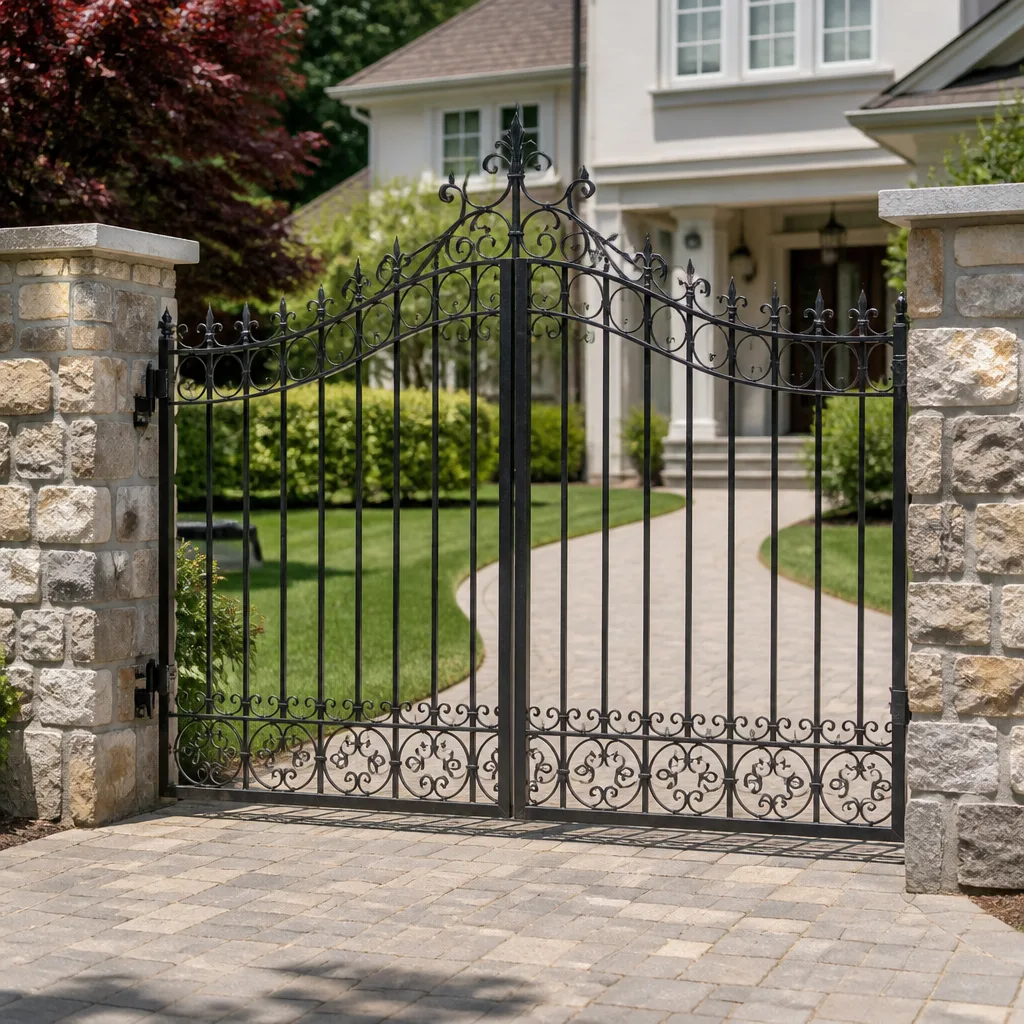 Wrought iron
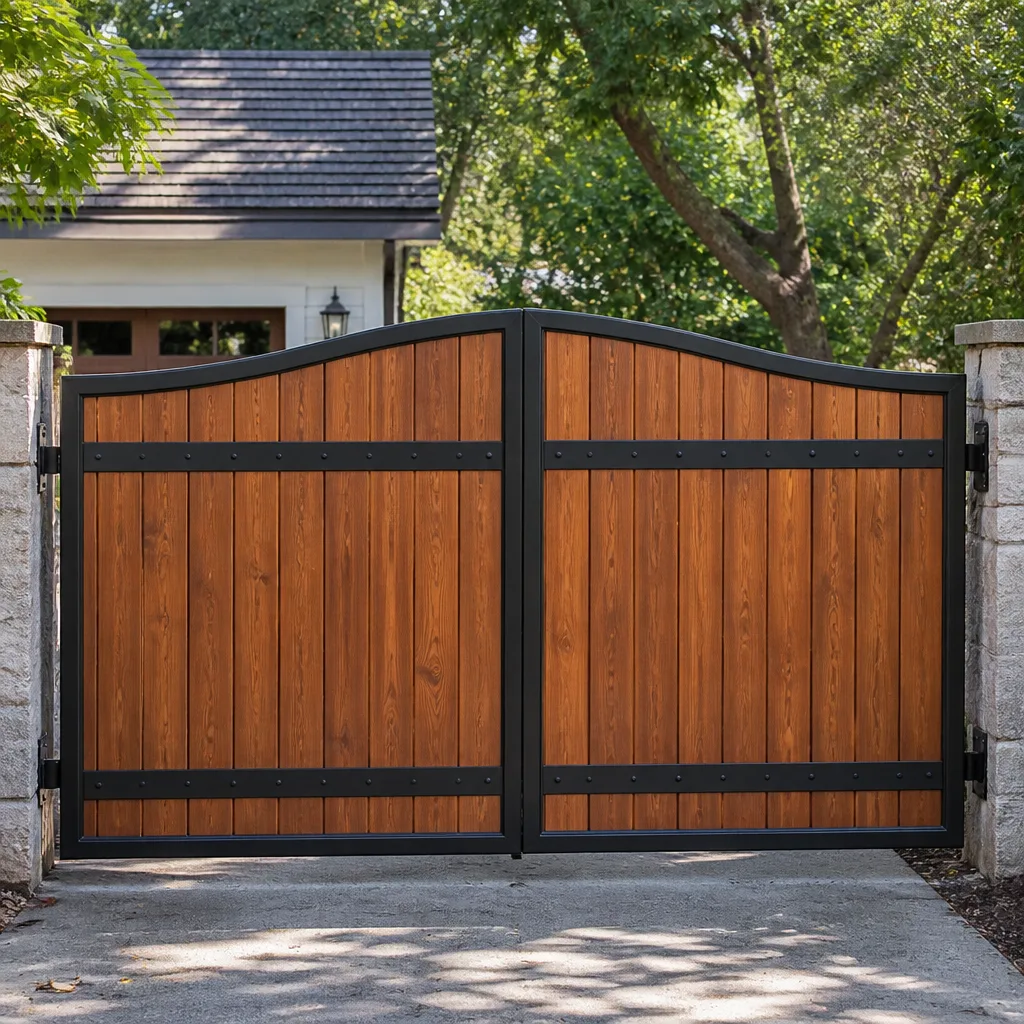 Wood & steel frame
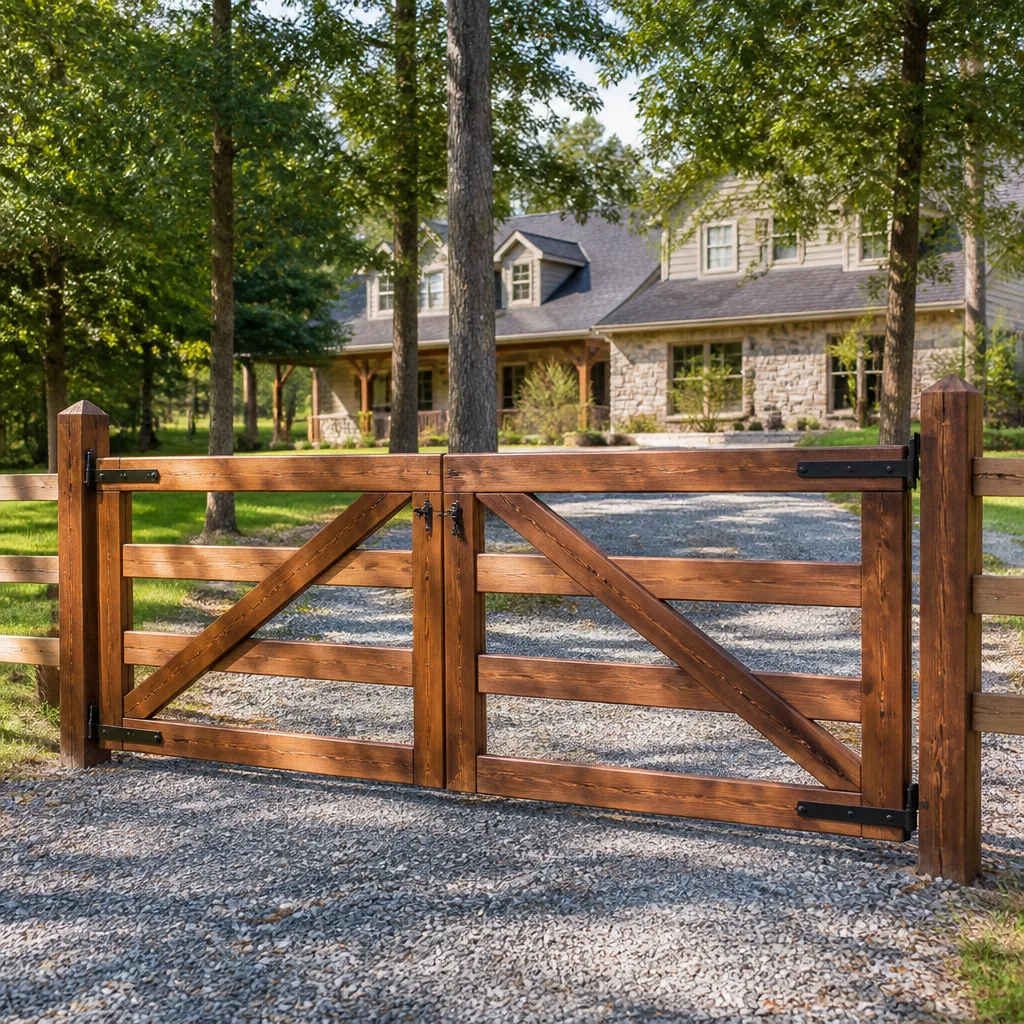 Farm & ranch
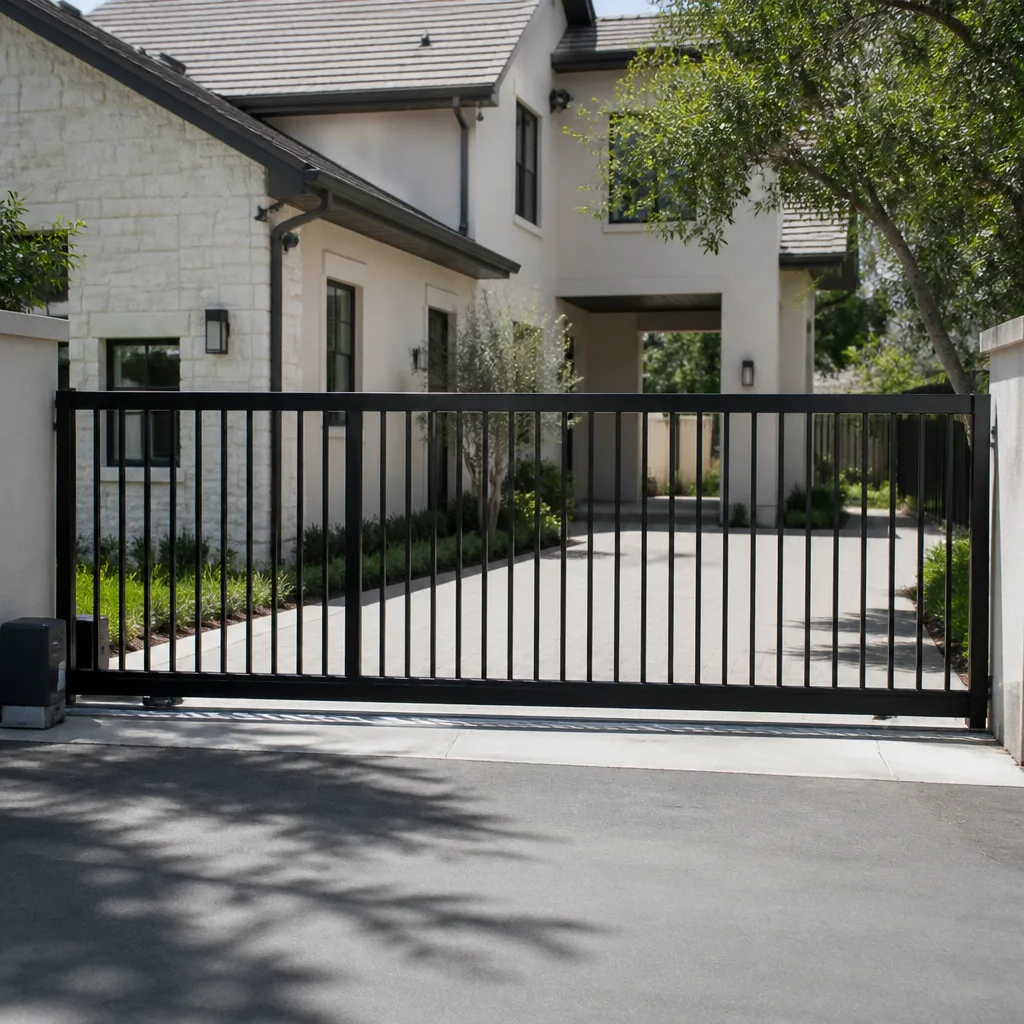 Sliding driveway gates
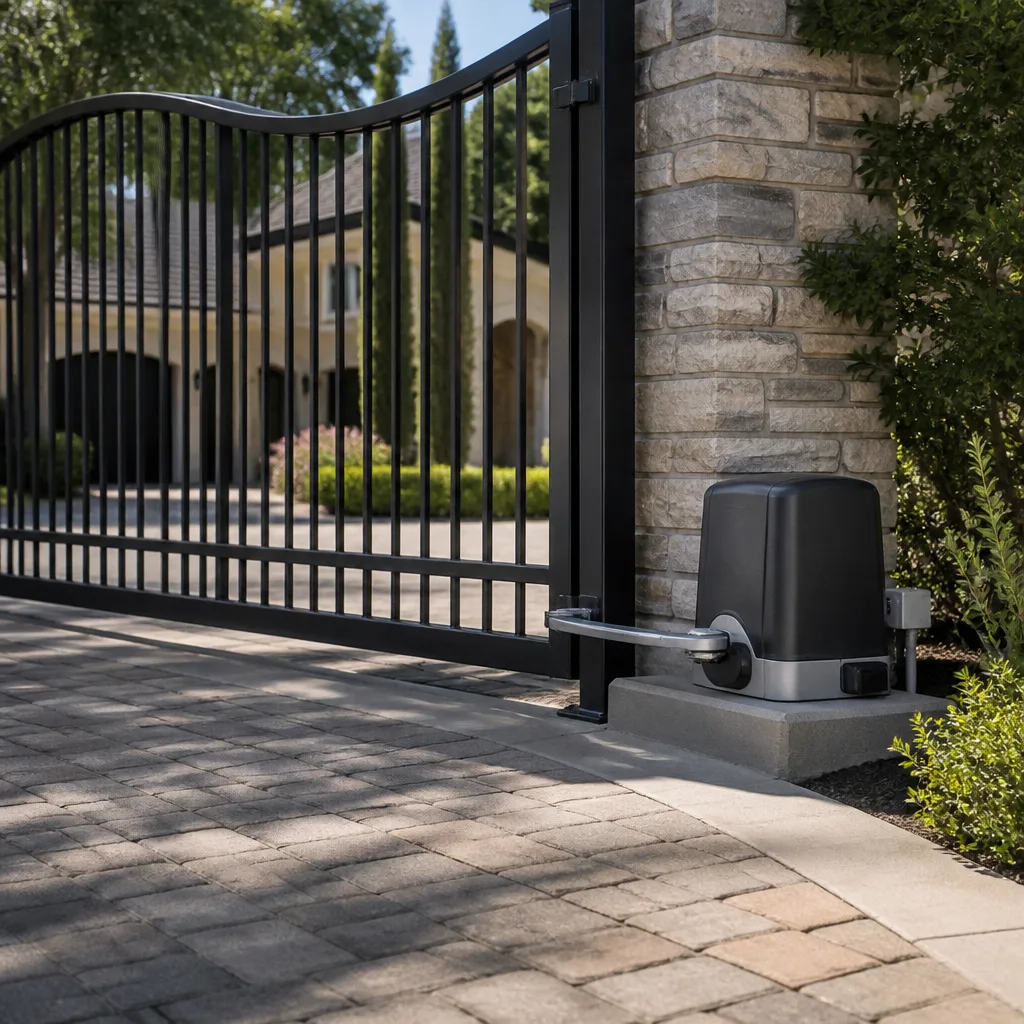 LiftMaster operators
Free on-site gate assessment - hinges, posts, and your LiftMaster or Nice gate operator checked before anything is quoted
The assessment is free and the quote is the invoice.
Get your free estimateGate Repair Maintenance Checklist for Houston Homeowners
A gate that passed a visual check in April can seize by August in Houston. The combination of summer UV baking the powder coat, humidity saturating every hinge pin, and salt-laden Gulf air working on the hardware means a gate here ages differently than one in Dallas or Austin. Most maintenance checklists you’ll find online are climate-agnostic, written for a generic American suburb. They miss the two things that actually shorten gate life in Houston: salt-laden Gulf air accelerating rust on steel hardware and standing water pooling at post footings after a heavy rain event. This checklist is built around those conditions, with task timing tied to Houston’s actual weather calendar, not a generic spring and fall schedule. By the time you finish reading, you’ll know what to check each month, which lubricants actually work in high humidity, and what to leave to a trained technician offering Gate Repair services.
Styles & brands we work with
Quick Answer
A Houston gate maintenance routine should cover three areas every month: hardware lubrication with a moisture-displacing lubricant, a five-minute obstruction test on the operator’s safety reverse, and a visual check for rust bloom at weld points and hinge plates. The heavier tasks like post footing inspection, chain tension adjustment, and control board cleaning should be done quarterly and after any storm that drops more than two inches of rain. Most Houston homeowners can handle the monthly checks themselves; the quarterly ones are safer and faster with a professional.
Table of Contents
- Why Houston’s Climate Is Harder on Gates Than Most Checklists Assume
- The 5-Minute Monthly Gate Check
- Month-by-Month Maintenance Calendar for Houston
- Which Lubricants to Use (and Which Ones Accelerate Corrosion)
- Three Physical Tests That Catch Gate Operator Problems Early
- How to Inspect a Post Footing for Water Intrusion After Houston Rain
- Warranty Traps: Which Maintenance Tasks Void Gate Warranties
- Common Mistakes to Avoid
- When to Call a Professional
- Frequently Asked Questions
- The Bottom Line
Why Houston’s Climate Is Harder on Gates Than Most Checklists Assume
Houston sits roughly 50 miles from Galveston Bay, close enough that prevailing southeast winds carry marine salt inland year-round. Salt is hygroscopic, which means it attracts and holds moisture against metal surfaces. A steel hinge pin in Houston doesn’t just get wet when it rains. It stays wet. The salt film pulls humidity out of the air and keeps a thin layer of water on the metal even during dry stretches. That’s why we regularly see rust at weld points on gates that are only four or five years old.
The second factor is rainfall. Houston averages about 49 inches of rain a year, and much of it comes in short, intense bursts. When a two-inch rain falls in an hour, water sheets across driveways and pools at the base of gate posts. If the post footing wasn’t sealed correctly at installation, that water works its way down between the concrete and the steel post, sitting there for days. Standing water at a post base is the single biggest cause of premature post failure we see on gate repair in Houston.
The third factor is UV. Houston gets about 2,600 hours of sunshine a year, much of it during July and August when temperatures sit in the mid-90s. Powder coating breaks down faster under that kind of UV load than it does further north. Once the coating degrades, the underlying steel is exposed to the salt and humidity. What starts as a cosmetic issue becomes a structural one within a season or two.
The 5-Minute Monthly Gate Check
This is the routine we recommend to every homeowner in Houston. It takes about five minutes and catches most problems before they require a service call. Do it on the first weekend of every month.
- Walk the gate through its full travel arc. Listen for grinding, squealing, or a rhythmic thumping. A squeal means metal-on-metal contact, usually at a hinge pin or a roller. A thump usually means a warped wheel or a bent track section. Neither resolves itself.
- Test the safety reverse. Place a roll of paper towels or a small trash can in the gate’s path and close it. The gate should reverse within one second of contact. If it pushes through or hesitates before reversing, the obstruction sensor needs adjustment. On an automatic gate, this is a safety system, not a convenience feature.
- Look at every hinge, bolt, and weld for rust bloom. Rust bloom is the early stage, that orange dust that appears at the edges of a bolt head or along a weld seam. It’s much easier to treat early than after it’s pitted the steel. A wire brush and a rust-converting primer will stop it for a season.
- Check the gate’s alignment at the latch. If the gate has to be lifted or shoved to engage the latch, the hinges are wearing or the post is starting to lean. Both get worse with Houston’s soft clay soil.
- Clear debris from the track or ground path. Leaves, twigs, and the occasional Houston mud dauber nest will bind a sliding gate or block a swing gate’s path. On an automatic gate, small obstructions in the track cause the operator to work harder, which shortens its life.
This five-minute check is not a substitute for quarterly maintenance, but it will catch most of the issues that lead to a electric gate repair in Houston before they become motor failures. If you find rust bloom at a weld point, address it that week. Houston’s humidity means it won’t stay surface rust for long.
Month-by-Month Maintenance Calendar for Houston
This calendar is built around Houston’s actual weather patterns, not a generic four-season model. The goal is to do the right task before the weather that causes the problem, not after.
January to February: Cold Snap Inspection
Houston winters are mild, but the occasional freeze causes steel to contract, which can open hairline gaps at weld points and loosen bolts that were previously tight. Walk the gate on a cold morning and check every bolt head and weld for movement or fresh rust in the gaps. Tighten anything that shows play. Check that the gate still opens and closes smoothly when the temperature is at its lowest. Lubricants thicken in cold weather, and a gate that works fine at 70 degrees can bind at 35.
March to April: Pre-Humidity Lubrication and Paint Touch-Up
This is the most important maintenance window in Houston. The humidity begins climbing in March and peaks in July. Get lubrication into every hinge pin, roller bearing, and chain link before the moisture arrives. Touching up any paint chips or scratches now prevents rust from starting during the humid stretch. If the powder coat has failed anywhere, apply a rust-converting primer and a marine-grade topcoat. Once May arrives, the window to do this work comfortably closes until October.
May to June: Pre-Hurricane Season Operator Check
Hurricane season officially starts June 1. Before it begins, run the full set of operator tests described below. Check that the battery backup on the gate operator holds a charge, if your model has one. Clear drainage channels around the post base so that heavy rain flows away from the footing rather than pooling against it. Confirm that the gate’s manual release works, because a power outage during a hurricane means you’ll need to open the gate by hand.
July to August: Peak Heat and Humidity Monitoring
July and August are when we get the most calls about gate operators overheating. The motor works harder in high ambient heat, and the capacitor in the control board can fail when the box sits in direct sun. Check the control box temperature on a hot afternoon. If it’s too hot to hold your hand against for ten seconds, it needs shade or ventilation. Listen to the operator for a labored sound. A motor that’s struggling is about to fail.
September: Post-Hurricane Footing Inspection
After any storm that drops more than two inches of rain, do the post footing inspection described below. Look for water pooling at the gate post base. Look for the post leaning even slightly out of plumb. Check that the gate still latches without being lifted or shoved. If you find any of these, the footing has been compromised and should be addressed before the next heavy rain.
October to November: Post-Summer Hardware Tightening and Lubricant Reapplication
The heat and humidity of a Houston summer will have degraded the lubricant you applied in April. Reapply it now. Tighten every bolt and screw on the gate and the operator. Check the chain tension if you have a chain-drive operator, and adjust it if it has more than three-quarters of an inch of sag. This is also the best time to address any rust that appeared during the humid months, before winter’s occasional freezes open the pits wider.
December: Annual Professional Inspection
Here’s our honest recommendation, and we’ll say it plainly. You can do most of the tasks on this calendar yourself. But once a year, it’s worth having someone who sees Houston gates every day look at yours. We catch things homeowners miss, not because homeowners are careless, but because they only see their own gate. A technician can spot early bearing wear, motor strain, and footing movement while they’re still cheap to fix, as covered in our Gate Repair Warning Signs: A Houston Homeowner’s Reference Guide. The cost of an annual inspection is less than half the cost of a single motor replacement.
Which Lubricants to Use (and Which Ones Accelerate Corrosion)
This is where most generic gate maintenance advice fails Houston homeowners. A lubricant recommendation from a website written in Ohio or California doesn’t account for Houston’s combination of salt air, humidity, and heat. The wrong product here isn’t just useless. Some common recommendations actively accelerate corrosion.
What to Use
- A moisture-displacing spray lubricant. Products like WD-40 Specialist or CRC 3-36 are designed for coastal environments. They push water out of the hinge pin and leave a thin corrosion-inhibiting film. Apply them monthly during the humid season.
- A marine-grade lithium grease. For hinge bearings and roller bearings, use a white lithium grease that’s explicitly rated for marine or coastal use. It resists washout better than standard grease and holds up under Houston’s heat.
- A dry PTFE spray. For chain drives and track rails, a dry PTFE (Teflon) spray lubricates without leaving a sticky film. Sticky films collect dust and grit, which then grind against the chain as it moves.
- A rust-converting primer. Not a lubricant, but part of the maintenance kit. Products like Permatex Rust Treatment or Corroseal convert surface rust to a stable compound and prime the metal for paint. Apply it to any rust bloom you find within the same week.
What to Avoid
- WD-40 standard. The regular formula is a solvent and a water displacer, but it’s not a long-term lubricant. In a humid climate, it evaporates quickly and leaves bare metal exposed. If you’re going to use WD-40, use the Specialist line.
- Graphite lubricant on outdoor hardware. Graphite powder is great for indoor locks but washes away quickly in Houston’s rain and works poorly in humid conditions. It also stains concrete and brick.
- Heavy axle grease on chains. Thick, sticky grease attracts Houston’s dust and grit. Within a month, the chain is coated in an abrasive paste that wears the links and sprockets faster than no lubrication at all.
- Penetrating oil on hinge pins. A penetrating oil like PB Blaster is designed to free seized parts, not to lubricate them over time. It’s too thin and evaporates within days. Use it to free a stuck hinge, then follow up with a proper grease.
Three Physical Tests That Catch Gate Operator Problems Early
An automatic gate operator is an electric motor, a gearbox, a control board, and a set of safety sensors working together. Most operator failures don’t happen suddenly. They build up over weeks or months as the motor strains against increasing resistance. These three tests will catch that strain before it kills the motor. You can do all three in about five minutes, and you should do them monthly during hurricane season and quarterly the rest of the year.
Test 1: The Obstruction Reverse Test
- Place a roll of paper towels in the path of the closing gate.
- Close the gate using the remote or keypad.
- The gate should contact the obstruction and reverse direction within one second.
- If it pushes through the obstruction, hesitates, or stops and beeps without reversing, the safety sensor is misaligned or the force sensitivity is set too high.
This test matters because it’s a safety system. A gate that doesn’t reverse on contact can injure a child or a pet. It also tells you the force setting has drifted, which means the motor is working with incorrect parameters and wearing prematurely.
Test 2: The Manual Release Test
- Locate the manual release handle on the operator, usually a small lever or a keyed mechanism.
- Disengage the operator from the gate.
- Push the gate through its full travel arc by hand.
If the gate moves smoothly and easily by hand, the operator isn’t fighting the gate itself. If it’s stiff, heavy, or catches at certain points, the problem is in the gate, not the operator. A hinge that’s binding or a wheel that’s dragging forces the motor to work harder with every cycle. Left unaddressed, that extra strain shortens the operator’s life by years. We’ve replaced motors in Houston that failed at four years because the gate they were driving was never maintained.
Test 3: The Sound Test
- Stand next to the operator while the gate opens and closes.
- Listen to the motor’s sound.
A healthy operator makes a consistent, even hum. A dying one makes a strained, grinding, or pulsing sound. A grinding noise from the gearbox means the gears are wearing, which happens faster in Houston’s heat when the gearbox oil degrades. A pulsing sound, where the motor’s pitch rises and falls rhythmically, usually means the gate is binding at a specific point in its travel. Both are signs to schedule a service call before the motor fails entirely.
If any of these tests fail, call a professional rather than continuing to run the gate. Every cycle with a failing component adds wear to the rest of the system. On brands like Linear, Viking, Ghost Controls, and DoorKing, we regularly see control board failures that were caused by a motor straining against a gate that should have been serviced months earlier.
How to Inspect a Post Footing for Water Intrusion After Houston Rain
Post footings are the most overlooked part of gate maintenance, and in Houston they’re the most vulnerable. Heavy rain pools at the base of gate posts, and if the steel post isn’t sealed where it enters the concrete, water works its way down and sits against the steel. The post rusts from the inside out, where you can’t see it, until one day the gate sags or the post snaps at the base.
Here’s how to check a post footing for water intrusion without digging anything up. Do this after any storm that drops more than two inches of rain, and at least quarterly during the rainy season from April through September.
The Water-Pooling Check
- The morning after a heavy rain, look at the base of each gate post.
- If water is standing in a puddle that touches the post, the ground around the footing isn’t draining.
- This alone doesn’t mean water is intruding into the footing, but it does mean the post is sitting in saturated soil, and the risk is elevated.
The Plumb Check
- Stand about ten feet back from the gate and sight down the post.
- Compare it against the gate’s top rail or a known vertical line.
- If the post leans even slightly, the footing has shifted. Houston’s clay soil expands when wet and contracts when dry, and over years that movement can crack footings.
The Latch Alignment Check
- Open and close the gate three times.
- Watch whether the latch engages cleanly on the first try.
- If you have to lift or shove the gate to get the latch to engage, the hinges have worn, the post has moved, or both. This is a sign of footing trouble or hinge wear that has already progressed far enough to affect the gate’s function.
The Rust Ring Check
- Look at the point where the steel post enters the concrete.
- If you see a ring of orange rust staining the concrete, water has been sitting against the steel at that junction.
- Wire-brush the area, apply a rust-converting primer, and seal the junction with a waterproof polyurethane sealant.
If any of these checks indicate a problem, don’t wait. A failing post footing puts stress on the hinges, which puts stress on the gate frame, which puts stress on the operator. The repair for a footing problem is much cheaper before the post actually fails. In our experience across Houston, a post footing repair costs a fraction of what a full gate installation in Houston costs after a post snaps.
Warranty Traps: Which Maintenance Tasks Void Gate Warranties
Most gate warranty documents are written by manufacturers who assume the gate will be maintained. Neglect doesn’t just cause mechanical problems. It can void the warranty on the operator, the gate frame, or the finish. Here are the specific traps we’ve seen with Houston homeowners.
Trap 1: Using Non-Recommended Lubricants on the Operator
Some operator manufacturers specify the exact lubricant to use on the chain, gearbox, or lead screw. If a homeowner uses a different product and the component fails, the manufacturer can deny the warranty claim by pointing to the incorrect lubricant. Check the operator’s manual before lubricating anything. If you can’t find the manual, call the manufacturer or a service technician. DoorKing and Linear both publish lubrication specs for their operators, and those specs exist for a reason.
Trap 2: Tightening the Chain Without Checking the Manual
Chain tension is adjustable on many operators, and over-tightening a chain is one of the most common homeowner mistakes. An over-tightened chain puts lateral load on the motor shaft and wears the bearings prematurely. If the motor fails and the technician finds the chain too tight, the warranty claim can be denied. The manual will specify the exact sag amount, usually about half an inch at the chain’s midpoint.
Trap 3: Painting Over Rust Without Preparing the Surface
If the gate has a finish warranty, painting over rust without first removing the rust and applying a primer will void it. The paint will fail, and the manufacturer will correctly point out that the surface wasn’t prepared. Surface prep matters, and in Houston it matters more than anywhere else in Texas because the rust comes back faster.
Trap 4: Not Documenting Maintenance
Here’s the documentation you should keep: receipts for lubricants and touch-up paint, dated photos of the gate taken quarterly, and written records of any professional service visits. If you ever need to file a warranty claim, this documentation shows that you maintained the gate to the manufacturer’s standard. A spiral notebook with dates and notes is enough. Digital photos with timestamps are better.
What the Warranty Covers and What It Doesn’t
Most gate warranties cover manufacturing defects, not wear from the environment. A powder coat failure caused by a manufacturing flaw is covered. A powder coat failure caused by Houston’s salt air and unaddressed scratches is not. Understanding this distinction tells you which maintenance tasks are actually protecting your warranty. Lubrication protects the mechanical parts. Paint touch-up protects the finish. Both are worth doing for their own sake, and they keep your warranty valid.
Common Mistakes to Avoid
- Treating the gate like it’s a set-and-forget fixture. A gate is a mechanical system with moving parts, an electrical system, and structural components. None of them maintain themselves. The Houston homeowners who get ten years from a gate and the ones who get four are following very different maintenance habits.
- Using WD-40 standard as a long-term lubricant. We mentioned this earlier, and it’s worth repeating because it’s the most common mistake we see. WD-40 standard evaporates and leaves metal exposed. In Houston’s humidity, that’s a recipe for rust.
- Ignoring a squeak. A squeak is metal rubbing against metal. The noise doesn’t go away on its own. The metal just wears until the noise changes to a grind, and by then the part is usually beyond saving. Lubricate a squeaking hinge the same week you notice it.
- Lifting the gate to engage the latch. If the latch doesn’t line up cleanly, the gate’s geometry has changed. Lifting the gate to make it work puts stress on the hinges and the post. The underlying problem, usually a worn hinge or a shifting post, gets worse every time you do it.
- Doing electrical work on the operator without training. Gate operators run on line voltage, and the control board carries live current even when the operator is off. A homeowner who opens the control box without understanding the system is risking a shock. On Ghost Controls and Viking operators, the capacitor can hold a charge after the power is cut. This is a job for someone who works on these systems professionally.
- Deferring maintenance until the gate fails. A gate rarely fails without warning. The squeak, the grinding sound, the sagging latch, the rust stain on the concrete. Each of these is a warning. Ignoring them turns a $200 hinge replacement into a $1,500 operator replacement or a $4,000 post repair.
When to Call a Professional
Some tasks are safe and sensible to do yourself. Lubricating hinges, clearing debris, checking for rust bloom, testing the safety reverse. Those are homeowner tasks. Other tasks are genuinely dangerous or require tools, training, and diagnostic equipment that most homeowners don’t have.
Call a professional when the gate is leaning on its post, when the post is moving in its footing, when the operator makes a grinding or pulsing sound, when the safety reverse doesn’t work, or when the control board shows error codes you don’t understand. Call one when the chain needs adjustment and you don’t have the manual’s torque specs. Call one when the gate has been hit by a car, even if it still opens and closes, because impact damage to the frame or operator is often hidden behind the parts you can see.
Portcullis Gate Repair Houston offers free estimates in Houston. Call (325) 378-0676 and a live person will answer, around the clock. We’ll give you a written price before any bolt is turned, and every repair carries the written 365-Day Done Right Promise. That means if the repair fails inside a year, we return and correct it at no charge. It’s the Kingswell Way: say the price before the work, show up in the window we gave, leave the place cleaner than we found it, put the guarantee in writing, and come back if it fails.
Frequently Asked Questions
Lubricate hinges, rollers, and chain drives monthly during Houston’s humid season, which runs roughly from April through September, and quarterly the rest of the year. The humidity accelerates lubricant breakdown, so the products that work fine in a dry climate need more frequent reapplication here. Call (325) 378-0676 if you want a specific recommendation for your gate’s hardware.
Most professional gate maintenance visits in Houston run $95 to $200 for a standard single gate inspection, lubrication, and adjustment, depending on the gate’s size, type, and condition. Repairs found during maintenance are priced separately, and with Portcullis Gate Repair Houston, you’ll see that price in writing before any work starts. Estimates are free.
The monthly checks, lubrication, rust-bloom treatment, and safety-reverse test are all doable by most homeowners. The tasks to avoid doing yourself are anything involving the operator’s electrical components, chain tension beyond simple adjustment, or post footing repair. Those involve line voltage, precision torque settings, or structural work that requires training and experience.
Rust at weld points and hinge plates, followed closely by operator motors failing from working against a poorly maintained gate. The salt in the air and the humidity create an environment where surface rust appears within a year and structural rust within three to five years if it isn’t addressed. Call (325) 378-0676 for a free estimate if you’re seeing rust on your gate’s structure.
It depends on the warranty and the cause. Manufacturing defects that lead to rust are typically covered. Rust caused by stone chips, scratches, or lack of paint touch-up is not. Keep documentation of your maintenance, including photos and receipts, so you can show the manufacturer that you held up your end of the warranty.
Heat is the most common cause of summer operator failures in Houston. The motor works harder in high ambient temperatures, the control board overheats if the box sits in direct sun, and the capacitor can fail when the temperature inside the box exceeds its rating. Shade the control box, keep the gate well-lubricated so the motor isn’t straining, and replace the operator if it’s more than ten years old and failing regularly. Call (325) 378-0676 to have a technician diagnose the specific cause on your system.
The Bottom Line
A Houston gate needs more consistent maintenance than a gate in a drier, less salty climate. The monthly five-minute check catches most problems early, the quarterly tasks address the wear that Houston’s humidity and heat accelerate, and the annual professional inspection catches the things that only a trained eye sees. Use the right lubricants, treat rust bloom as soon as it appears, check post footings after heavy rain, and test the operator’s safety reverse every month. The cost of this routine is small. The cost of skipping it is a gate that fails at the worst possible moment, usually during a storm or right before a trip.
If you’d rather have someone else handle the quarterly and annual work, Portcullis Gate Repair Houston is here. We’ve served Houston since 2008 as an independently owned Kingswell company. Call (325) 378-0676 for a free estimate. You’ll get a written price before any work starts, a real arrival window, and a written guarantee on every repair. No pressure, no surprises, no inflated prices at the door. Just the gate fixed the right way.
Written by Dean Prescott, Owner at Portcullis Gate Repair Houston, serving Houston since 2008.
See the difference
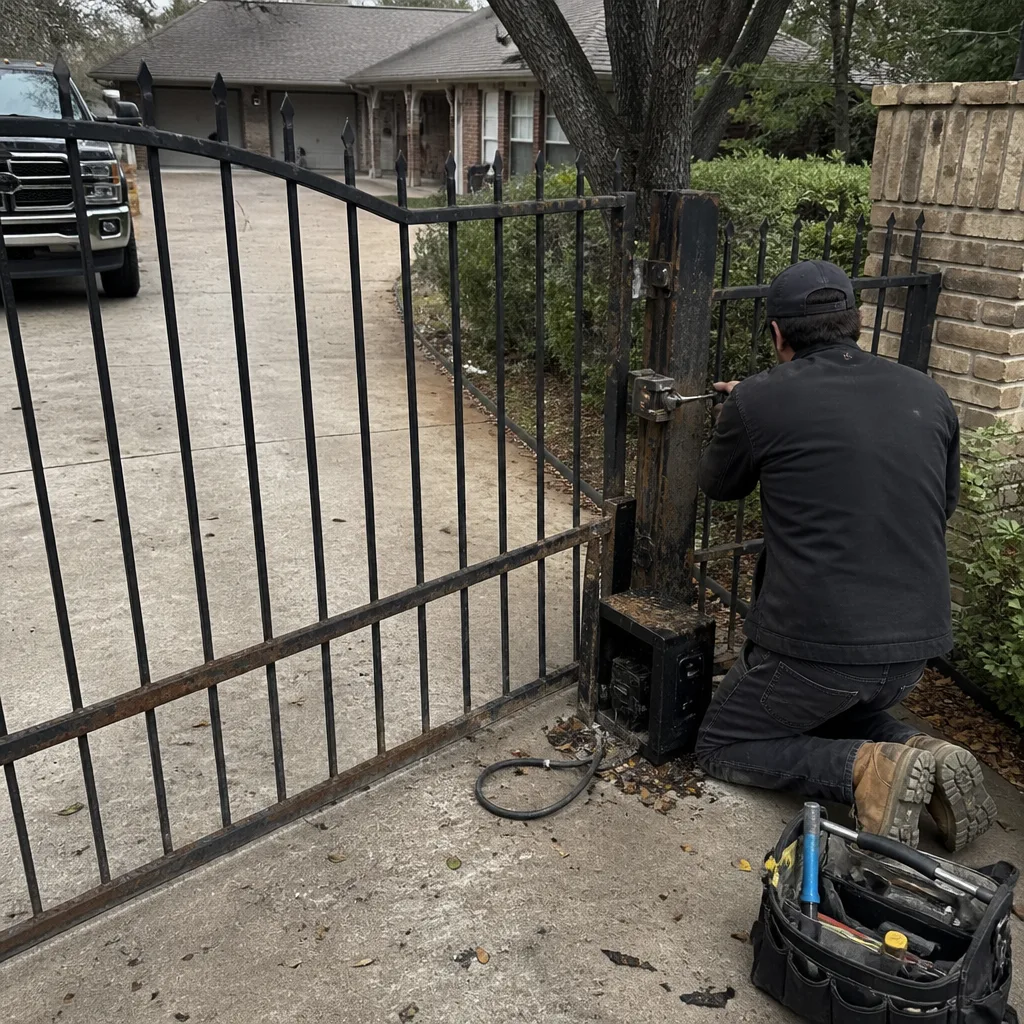 Before
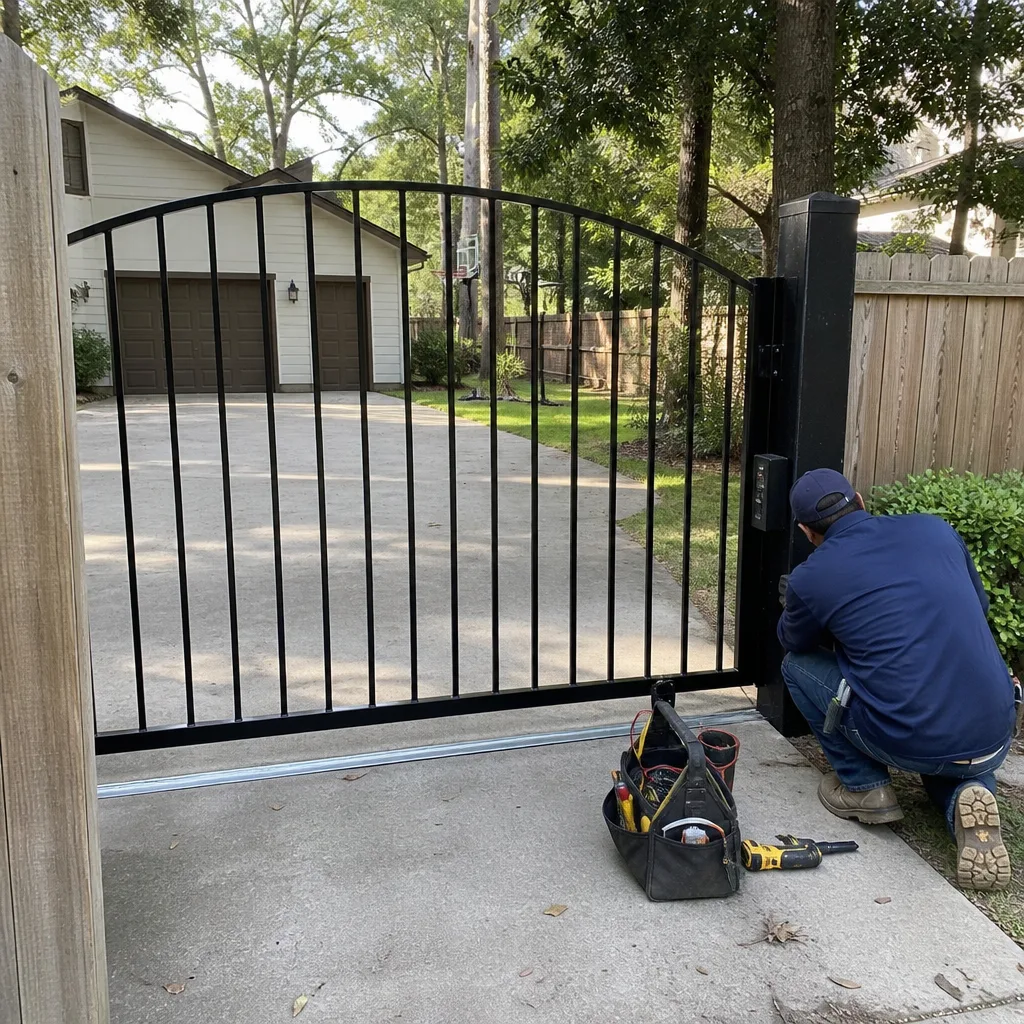 After
After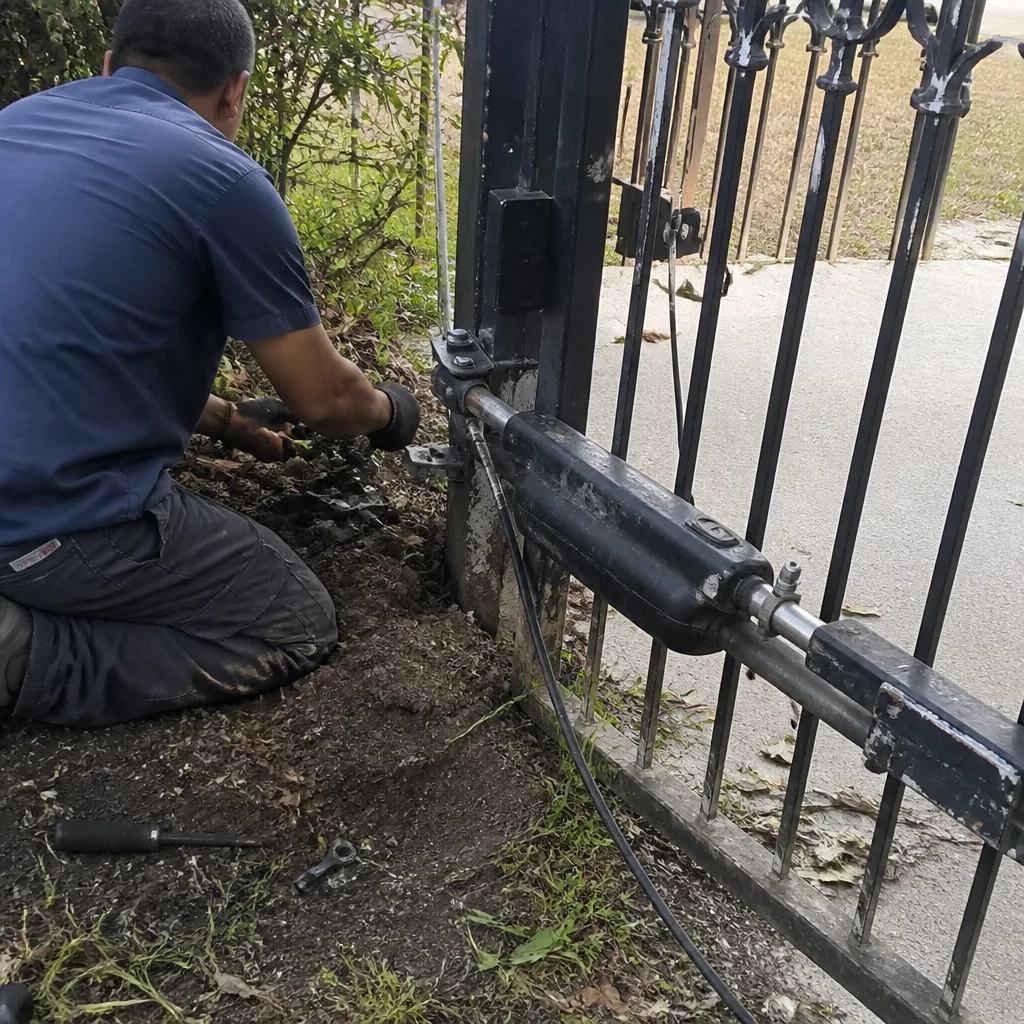 Before
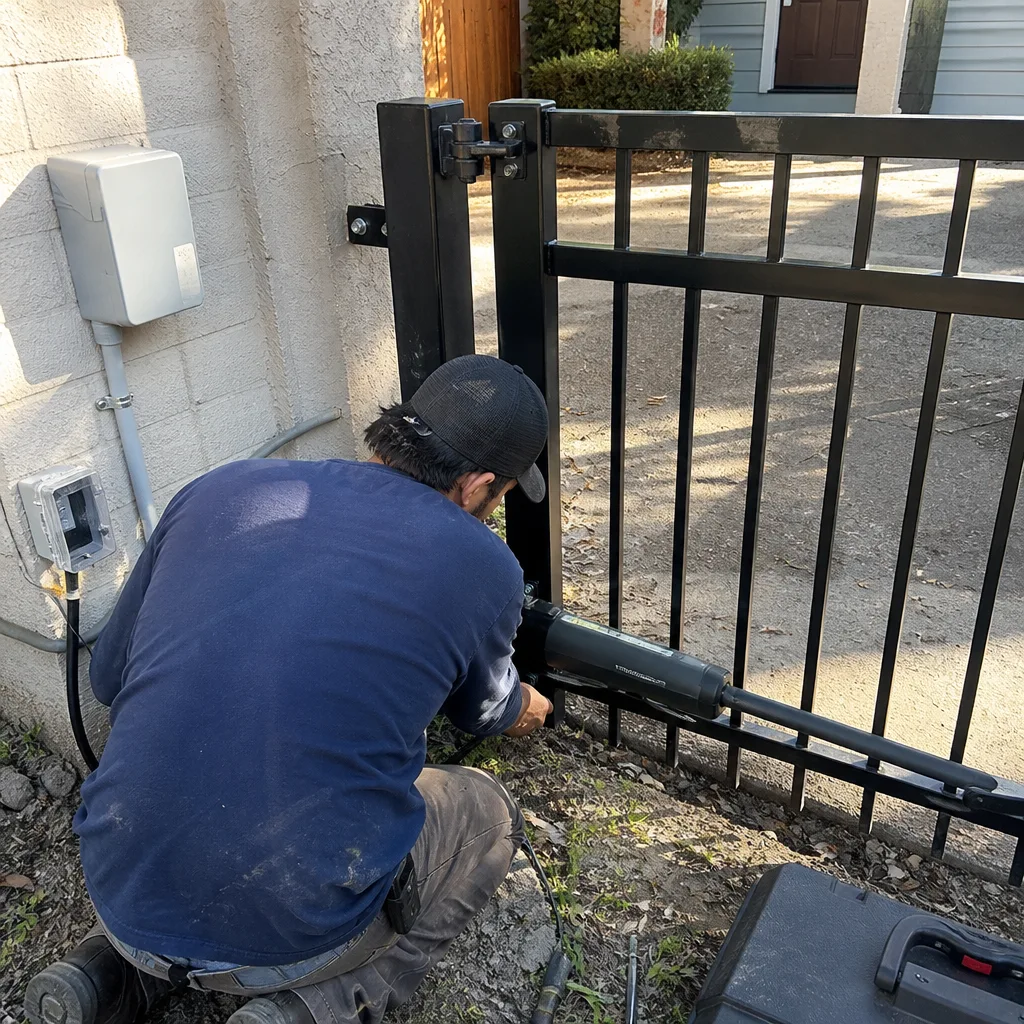 After
After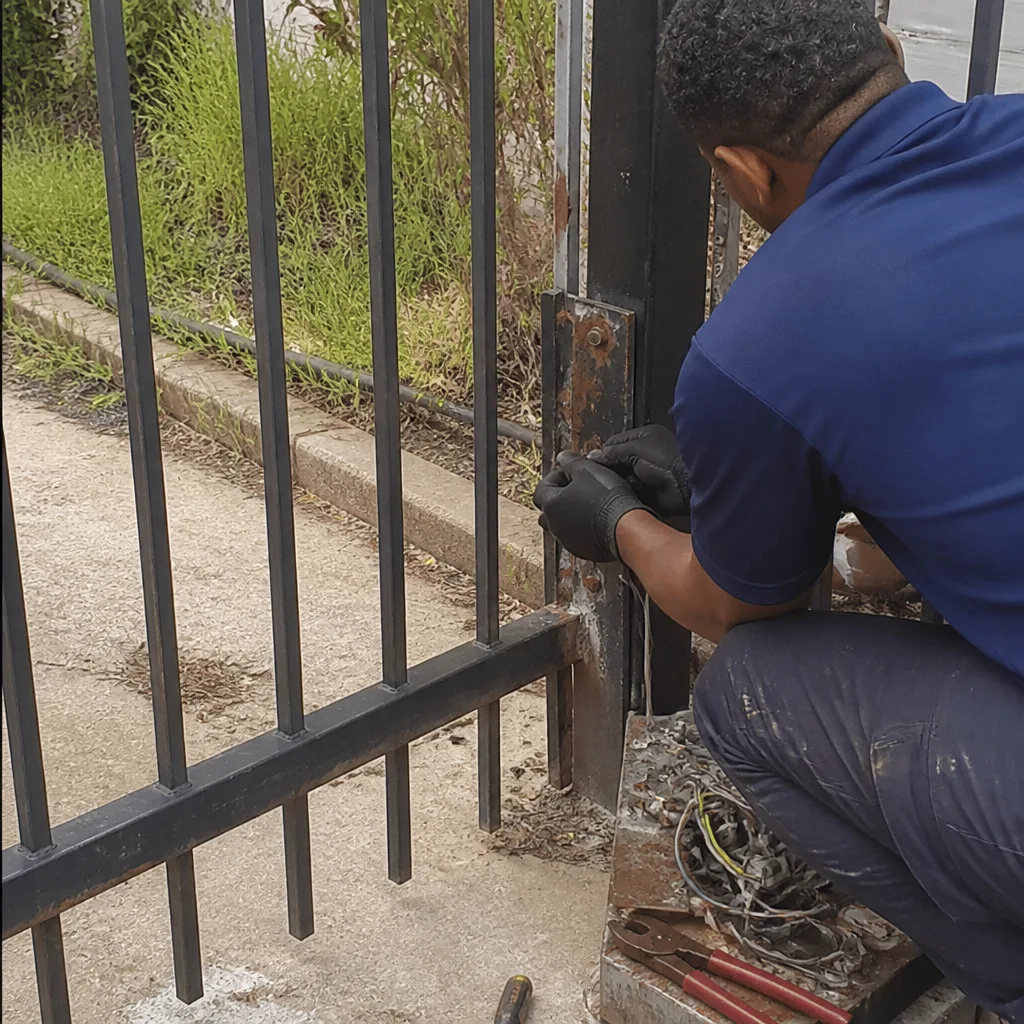 Before
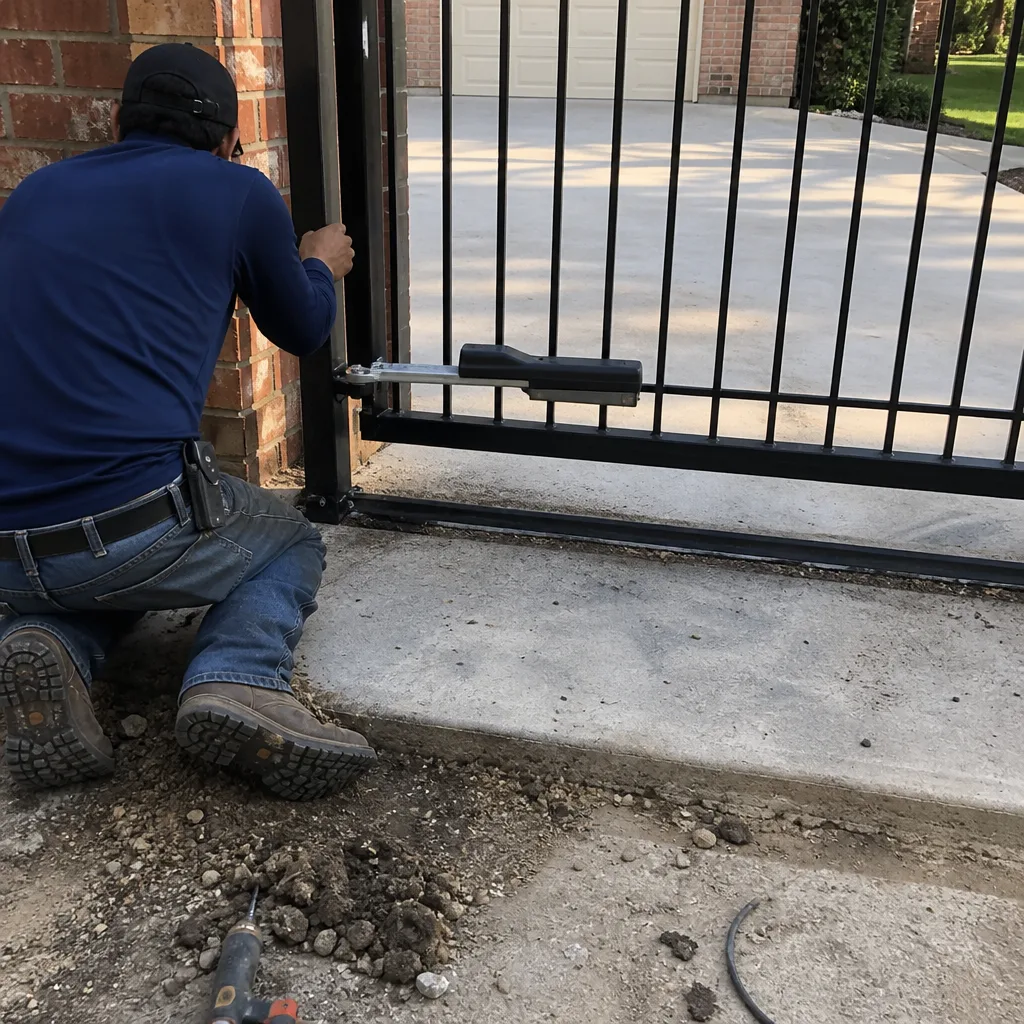 After
After