
Last updated October 16, 2026
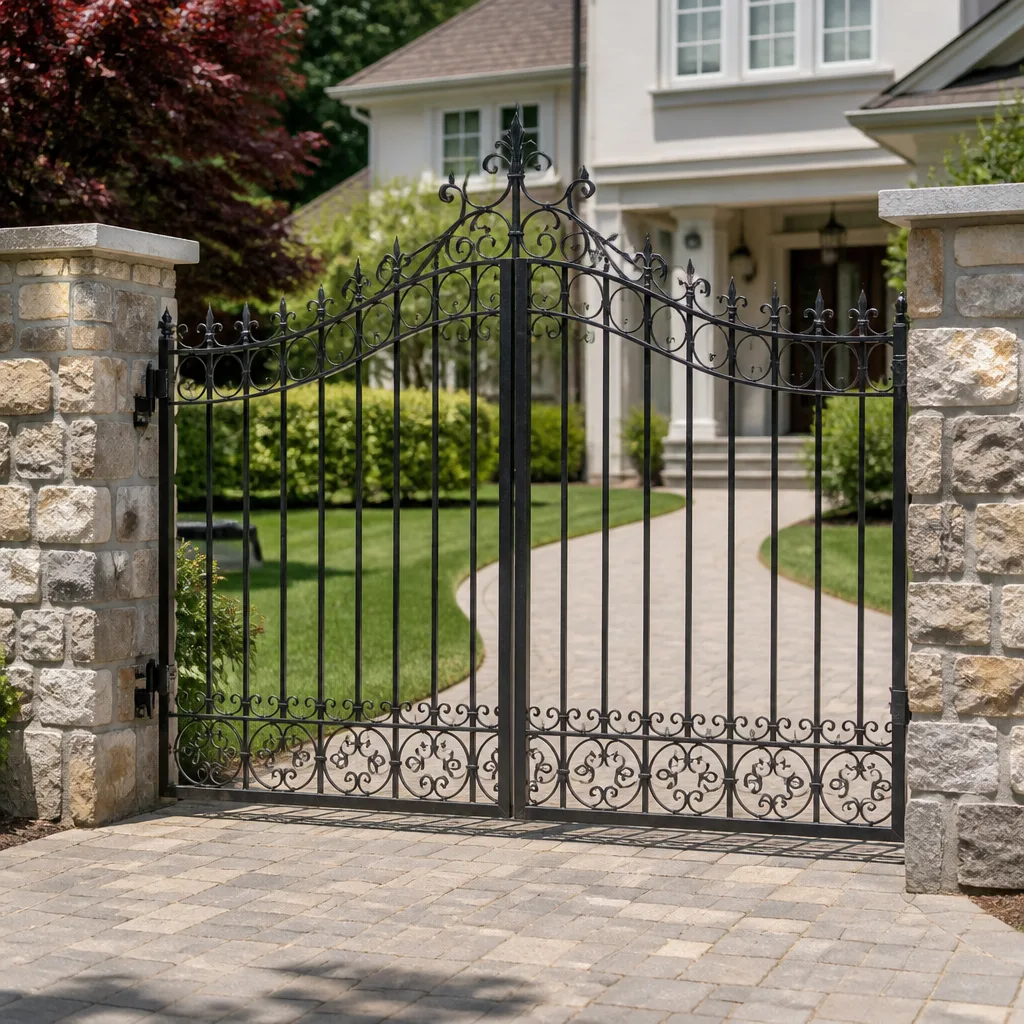 Wrought iron
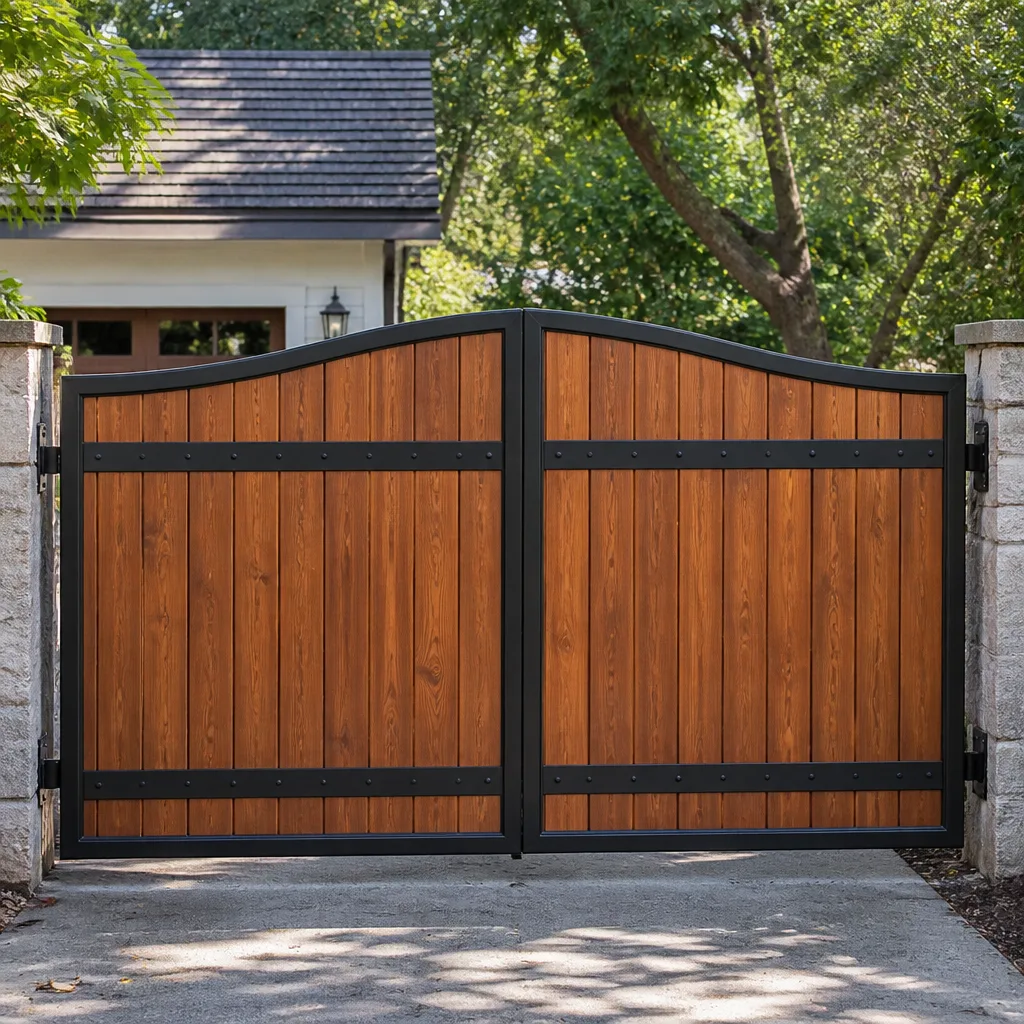 Wood & steel frame
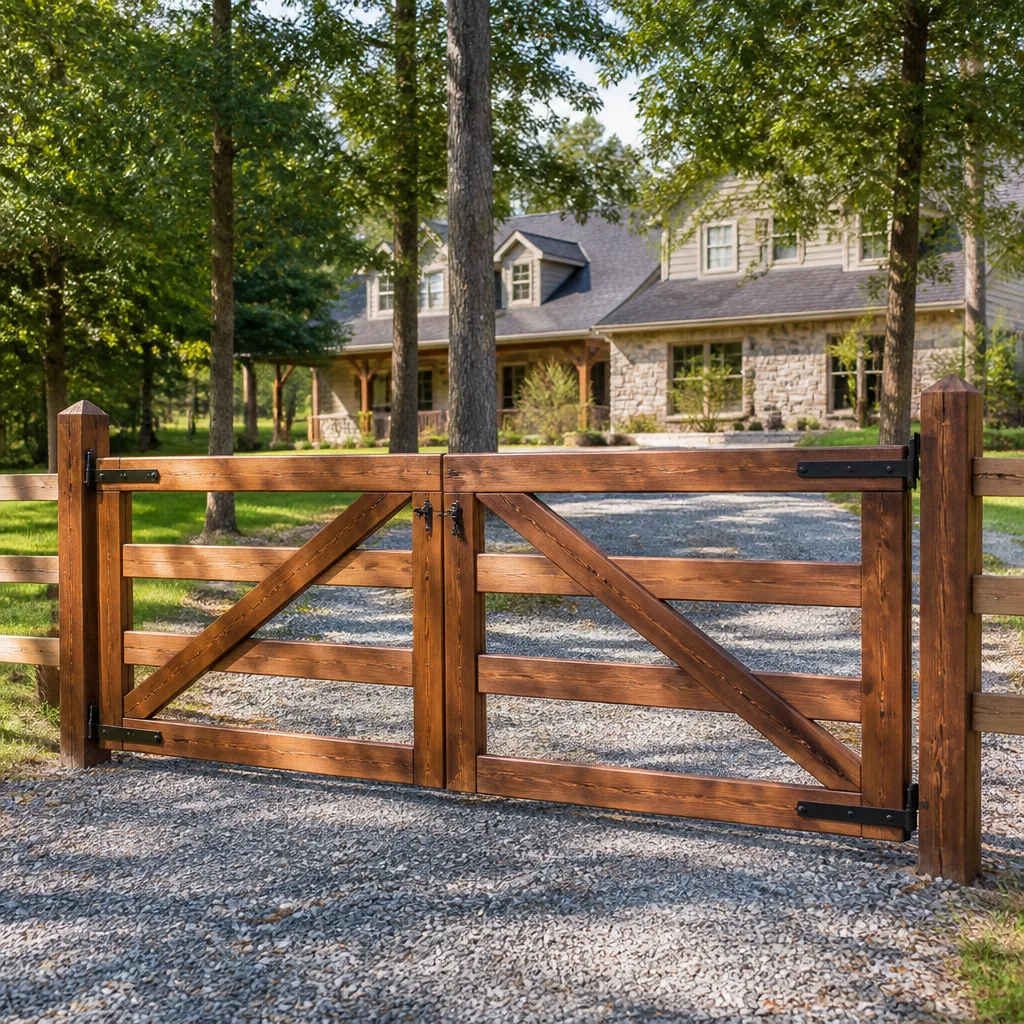 Farm & ranch
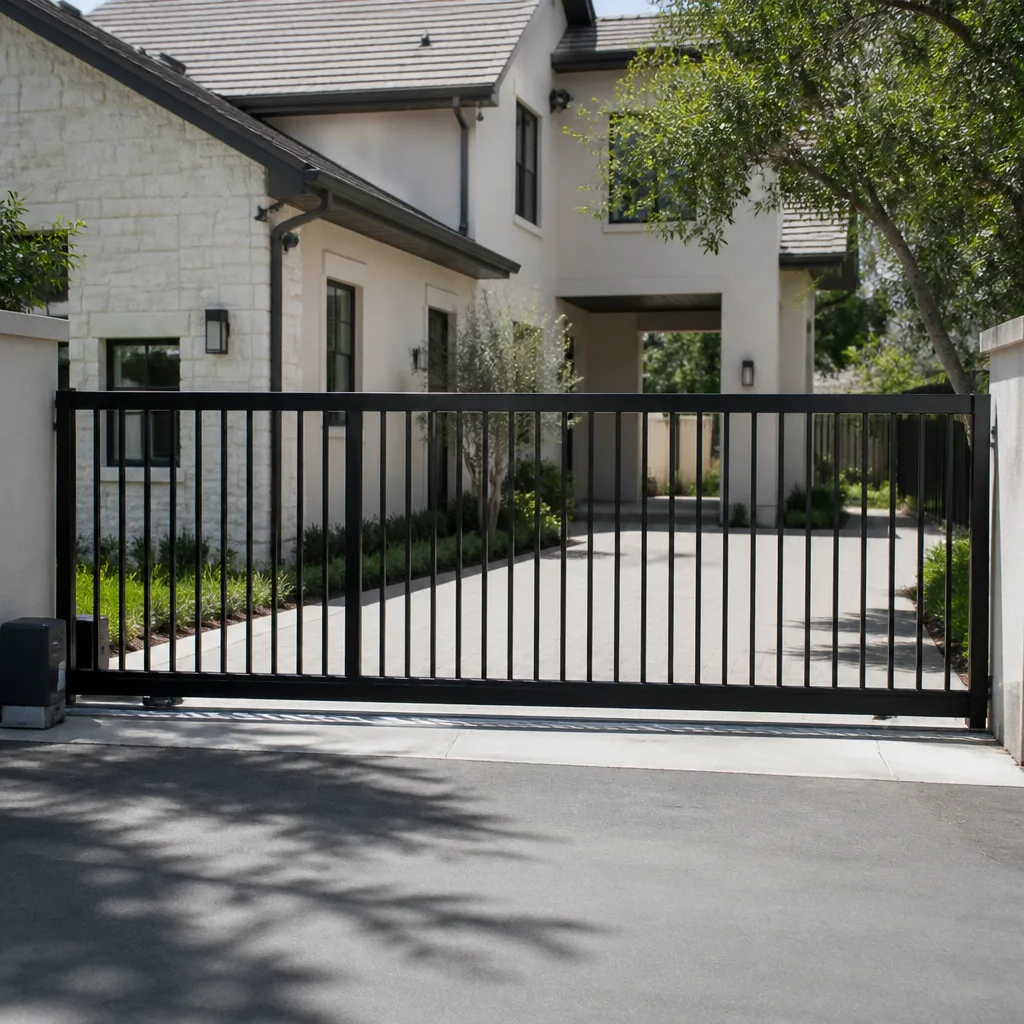 Sliding driveway gates
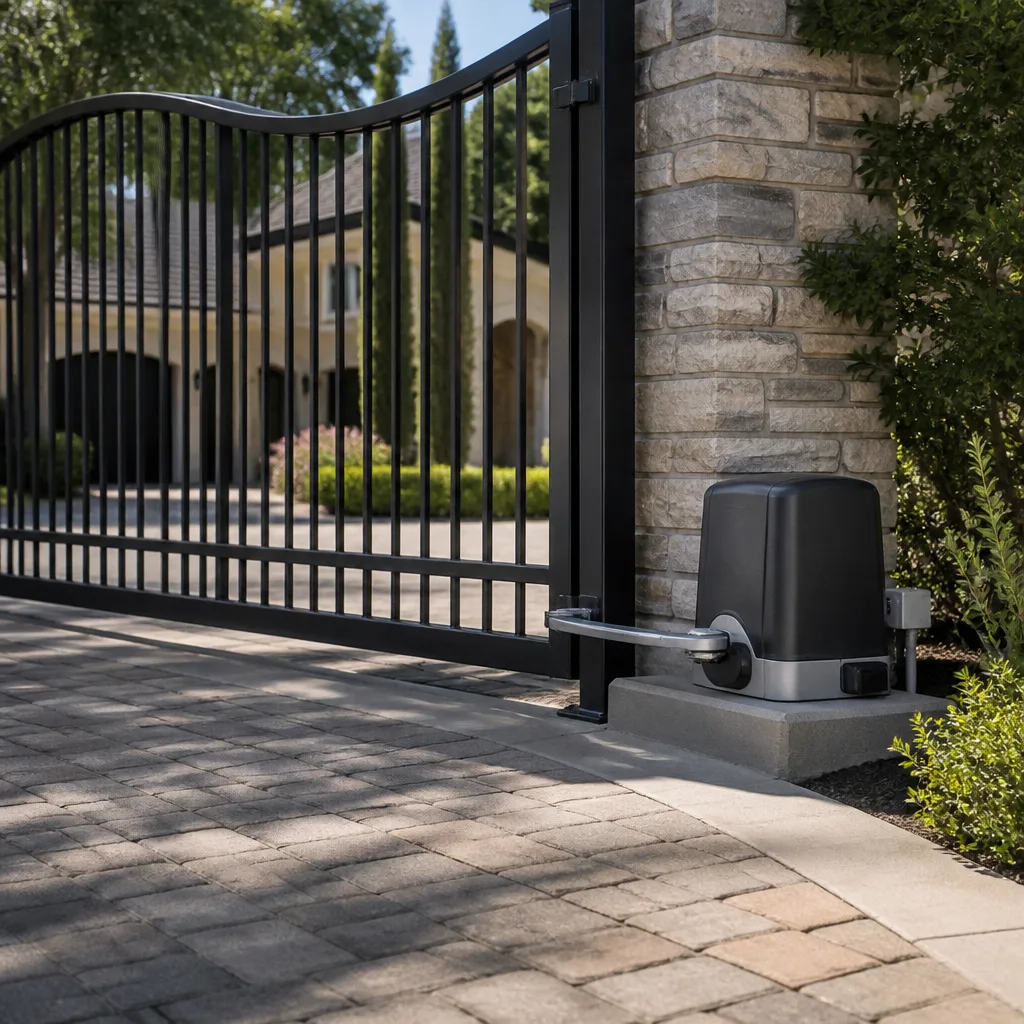 LiftMaster operators
Free on-site gate assessment - hinges, posts, and your LiftMaster or Nice gate operator checked before anything is quoted
The assessment is free and the quote is the invoice.
Get your free estimateSeasonal Gate Repair Care for Houston: Year-Round Homeowner’s Guide
February’s brief hard freeze gets all the attention, but it’s the six-month stretch from May through October, sustained heat, UV degradation, and storm surge humidity, that accounts for the majority of Houston gate failures in any given year. Most seasonal gate maintenance guides assume a four-season climate with freeze-thaw cycles. Houston doesn’t work that way. What you need is a calendar built around hurricane season stress, summer drought soil movement, and the specific ways a Gulf Coast climate ages a gate operator. Our Complete Guide to Gate Repair in Houston gives you that calendar: what to inspect before June, what to check after every named storm, what the summer heat is doing to your actuator and control board, and what actually matters when the January freeze rolls through. It’s written for Houston homeowners who want a gate that opens every time, not just when the weather is mild.
Styles & brands we work with
Quick Answer
Seasonal gate care in Houston means inspecting twice a year around two distinct stress periods: a pre-hurricane-season check in May covering post anchoring, battery backup, and manual release operation, and an early fall check in September covering track clearing, hinge lubrication, and UV damage from the summer. Between those, the highest-value monthly tasks are clearing debris from slide gate tracks and watching for post lean caused by clay soil shrinkage during summer drought. Most gate failures we see in Houston are predictable weeks before they happen, if you know which signs the climate creates.
Table of Contents
- Why Houston Weather Is Different for Gates
- Pre-Hurricane-Season Inspection Protocol: May Checklist
- Summer Drought and Clay Soil: Why Your Post Starts Leaning
- After the Storm: 24-Hour Slide Gate Track Clearing
- What Houston’s Winter Freeze Actually Requires (It’s Less Than You Think)
- The Fall Re-Entry Checklist for Snowbirds and Second-Home Owners
- UV Damage and Operator Longevity: What Summer Does to Electronics
- Common Mistakes to Avoid
- When to Call a Professional
- Frequently Asked Questions
- The Bottom Line
Why Houston Weather Is Different for Gates
A gate in Minneapolis fails because ice expands in the hinges and the ground heaves the post. A gate in Phoenix fails because the operator’s plastic gears get brittle and the sun bakes the control board. Houston does both, briefly, and then adds a third thing neither city has: six months of sustained humidity, punctuated by tropical storm events that dump inches of rain in a few hours. The gate has to handle all of it, often within the same calendar year.
The most important fact about Houston’s climate, for a gate owner, is that the city sits on expansive clay soil, the Beaumont and Lake Charles formations that shrink dramatically when dry and swell when wet. Your gate posts are set in that soil. During a Houston summer, when rain can be scarce for six to eight weeks, the clay pulls away from the post footing, creating a gap between soil and concrete. The post loses lateral support. Add the weight of a swing gate leaf, which is cantilevered off the post, and the post begins to lean toward the gate, slowly at first, then visibly. This is the single most common structural gate problem we see in Houston neighborhoods from Meyerland to Cypress, and it has nothing to do with the operator.
Humidity is the other quiet killer. Control boards corrode. Limit switch contacts oxidize. Wire connections inside the operator housing grow green fuzz that creates intermittent faults, the kind where the gate works seven times and fails on the eighth, typically when you’re late for work. Homes closer to Galveston Bay, in Clear Lake, League City, and Seabrook, see this corrosion accelerate because salt aerosol rides the onshore wind. A gate operator five miles inland might last nine years before board replacement; the same unit near the water might need it at six.
This means the seasonal care calendar for Houston homeowners doesn’t look like a Northern seasonal calendar. You don’t need to “winterize” your gate in October. You need to storm-prep it in May and drought-check it in August. The sections below walk through both cycles in order, starting with the one that matters most for Houston: hurricane season readiness.
If you’re new to gate ownership or just want a broader overview of what these systems involve, start with the Portcullis Gate Repair Houston home page, which covers the basics of residential gate systems and the brands we service.
Pre-Hurricane-Season Inspection Protocol: May Checklist
Houston’s hurricane season officially runs from June 1 through November 30, but the storms that have caused the most gate damage in recent years, Harvey in 2017, Laura in 2020, Nicholas in 2021, all share a pattern: heavy rain, sustained wind, and power loss. Your gate preparation in May should address all three. Here’s the protocol we recommend, in the order that matters:
- Test the manual release. Every automatic gate has a manual release mechanism, usually a lever on the operator or a keyed disconnect, that lets you operate the gate by hand when power is out. Find it now, before the storm. Pull it, swing the gate open, close it, and re-engage. If the release is stiff, rusted, or jammed, fix it in May. During a power outage after a hurricane, this release is the only way to get your car through the gate. Houston doesn’t wait for the utility to restore power before life resumes.
- Check the operator battery backup. Many LiftMaster and FAAC operators installed in Houston homes run on AC power with a DC battery backup for gate operation during outages. The battery is a sealed lead-acid or lithium unit inside the operator housing. After about three years in Houston heat, it’s degraded. Test it: cut power to the operator at the breaker, and operate the gate several times using the remote. If it’s sluggish or stops after two cycles, replace the battery now. A dead backup battery is the reason so many Houston gates are locked shut on the morning after a storm.
- Verify post anchoring. Walk to each gate post and look for gaps between the concrete footing and the surrounding soil, especially if the spring was dry. Grab the post at the top and push firmly; any movement, even an eighth of an inch, indicates loosening. Hurricane-force gusts push against the full face of a swing gate, and the post carries that load. A post that’s already loose in May can snap its anchor bolts or pull completely out of the ground in a 70 mph gust.
- Clear the track and the swing arc. For slide gates, remove every pebble, twig, and clod of dirt from the track and check the track wheels for flat spots. For swing gates, clear anything in the gate’s path, including low tree limbs that will whip in wind and can strike the gate or the operator arm.
- Inspect the operator housing seal. The operator is the box that powers the gate. Its weather seal, the gasket that runs around the door or lid, keeps rain and humidity out of the electronics. Run your finger along the gasket; if it’s cracked, flat, or missing sections, replace it. A failed seal is the most common entry point for storm water, and the resulting corroded control board is one of the more expensive Houston gate repairs, typically $300 to $600 for the board alone, plus labor.
You can do items one, three, and four yourself in under an hour. Items two and five are where we’d suggest professional eyes, because testing a battery backup and replacing a housing seal involve opening the operator, and a mis-seated seal that looks fine but isn’t will still leak. For a full Gate Repair in Houston evaluation before the season, Portcullis Gate Repair Houston sends a technician who checks all of the above and gives you a written price for anything that needs to be fixed, before any work starts.
Summer Drought and Clay Soil: Why Your Post Starts Leaning
Houston’s expansive clay soil shrinks when it dries. That’s not theory; it’s geology. The Beaumont formation under much of Harris County is rich in smectite, a clay mineral that can shrink to less than half its wet volume during prolonged drought. When that happens around a gate post, the soil pulls inward away from the concrete footing, leaving a visible gap, sometimes an inch wide, between dirt and concrete. In neighborhoods like Kingwood, Katy, and Tomball, where open ground around gates is common, we see this gap form in as little as six weeks of dry summer weather.
The post doesn’t fail immediately. It fails gradually, as thousands of gate cycles, each one a side load against the post, work the footing in soil that no longer grips it. The early signs are subtle:
- The gate leaf drops slightly at the latch end, so the latch strikes the receiver post a little low or scrapes the top of the catch.
- You hear a new creak or groan when the gate opens or closes; that’s the hinge bearing taking load it wasn’t designed for.
- The gap between the two gate leaves, or between the gate and the receiver post, widens at the top or bottom, meaning the post is no longer plumb.
- Water pools around the post footing after a rain, because the soil has pulled away and left a moat.
If you catch the lean early, Gate Repair services can usually fix it straightforwardly: the post is re-set or reinforced, the hinges are re-aligned, and you’re back in service. If you wait until the gate drags on the ground or the operator burns out trying to move a misaligned leaf, the repair is much bigger, often involving excavation, new concrete, and sometimes a new operator, because a gate that’s binding against the ground draws more current than the operator is rated for, overheating the motor and the control board.
The practical advice for Houston homeowners: during a dry spell, once a week, push on the gate and look at the footing. Thirty seconds. The moment you see a gap wider than a pencil, address it. You don’t need to fix it yourself, and you shouldn’t try to re-set a gate post as a DIY job; the post is under load from the gate leaf, and a post that shifts while you’re working on it can drop a heavy gate on you. You need to call a professional, but calling early is the difference between a $200 reinforcement and a $1,500 excavation.
If you’re not sure whether the gap you’re seeing is serious, a Gate Repair in Houston tech can measure the post’s deflection with a level and tell you in five minutes whether it’s stable or moving.
After the Storm: 24-Hour Slide Gate Track Clearing
A horizontal slide gate rides on a steel track that runs across the driveway opening. In Houston, that track sits at the lowest point of the driveway, which is exactly where storm water pools and where silt, leaves, and small debris settle when the water drains. Every significant rain event, from a summer thunderstorm to a tropical system, drops new material into that track. Left untreated for even a few days, the debris gets packed into the track by the gate wheels, and the gate starts to grind, slow down, and eventually trip the obstruction sensor and reverse mid-cycle, which is when homeowners call us.
Here’s the 24-hour post-storm routine we recommend for slide gate owners, once the rain stops and the water recedes:
- Clear the track by hand. Use a trowel, a flat screwdriver, or a piece of scrap wood, not your fingers, to scrape packed debris out of the track channel. Work from one end to the other. Pay attention to the section where the gate sits when closed, since debris collects there against the stop.
- Flush the track with a garden hose. After scraping, run water through the full length of the track to carry out silt the scraper missed. If water doesn’t drain quickly from the track, the weep holes are clogged; clear them with a wire or a screwdriver tip.
- Inspect the wheels. Look at each gate wheel for flat spots, wobble, or grit embedded in the rolling surface. A wheel with a flat spot thumps every rotation and gets worse quickly. Replacing a slide-gate wheel set typically runs $80 to $200 in Houston, depending on wheel size and access.
- Run the gate through a full cycle. Open and close it three times using the operator, and listen. It should move smoothly with no grinding, scraping, or rhythmic thumping. If it hesitates, reverses on its own, or stops mid-cycle, that’s an obstruction sensor or limit switch issue, and it needs a technician’s attention, not another cleaning.
Swing gate owners don’t have a track, but they do have the same storm effect on their hinges and operator arm. After heavy rain, check that the gate’s arc is clear of storm debris, branches, plastic bags, lawn furniture that blew over, and run the gate through two full cycles. Listen for changes. Water-driven silt can work into the hinge pins and make a swing gate creak where it didn’t before.
What Houston’s Winter Freeze Actually Requires (It’s Less Than You Think)
Every January, we get calls from Houston homeowners who want to “winterize” their gate, having read a Northern seasonal gate guide that told them to drain the irrigation line, cover the operator, and add antifreeze to something. Houston’s freeze is real but brief, and most of those Northern tasks are irrelevant here. You don’t need to cover your operator. You don’t need to drain anything. What you need to do, for the two or three nights a year when the temperature drops below freezing and the grid gets shaky, comes down to two things: battery performance and latch lubrication.
Battery performance. Cold temperatures reduce battery capacity. A gate operator battery that tested fine in August may deliver half its normal output at 28 degrees. If the electricity goes out during a freeze, which happened to thousands of Houston homes during the February 2021 event and again in subsequent winter storms, your gate has to run on that degraded battery. Test the backup battery in early December, before the cold nights arrive, using the same breaker-cut procedure described in the pre-hurricane section. If the gate runs through three or more full cycles on battery power, it’s fine. If it’s sluggish or fails after one, replace the battery before the freeze, not during the outage.
Latch lubrication. When moisture from Houston’s winter rain and fog sits in a gate latch, then freezes, the latch mechanism can jam. The fix is simple: in November or December, apply a silicone or lithium spray lubricant to the latch assembly, the receiver catch, and the hinge pins. Spray it, work the mechanism a few times, and wipe the excess. This is a five-minute job that prevents the most common winter gate problem we see in Houston: a gate that won’t latch because the internal spring or pin is frozen. If your gate uses an electric lock, the lubricant keeps the lock’s moving parts from sticking when the temperature swings from 70 degrees in the afternoon to 25 degrees at midnight.
That’s it. Houston’s winter gate care is a December battery test and a November lubrication. The real seasonal maintenance burden in this city is the hurricane season and the summer drought, not the freeze.
The Fall Re-Entry Checklist for Snowbirds and Second-Home Owners
Houston’s status as a hub for energy, medicine, and aerospace brings a particular class of homeowner: people who own a house in Houston but spend parts of the year elsewhere. If you leave your Houston home from May to October, which is exactly the period when this city’s weather is hardest on gates, you return to a gate that has been through a hurricane season without anyone watching it. The re-entry checklist below is for those homeowners, but it applies equally to anyone who’s been away from the home for more than a month, including renters returning to a leased property.
Walk through these steps in the first few days after you return, before you start relying on the gate for daily comings and goings:
- Run the gate through five full cycles. Open, close, open, close, open. Watch for hesitation, listen for new noises, and note whether the gate stops at the same points every time. A gate that sat unused for months often has stiff hinges, a dry chain, or a limit switch that’s drifted; five cycles will reveal most of it.
- Inspect the gate for rust and corrosion. Houston’s humidity doesn’t take the summer off. Look at the hinges, the operator arm, the track, and any exposed bolts. Surface rust is cosmetic for now. Deep pitting or flaking on structural components, especially the post brackets or the hinge welds, is a structural matter.
- Clear vegetation. Houston’s growing season is aggressive. Vines, branches, and grass will have grown into the gate’s path and possibly wrapped around the operator arm or the safety photo-eye sensors. Clear it all with shears, keeping vegetation at least two feet from the gate mechanism in every direction.
- Test the photo-eye sensors. Place a broom or a cardboard box in the gate’s path, and try to close the gate. It should stop and reverse. If it doesn’t, the sensors are misaligned, dirty, or failed, and this is a safety matter that needs immediate attention, especially if you have children or pets.
- Check the post footings. The summer drought was working on your gate posts while you were gone. Look for the soil gap described in the drought section. The gap doesn’t close by itself when rain returns; if anything, the swell of re-wetted clay around a sunken footing can shift the post further.
If the gate passes all five checks, you’re clear. If it fails any of them, schedule a professional inspection rather than waiting for a failure. The Gate Installation in Houston team at Portcullis sees a spike in calls every October from returning snowbirds, and the diagnosis usually involves something that would have been caught months earlier if someone had been there to see it.
UV Damage and Operator Longevity: What Summer Does to Electronics
Houston averages over 2,500 hours of sunshine annually, and the sun’s ultraviolet radiation is relentless from May through September. That sunlight ages gate operators in three specific ways, and understanding them helps you plan for replacement before you’re locked out.
Plastic degradation. The operator’s housing, the control board standoffs, the limit switch cams, the capacitor housing, and the wiring insulation are all plastic or polymer-based. UV light breaks the polymer chains, making these parts brittle. A housing that’s been in Houston sun for eight years will crack when you remove the cover screws. The control board inside may still work, but the cracked housing no longer seals against rain and humidity, and that starts the corrosion cycle. We routinely see operators in Houston that fail from UV-brittled plastic years before the motor or electronics wear out.
Heat accumulation. The inside of a dark-colored operator housing sitting in direct Houston sun can reach 150 degrees Fahrenheit, well above the rated operating temperature of most control boards. Cheap capacitors swell. Solder joints fatigue. The thermal stress of daily cycling, from a 150-degree daytime peak to the mid-70s at night, slowly degrades the board. Operators from BFT and FAAC, which are designed for the Mediterranean climate and tend to run hotter, benefit from being mounted where they get afternoon shade in Houston. The same is true for Mighty Mule units, which are popular with Houston homeowners doing DIY vs Professional Gate Repair installations but are the most sensitive to heat buildup because of their lighter-gauge housings.
Wire insulation breakdown. The low-voltage wires that run from the operator to the photo-eye sensors, the keypad, and the loop detector are often run in shallow conduit or exposed along the gate frame. Houston UV light turns PVC wire insulation brittle in three to five years. The insulation cracks, moisture enters, and you get intermittent faults that are notoriously hard to trace. When we open a Houston gate operator and see equipment from LiftMaster or FAAC with original wiring from the early 2010s, the wiring is usually on borrowed time.
One practical step: know the age of your operator. Most residential gate operators in Houston last 8 to 12 years, and the environment here is harder on them than in most of the country. If your operator is past the 10-year mark, or if the housing shows visible sun fading, chalkiness, or cracks, start budgeting for a replacement rather than waiting for the failure. A planned operator replacement is a $1,200 to $2,800 job in Houston depending on brand and swing. An emergency replacement after the gate locks shut is the same price plus the stress.
Common Mistakes to Avoid
- Relying on the last homeowner’s maintenance schedule. Many Houston gates we service were installed by the previous owner, along with a maintenance schedule designed for Phoenix or Minneapolis. Houston needs its own rhythm: May storm prep and August drought check. If you’re following a generic four-season checklist, you’re missing this city’s two real stress seasons.
- Ignoring a slow gate. A gate that opens more slowly than it did in the spring is a symptom, not a personality quirk. It usually means binding at the hinges, a failing capacitor, or debris in the track. Every month you ignore it, the motor works harder and the repair gets more expensive.
- Lubricating with WD-40. WD-40 is a water displacer, not a gate lubricant. It washes the existing grease out of hinges and then evaporates, leaving the joint drier than before. Use silicone spray or white lithium grease on gate hinges and latch mechanisms in Houston’s humid climate, never WD-40.
- Testing the battery backup after the storm starts. Once the power is out, it’s too late to discover that the backup battery died two years ago. Test it in May and again in December. A replacement battery is $60 to $180 in Houston, and it’s the difference between a functional gate during a blackout and a locked one.
- Clearing only the visible part of a slide gate track. The section of track where the gate rests when closed looks clear, so you move on. But the debris that causes failure is under the gate in the closed position, packed against the stop by the gate’s own weight. Open the gate and clean the track under the closed position specifically.
- Assuming post lean will fix itself. The clay soil gap around a Houston gate post closes when rain returns, which looks like the problem resolved. It didn’t. The post is still misaligned, and the hinge geometry has already changed. The lean will worsen each dry season until the post fails.
- Replacing the operator without addressing the post. We see this constantly: a homeowner replaces a burned-out operator because the gate was binding, but nobody fixed the leaning post or the worn track that caused the binding. The new operator dies within two years from the same overload. The operator was never the root problem.
If any of these patterns sound familiar, the place to start is an honest assessment of the gate’s current condition. The Electric Gate Repair in Houston page explains what a professional diagnostics visit covers and what to expect in writing before any work begins.
When to Call a Professional
Most of the seasonal tasks in this guide are inspection and light maintenance within a homeowner’s reach: clearing a track, lubricating a latch, testing a battery, looking for post gaps. But there are clear points where professional help is the right call, not just the convenient one. If your gate post visibly moves when you push on it, that’s a structural issue that can drop a heavy gate leaf on someone; a pro needs to re-set it. If you hear grinding from the operator, the gear train is failing, and opening the housing to inspect it means working around a motor that can start unexpectedly. If the photo-eye sensors don’t reverse the gate, that’s a safety system failure, and an unguarded moving gate can seriously injure a child or a pet. If the operator trips a breaker or the control board shows burn marks, melted wire insulation, or a burned smell, cut power to the operator at the breaker and leave it off until a technician arrives.
Portcullis Gate Repair Houston offers free estimates in Houston, call (325) 378-0676. Every job gets a written price before any work starts, and the Kingswell Guarantee, a written, 365-day promise on every repair. If it’s not done right, we make it right, at no charge for the return visit.
Frequently Asked Questions
A seasonal gate inspection in Houston typically runs $95 to $180, while minor maintenance like latch lubrication, track clearing, and limit switch adjustment is usually $150 to $350 for the service call plus parts. More involved seasonal repairs, like a battery backup replacement or a post re-alignment, range from $350 to $900 depending on the operator model and the post condition. The written price comes before any work starts, so you’ll know the exact number before a single bolt is turned. Call (325) 378-0676 for a free estimate on your specific gate.
No, not in the Northern sense. Houston’s winter requires only two specific tasks: testing the operator’s battery backup in December and lubricating the latch and hinges in November. You don’t need to cover the operator, drain irrigation lines, or apply any cold-weather additives. The freeze risk in Houston is brief and the real damage comes from the summer, not the winter.
We recommend a thorough inspection twice a year, once in May before hurricane season and once in September or October after the summer heat. Between those, a monthly visual check takes about ten minutes: look at the post footings for gaps, clear debris from the track, and run the gate through two full cycles listening for changes. If you notice a post gap, a slow gate, or binding, call before it worsens.
Expansive clay soil is the cause. Houston’s clay shrinks during summer drought, pulling away from the post footing and reducing lateral support. The weight of the gate leaf then works the post loose, and it leans toward the gate over many cycles. The fix is post re-setting or reinforcement, and it’s much less expensive when caught early, before the post has moved more than a small fraction of an inch.
Most common gate repairs in Houston, track clearing, switch adjustments, latch repairs, hinge lubrication, are same-day jobs. More involved work like post re-setting, operator replacement, or control board replacement is usually scheduled within a few days, depending on part availability. Every visit starts with a written price before any work starts, and a real arrival window, so you know when the technician will be there. Call (325) 378-0676 to schedule.
Yes. Every repair performed by Portcullis Gate Repair Houston carries the Kingswell Guarantee in writing, 365 days, on the invoice. If a repair fails within that year, we come back and fix it at no charge. It applies to seasonal repairs like a post re-alignment, a battery replacement, or a hinge repair, the same as any other work we do. The promise is written, not spoken.
Our technicians are trained on nine major gate operator brands, including LiftMaster, Mighty Mule, FAAC, and BFT, covering the operators most common in Houston residential gate installations. That means the technician who arrives already knows the specific system on your property, the wiring architecture, the common failure points, and the parts that typically need replacement on that model. It saves time and reduces misdiagnosis on complex seasonal issues.
The Bottom Line
Houston’s gate care calendar has two real deadlines: May, before hurricane season, and September, after the summer heat. Everything else is noise. Make the May inspection a habit, checking the manual release, the battery backup, and the post anchoring before the first named storm. During summer drought, spend thirty seconds a week looking for soil gaps around the post footings, because a leaning post never fixes itself. After storms, clear the slide track within 24 hours. In November, lubricate the latch; in December, test the battery. That’s the year. Do those things, and a Houston gate will open when you need it. Skip them, and the climate will eventually win. For more guides & resources, or if you’d rather hand the checklist to someone who’s done it a few thousand times, call (325) 378-0676 for a free estimate, written price before any work starts, and the Kingswell Guarantee on every repair, in writing, for 365 days, no fine print.
Written by Dean Prescott, Owner at Portcullis Gate Repair Houston, serving Houston since 2008.
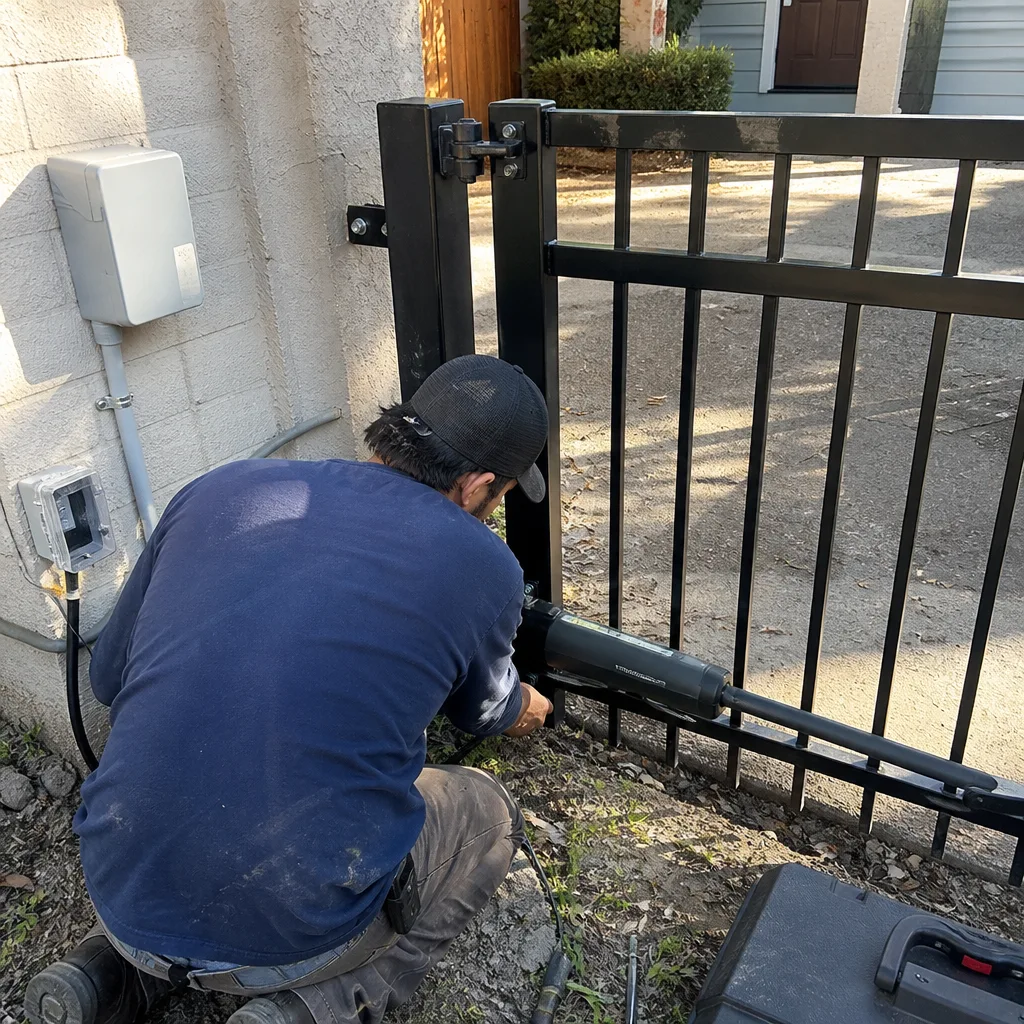
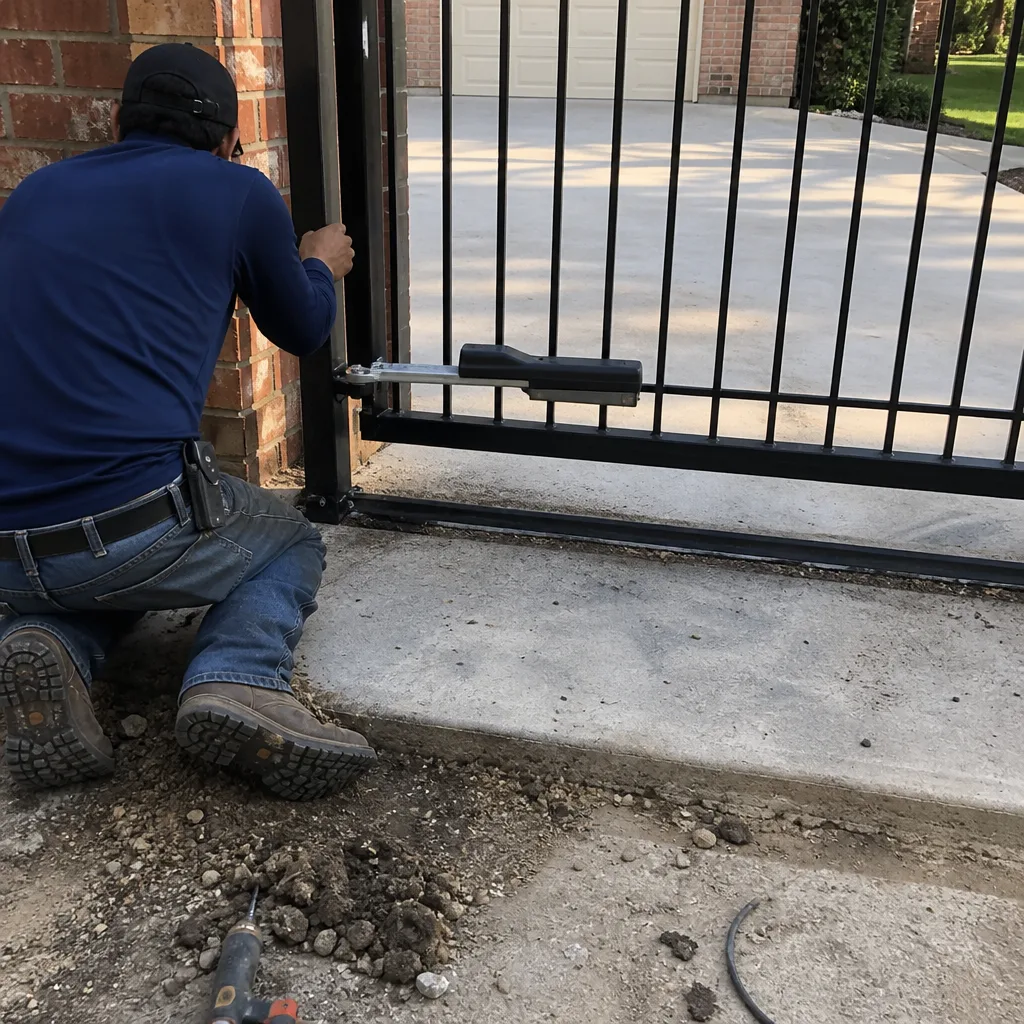
See the difference
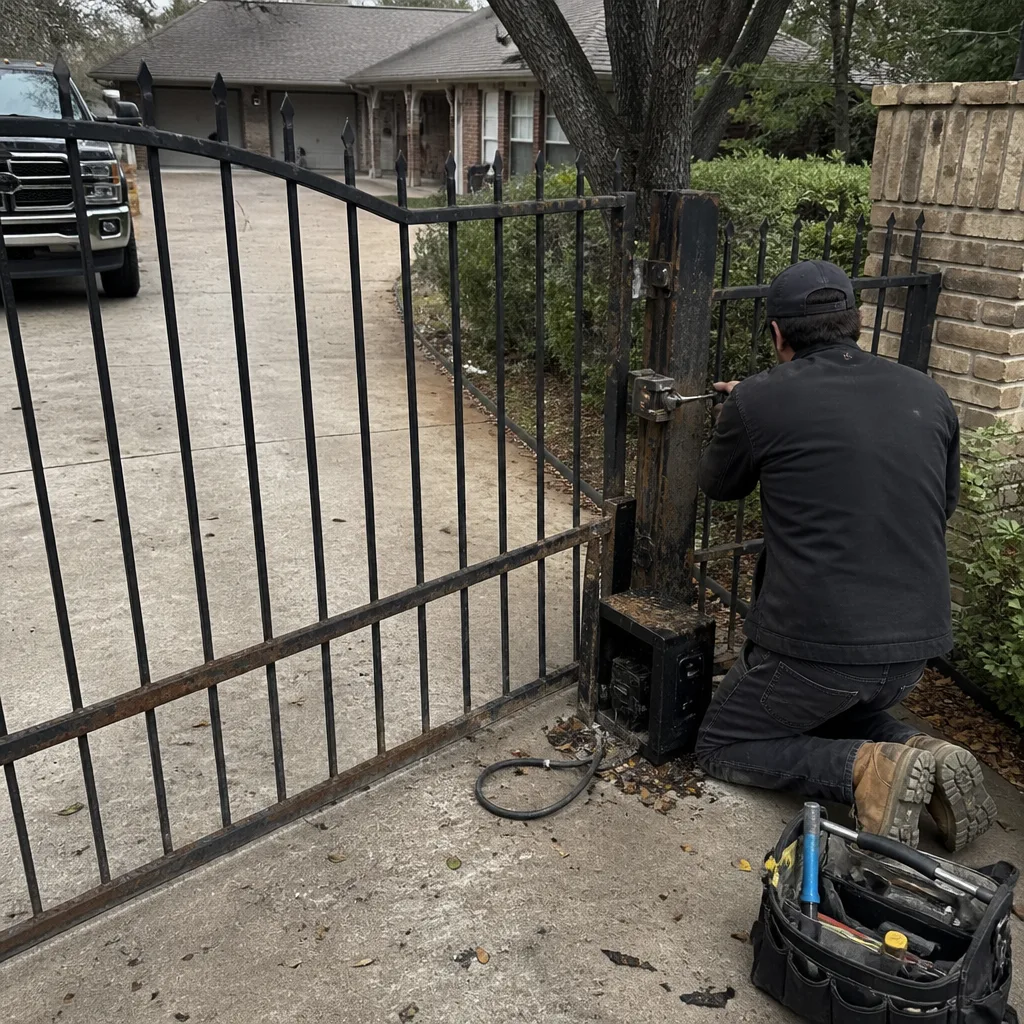 Before
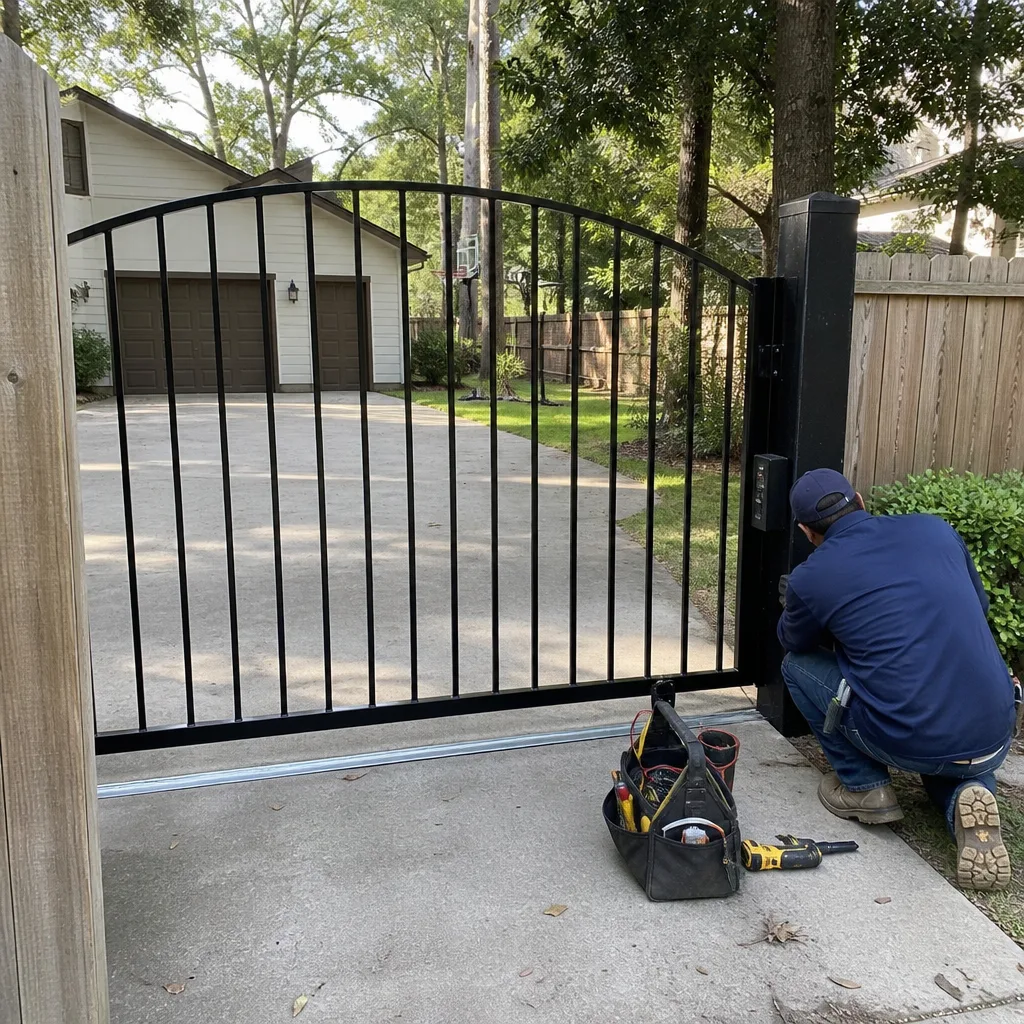 After
After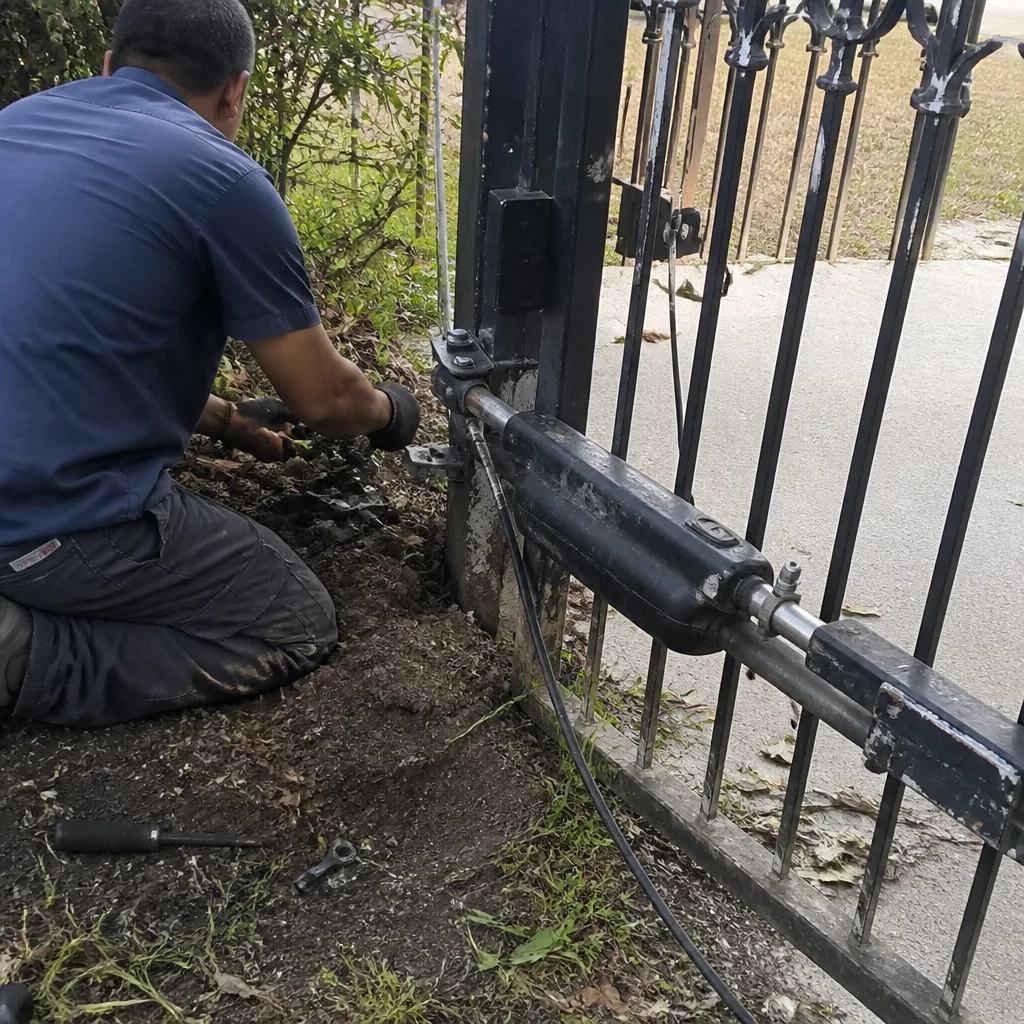 Before
 After
After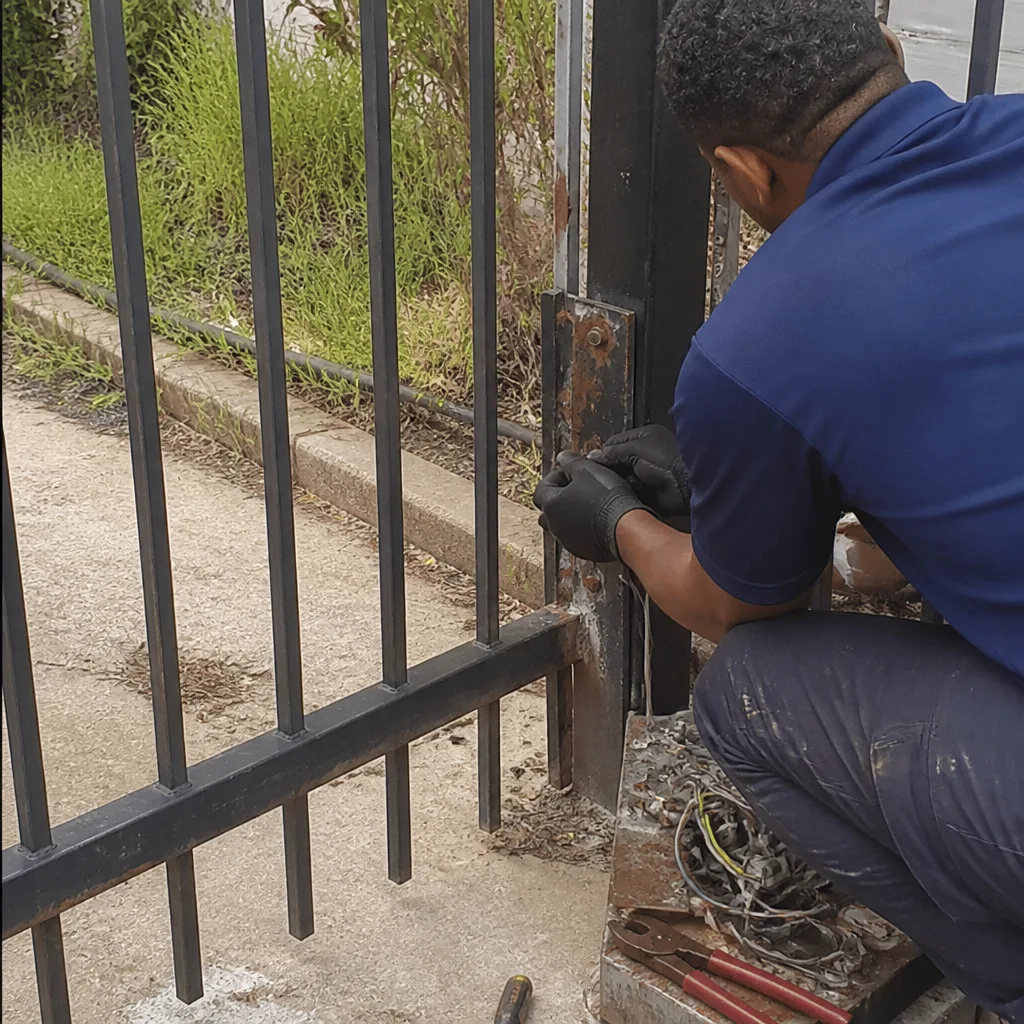 Before
 After
After