
Last updated October 16, 2026
 Wrought iron
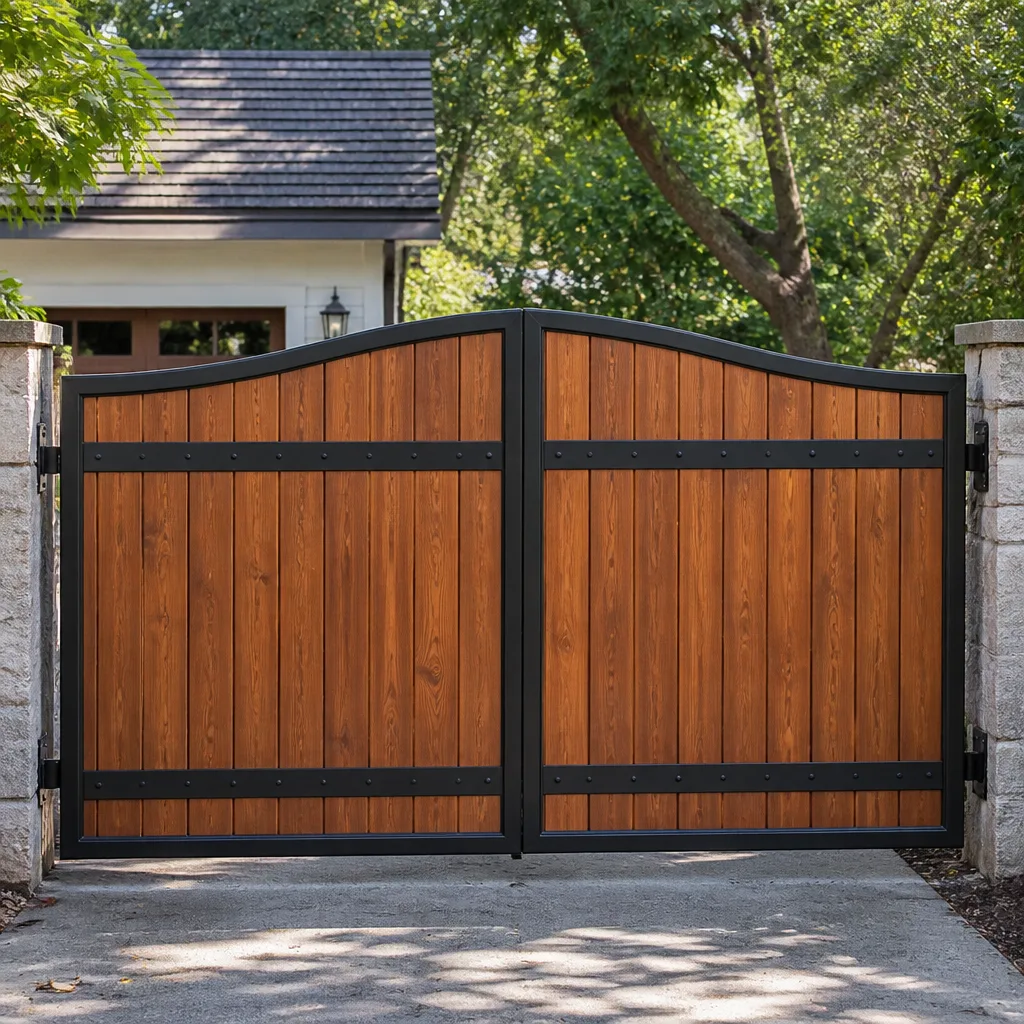 Wood & steel frame
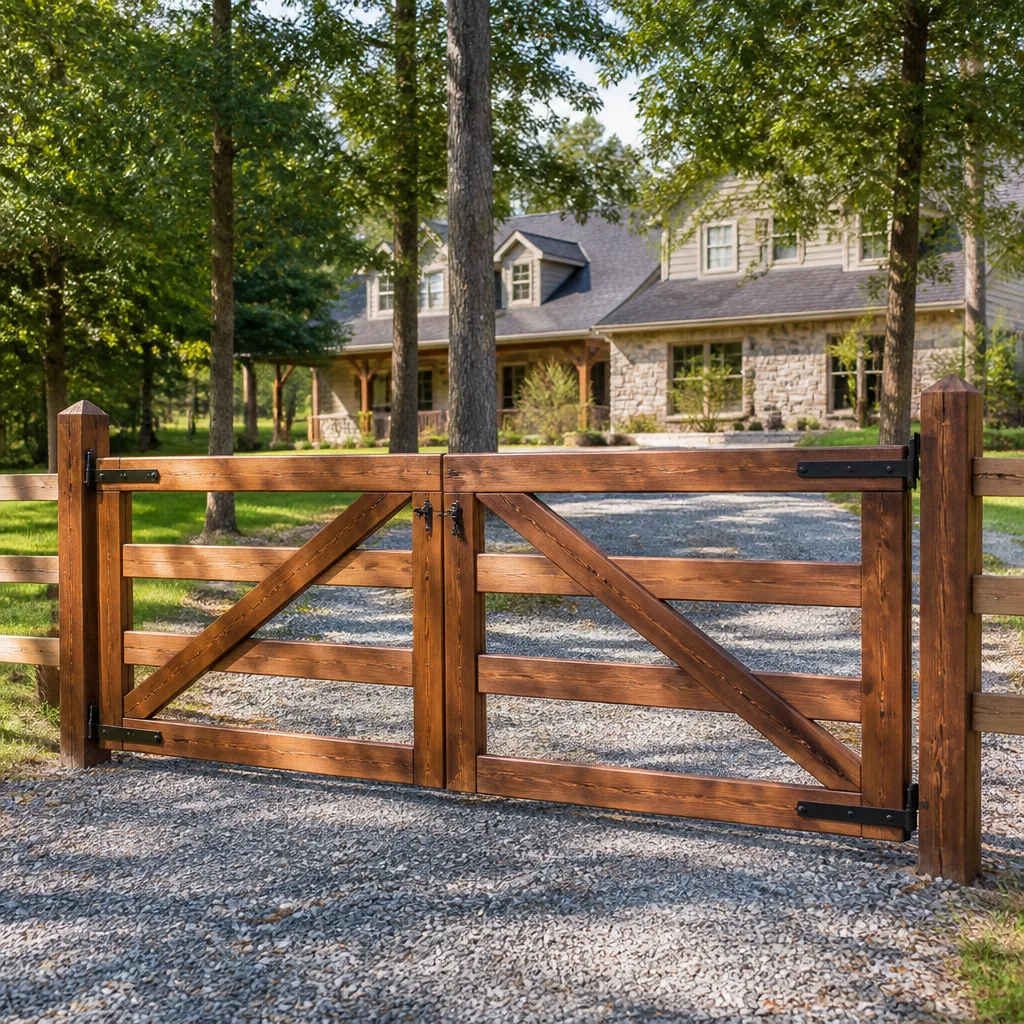 Farm & ranch
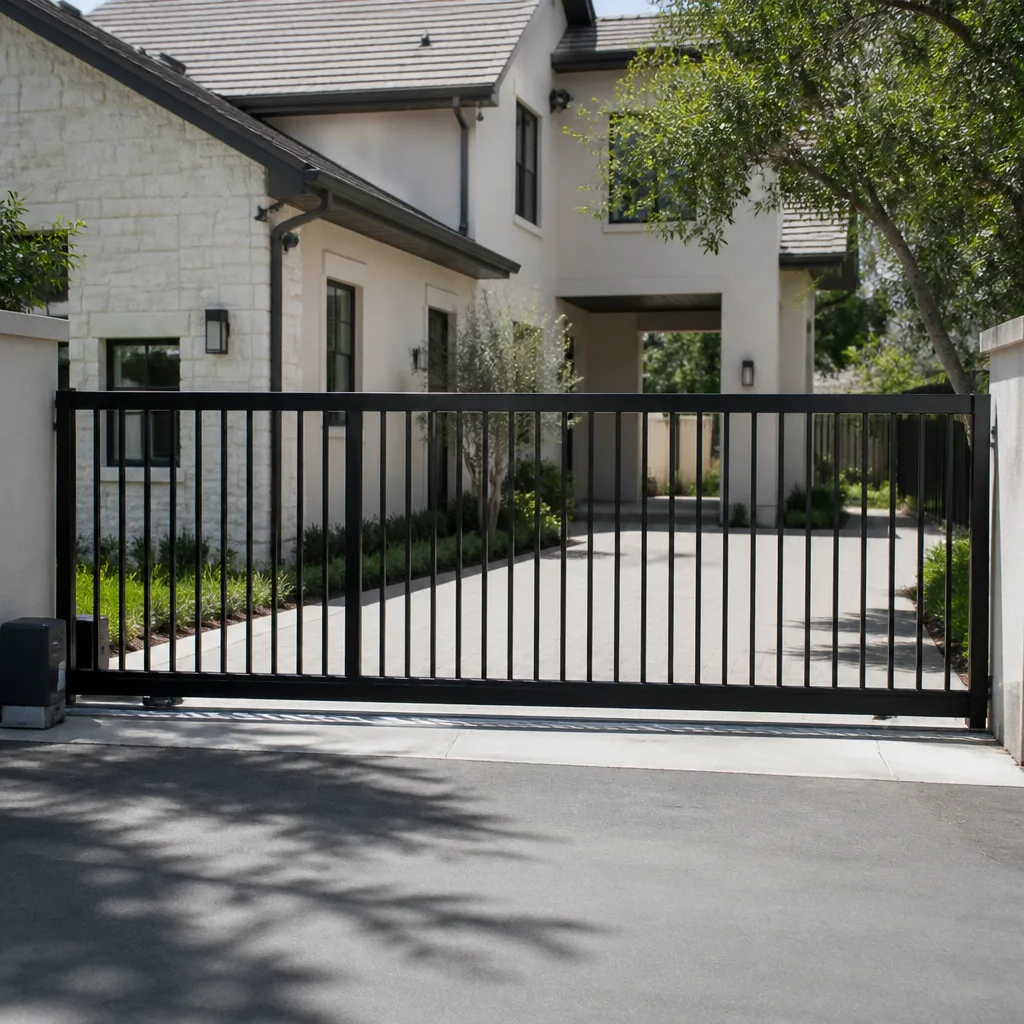 Sliding driveway gates
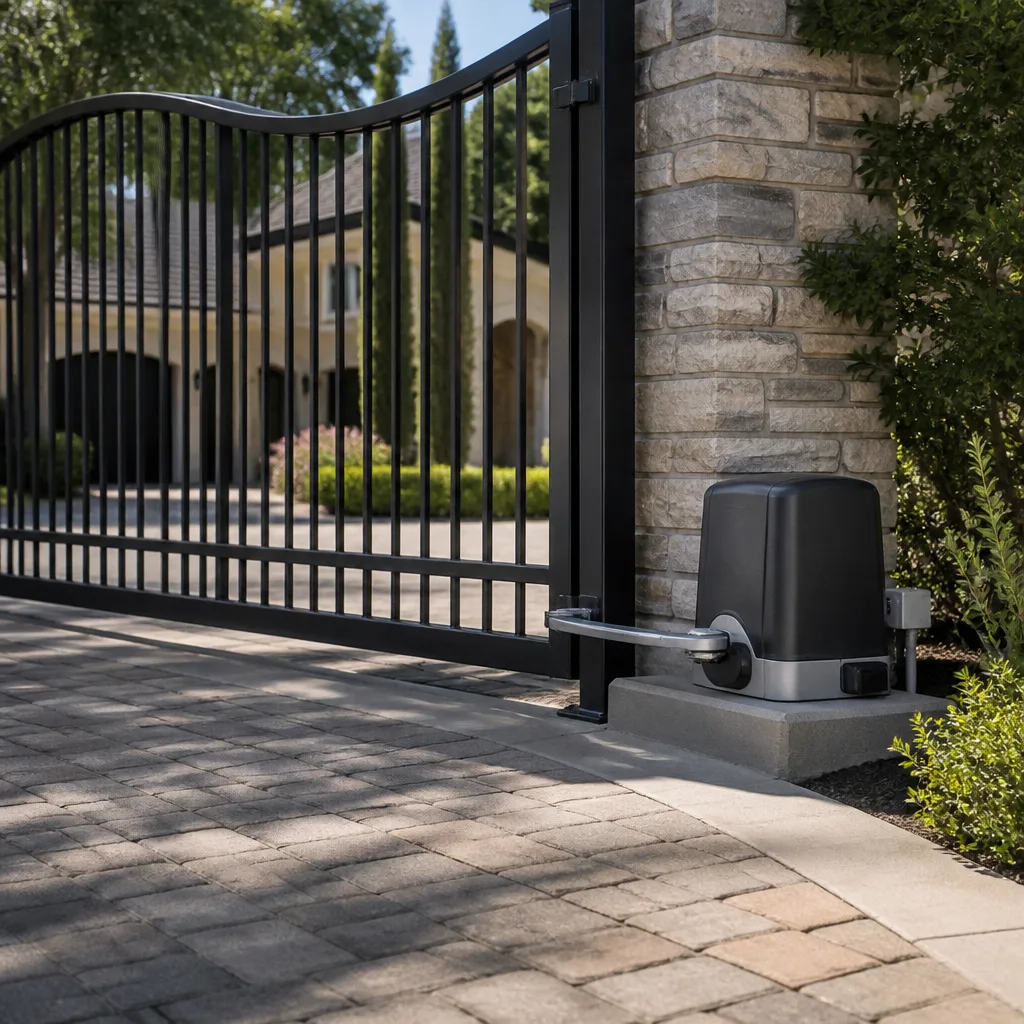 LiftMaster operators
Free on-site gate assessment - hinges, posts, and your LiftMaster or Nice gate operator checked before anything is quoted
The assessment is free and the quote is the invoice.
Get your free estimateGate Repair Permits, Codes & Inspections in TX: What You Need to Know
Here’s a fact most Houston homeowners don’t learn until closing day: a gate automation upgrade installed without a City of Houston electrical permit can flag during a home sale inspection and force a retroactive permit, a process that routinely costs double what the original permit fee would have been and can delay closing by three to six weeks. It’s the kind of surprise that turns a routine transaction into a negotiation crisis. This guide draws the actual line between a simple repair that needs no paperwork and an alteration that requires a permit, covers how Houston HOA review intersects with city code, and walks through what an inspector actually checks when a gate is involved. If you own a gate in Houston, this is the guide that keeps a $400 retrofit from becoming a $4,000 title problem.
Quick Answer
Most like-for-like gate repairs in Houston (replacing a hinge, swapping a broken wheel, or reinstalling the same operator) do not require a City of Houston permit. However, installing electrical service to a gate that never had it, replacing a concrete post footing, rebuilding a gate taller than 6 feet, or adding a pedestrian gate that requires a new opening in a masonry wall are alterations that typically do require a permit, and in planned communities the HOA’s design review usually comes first. When unsure, call the City of Houston Permitting Center and describe the scope in plain language: if the word “new” or “replace” describes the structural or electrical component, you’re probably in permit territory.
Styles & brands we work with
Table of Contents
- Repair vs. Alteration: Where the City of Houston Draws the Line
- Electric Gate Automation and the Electrical Permit
- HOA Architectural Review vs. City Permitting: Which Comes First?
- Certificate of Occupancy vs. Repair Permits on Existing Gates
- Who Pulls the Permit: Homeowner vs. Licensed Contractor
- The Real Cost of Skipping a Required Permit
- Houston Climate and Gate Code Compliance
Repair vs. Alteration: Where the City of Houston Draws the Line
The City of Houston’s building code distinguishes between maintenance, repair, and alteration using language that trips up a lot of gate owners. A maintenance task keeps the gate in its originally approved condition: greasing the track, tightening bolts, adjusting the chain tension, replacing a worn-out wheel. A repair replaces a part with a substantially identical one: a new hinge of the same size and rating, a new gate wheel of the same diameter, a new operator of the same voltage and roughly the same capacity. Neither of these typically requires a permit because they don’t change how the structure or the electrical system performs.
An alteration, by contrast, changes the gate’s structural, electrical, or life-safety performance. Under Houston’s adopted International Residential Code, altering a masonry pier, enlarging the gate opening, changing gate swing direction so it encroaches on a public right-of-way, or running a new 120-volt circuit from the panel to a gate location is not a repair, even if the gate itself looks the same when the job is done. This is where unpermitted work accumulates: the physical gate looks identical, the operator is a new brand, and behind the scenes a new underground service from the house has been added. That’s an electrical alteration, and it needs a permit.
Here’s the practical list of conditions that move a Houston gate job from “no permit” to “permit required”:
- Any new electrical service to the gate location, whether 120-volt or 24-volt, when the power run from the house is being installed or extended.
- A new post footing poured in concrete, especially in the front yard or within a public utility easement.
- Rebuilding a gate taller than 6 feet, since this engages structural wind-load requirements under the Texas Design Wind Speed maps.
- Changing the gate’s swing direction so it opens inward over a sidewalk or right-of-way.
- Creating a new pedestrian opening in a masonry or concrete block wall, which involves structural lintel work.
In Houston neighborhoods like West University Place and Bellaire, we regularly see gate alterations completed during kitchen remodels because the electrical subcontractor was already on site. The trench to the gate gets dug, the low-voltage transformer gets connected, and nobody thinks to pull an electrical permit. It’s the single most common unpermitted gate item we encounter on pre-listing inspections.
Electric Gate Automation and the Electrical Permit
Installing an electric gate operator in Houston means the gate location becomes a branch circuit of the home’s electrical system, and that triggers a permit under the City of Houston Electrical Code when the circuit is new. If the gate already had a working operator and you’re simply swapping in a replacement, the job usually qualifies as like-for-like repair, no new permit required. But if the gate was previously manual and you’re adding automation, the new low-voltage transformer, conduit, and any 120-volt outlet near the gate post all fall under the electrical permit.
Here’s the sequence a permit-compliant automation upgrade should follow:
- Verify the circuit – a licensed electrician or gate contractor confirms whether dedicated power can be fed from an existing exterior outlet or whether a new branch circuit from the panel is needed.
- Pull the electrical permit – the city needs to see the scope, the proposed circuit ampacity, and the location of the new outlet or transformer.
- Rough-in inspection – after the trench is open and the conduit is in place but before it’s backfilled, the inspector verifies depth, protection, and grounding.
- Final inspection – after the operator, safety edges, and photo-eye sensors are installed, the inspector confirms UL-listed equipment and proper bonding.
- Close the permit – the city records the completed work, which is what protects you at resale.
One detail Houston homeowners often miss: the 24-volt operators from brands like LiftMaster, FAAC, and Elite still require an electrical permit if the transformer is new. Homeowners assume low voltage means no permit. The City of Houston does not. The transformer is connected to a 120-volt source, and that connection point is what the inspector verifies. If the work involves a new branch circuit from the main panel, it is an electrical alteration with real safety implications. This is work a trained professional should handle, because an incorrectly bonded operator or an unprotected circuit can energize the gate frame in a fault condition.
HOA Architectural Review vs. City Permitting: Which Comes First?
In Houston’s planned communities, from Kingwood to Sienna to Cinco Ranch, the HOA’s architectural control committee typically reviews gate changes before the city does. The reason is practical: the HOA’s published design guidelines often specify maximum gate height, approved colors, allowed materials, and the direction of swing. You do not want to pull a City of Houston permit for a gate the HOA is then going to reject.
The correct order in an HOA-governed neighborhood is:
- Read the deed restrictions for your section, not just the neighborhood as a whole. Gate rules vary by section within the same master-planned community.
- File the ACC application with drawings, material samples, and the proposed operator brand and model.
- Wait for written approval, which usually arrives in 30 to 45 days. Verbal approval from a board member means nothing if a later board disagrees.
- Pull the city permit for the portions that require it, using the HOA-approved drawings.
- Build and inspect according to the approved scope.
We’ve seen more Houston gate installations stall at the HOA stage than at the city stage. The most common rejection is a gate height dispute: the homeowner wants a 7-foot solid wood gate for privacy, the HOA’s published standard says 6 feet. That’s not a difference you want to discover after the gate posts are already set in concrete.
Certificate of Occupancy vs. Repair Permits on Existing Gates
A Certificate of Occupancy (CO) is not a repair document. The City of Houston issues a CO when a structure is new, when its use changes, or when a building permit has been closed on substantial work. For a gate on new construction, the gate’s electrical connection, its clearance from the property line, and its operation (if automated) are part of the overall building inspection that leads to the CO. In practical terms, the gate is folded into the larger permit record of the house.
For an existing gate on an existing home, the CO process does not apply. Instead, any work that qualifies as an alteration receives its own standalone permit: an electrical permit for automation, a building permit for a post or footing replacement. The city’s permit office tracks these by address, and that record is exactly what a title company or a sharp buyer’s agent pulls when a property changes hands. This is why the distinction matters so much: a house with a closed CO from 2006 and a new electric gate installed in 2021 with no electrical permit on record has a gap. The title may still transfer, but the seller may now have a disclosure obligation and a buyer may use the unpermitted work as a negotiation lever.
On new construction in Houston, gates are also subject to the city’s minimum front-yard setback rules and, in some neighborhoods, the visibility triangle at the driveway exit. An automated gate that is too close to the street or too tall on a corner lot is a code item usually caught during the CO inspection, not years later. Once that gate passes with the home’s original CO, later work on it is assessed against repair standards, not new-construction standards, unless the alteration is substantial.
Who Pulls the Permit: Homeowner vs. Licensed Contractor
Texas law lets a homeowner pull a permit for work on their own primary residence, provided the homeowner is doing the work or directly supervising it. The City of Houston honors this: a homeowner permit is cheaper than a contractor permit, and the homeowner assumes full liability for code compliance. That said, the homeowner’s name goes on the permit record, which means the homeowner is certifying that the work meets code, even if a hired hand actually did it.
Here’s the honest breakdown of where each route makes sense:
- Homeowner permit works for: a simple gate rebuild on the existing footprint, replacing like-for-like hardware, or swapping a manual gate for another manual gate with no electrical work.
- Licensed contractor permit works for: any new electrical service to the gate, any new post footings, any gate that exceeds 6 feet in height, or any work in a utility easement where the city wants to see a licensed master electrician’s signature.
The appliance of the rule in Houston is straightforward: if the job involves cutting concrete or running an electrical circuit, you want the contractor’s license on the permit. It transfers code liability to the licensed party, and it keeps the inspection process clean because the inspector is dealing with a party who works in the code every day. For gate automation brands like Mighty Mule and LiftMaster, the installation instructions themselves state the operator must be installed in accordance with a recognized electrical code. A permitted installation is the document trail that proves it was.
The Real Cost of Skipping a Required Permit
Houston homeowners tend to price a skipped permit at zero, which is the wrong way to think about it. A skipped electrical permit on a gate operator rarely stays hidden forever. It surfaces during a home sale inspection, during a property insurance review after a storm claim, or during a subsequent building project when the inspector reviews the address history and asks about the gate that wasn’t there in the last record.
Here is what an unpermitted gate alteration actually costs in Houston when it catches up with you:
- Retroactive permit fee: City of Houston charges a double-fee penalty for work performed without a permit, so the electrical permit that would have cost $200 to $400 up front often costs $400 to $800 after the fact.
- Re-inspection cost: if the original installation is no longer visible (the conduit is buried, the footing is poured), the inspector may require partial excavation or a written certification from a licensed electrician, a service call that starts around $300.
- Fines: the city can issue a citation for unpermitted electrical work, and fines in the Code Enforcement process typically start at a few hundred dollars and climb if the violation remains open, often reaching over $1,000.
- Disclosure obligation on the sale: Texas Property Code requires sellers to disclose known work performed without a permit. If you don’t disclose it and the buyer later discovers the issue, you can face a claim after closing. If you do disclose it, expect the buyer to negotiate the repair or ask for a credit.
- Delayed closing: retroactive permits don’t close overnight in Houston. The process usually takes three to six weeks, which means the sale timeline blows past the original closing date while inspectors, electricians, and paperwork get coordinated.
The arithmetic is unkind: a gate automation upgrade that saved $250 on a permit can cost $1,500 to $2,500 to legitimize at sale, and it introduces uncertainty into a transaction that the buyer’s lender may refuse to fund until the record is clean.
Houston Climate and Gate Code Compliance
Houston’s climate shapes gate code compliance in ways that generic Texas guides ignore. This city sits in a hurricane zone, with a design wind speed that varies by exact location, and those wind maps feed directly into how tall a gate can be and how its footings must be sized. A 6-foot solid wood gate is not just an HOA preference; it’s a structural calculation influenced by the gate’s surface area acting as a sail in a hurricane. A taller gate of the same footprint needs a larger concrete footing and stronger post hardware, and that’s exactly the kind of alteration that should have a permit on record.
Rainfall matters too. Houston averages around 49 inches of rain a year, usually in bursts that saturate the ground for days. Gate posts set in Houston’s gumbo clay expand, contract, and heave more than they do in drier parts of Texas. The City of Houston building code’s footing depth requirement of 18 inches minimum for a typical residential gate post is a floor, not a target, and in flood-prone areas the city may require a deeper embedment or a larger diameter. We’ve replaced gate posts in Katy, Cypress, and Sugar Land where the original post was set at 12 inches and the whole gate started leaning within five years due to soil movement.
Corrosion is the third Houston-specific factor. The combination of humidity, salt-laced air near the coast, and the relentless rain means gate hardware fails faster here than in Central or North Texas. The code’s requirement for corrosion-resistant fasteners and coated or stainless hardware on exterior gates is not academic; it’s the difference between a gate that opens in 10 years and one that has rusted into its own hinges. When a gate rebuild is permitted, the inspector will look for the correct hardware grade, and a licensed contractor’s material list is part of what gets verified.
Common Mistakes to Avoid
- Assuming low-voltage means no permit. A new 24-volt operator wired to a new transformer still requires a City of Houston electrical permit because the transformer connects to a 120-volt source. The voltage of the operator itself is not the deciding factor.
- Pulling the city permit before HOA approval. In an HOA-governed neighborhood, the ACC approval should come first. A city permit for a gate the HOA will reject is wasted time and money, and some HOAs treat an unapproved installation as a deed restriction violation with its own fine structure.
- Treating a homeowner permit as a blanket pass. A homeowner can pull a permit on their own primary residence, but the homeowner’s name is on the record and the homeowner certifies code compliance. For electrical or footing work, a licensed contractor’s permit shifts that liability to the licensed party.
- Ignoring the visibility triangle. On corner lots, the City of Houston zoning code restricts how high a gate or fence can rise near the intersection of the driveway and the street. An automated gate that’s too tall or too opaque in that triangle creates a sight-line safety issue and can be cited by code enforcement even if the gate itself passed a structural inspection.
- Reusing old footings for a taller gate. A gate that grows from 5 feet to 7 feet imposes a larger wind load on the SAME post. The concrete footing, post size, and hinge hardware all need to be recalculated. Bolting a heavier gate to old posts is a classic unpermitted-alteration failure.
- Filing no record at all. Even when the job qualifies as like-for-like repair, keep the invoice with the operator brand, model, and date. A clean repair record with no permit is still a record, and that document trail helps when a buyer’s inspector asks why the brand changed.
See the difference
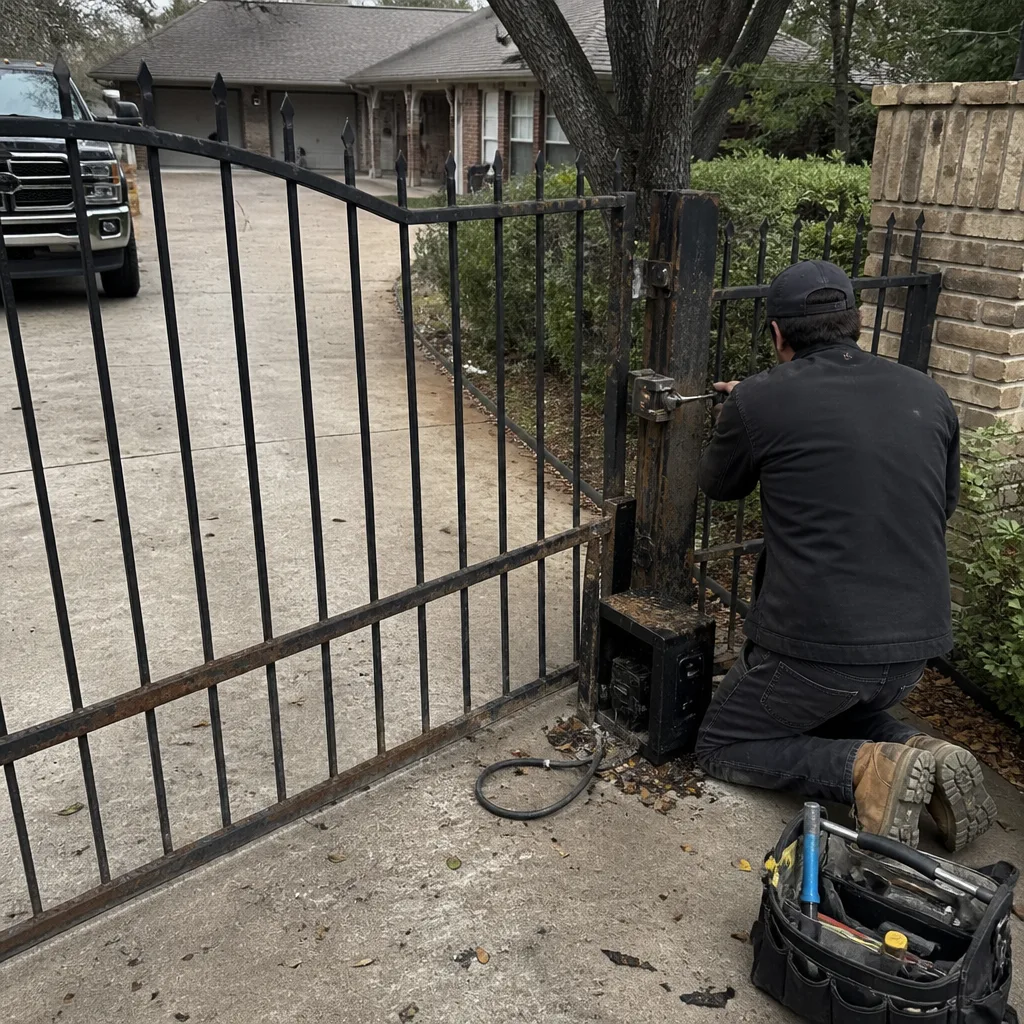 Before
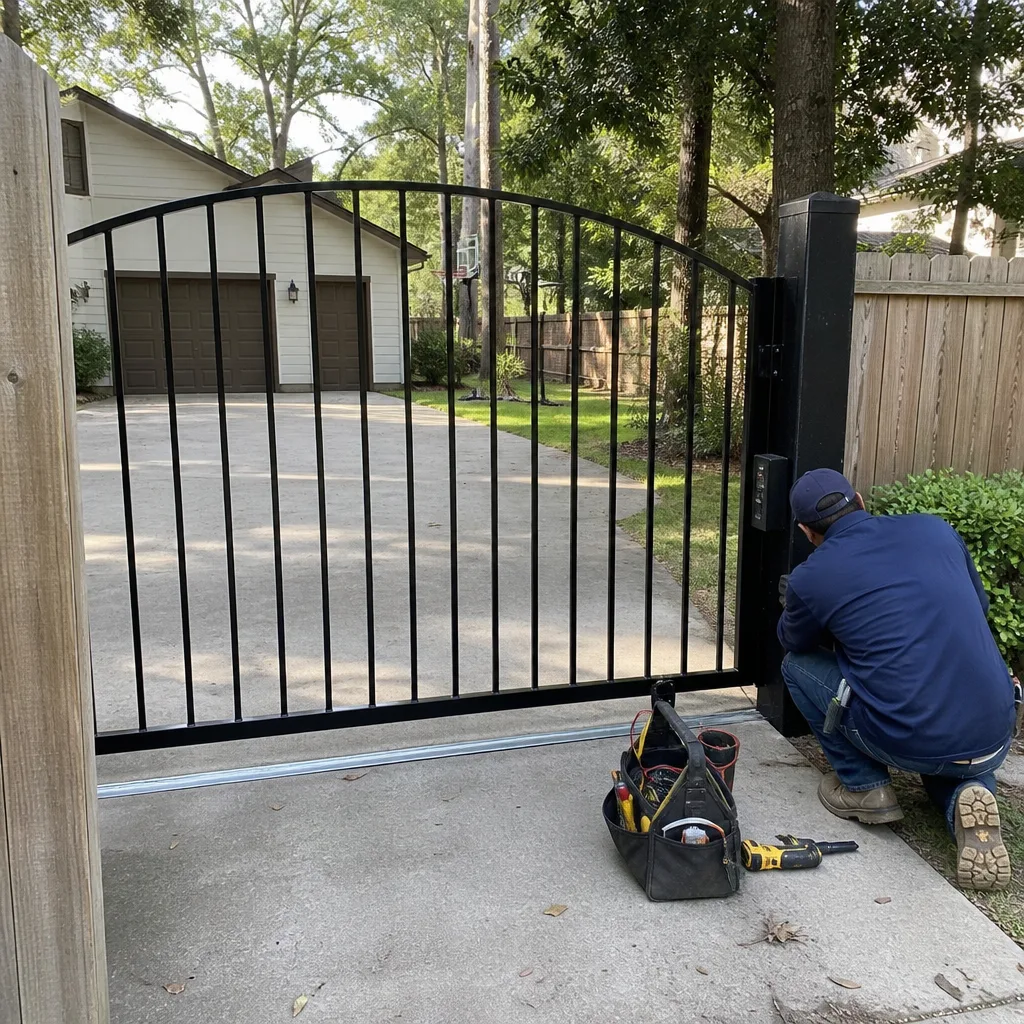 After
After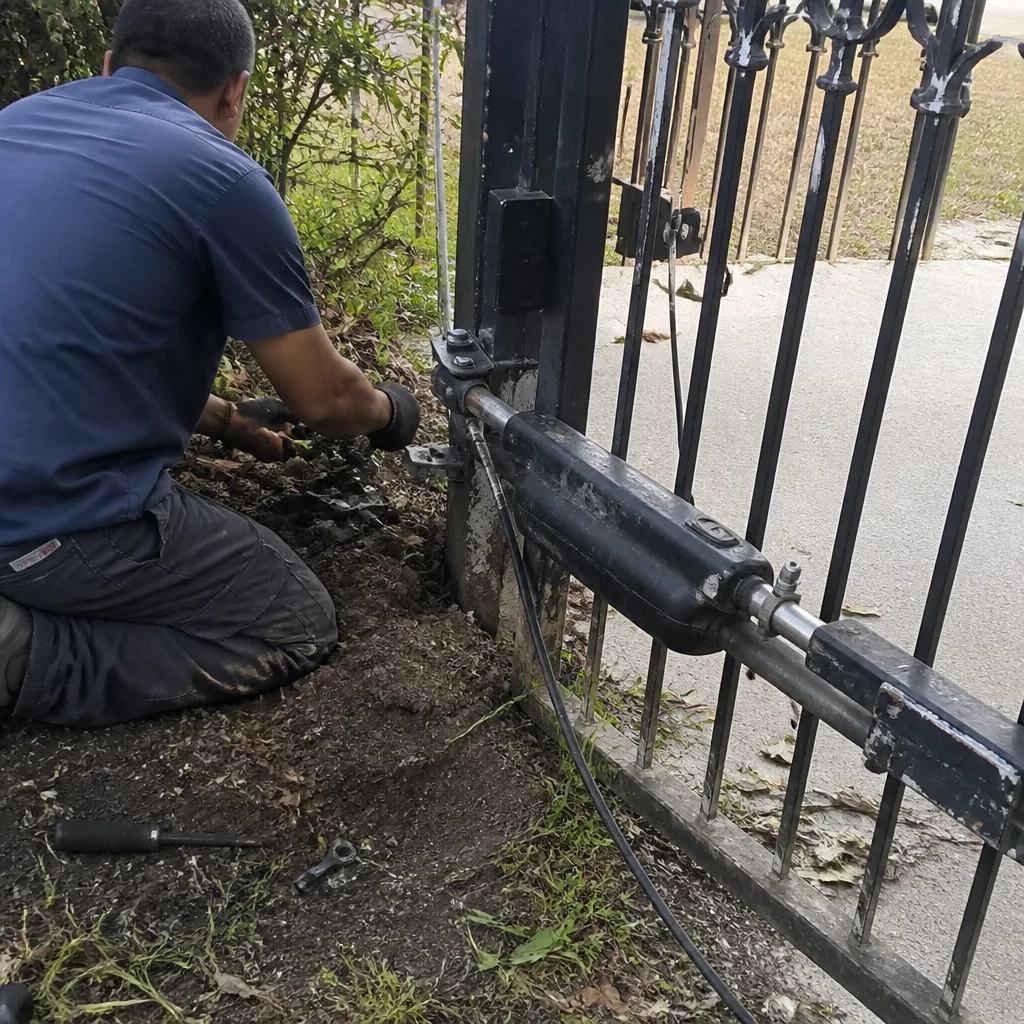 Before
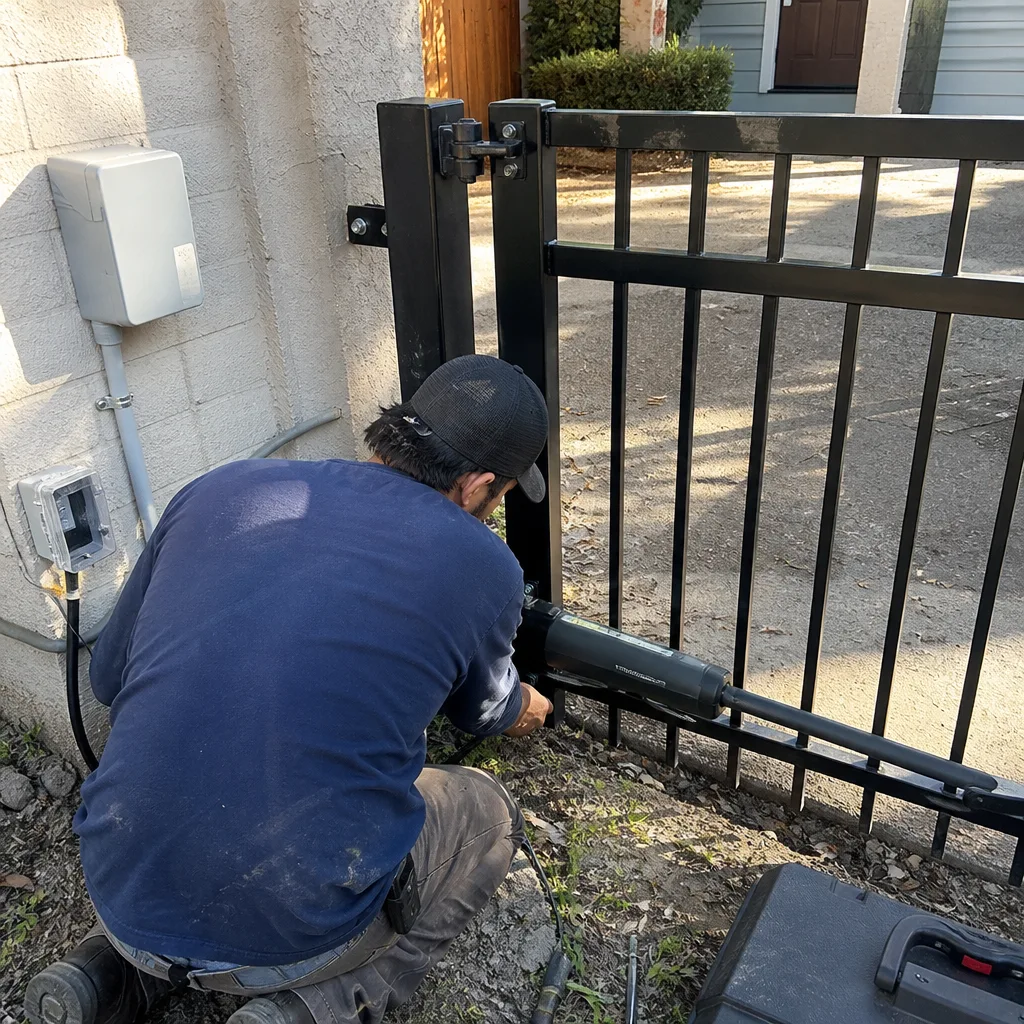 After
After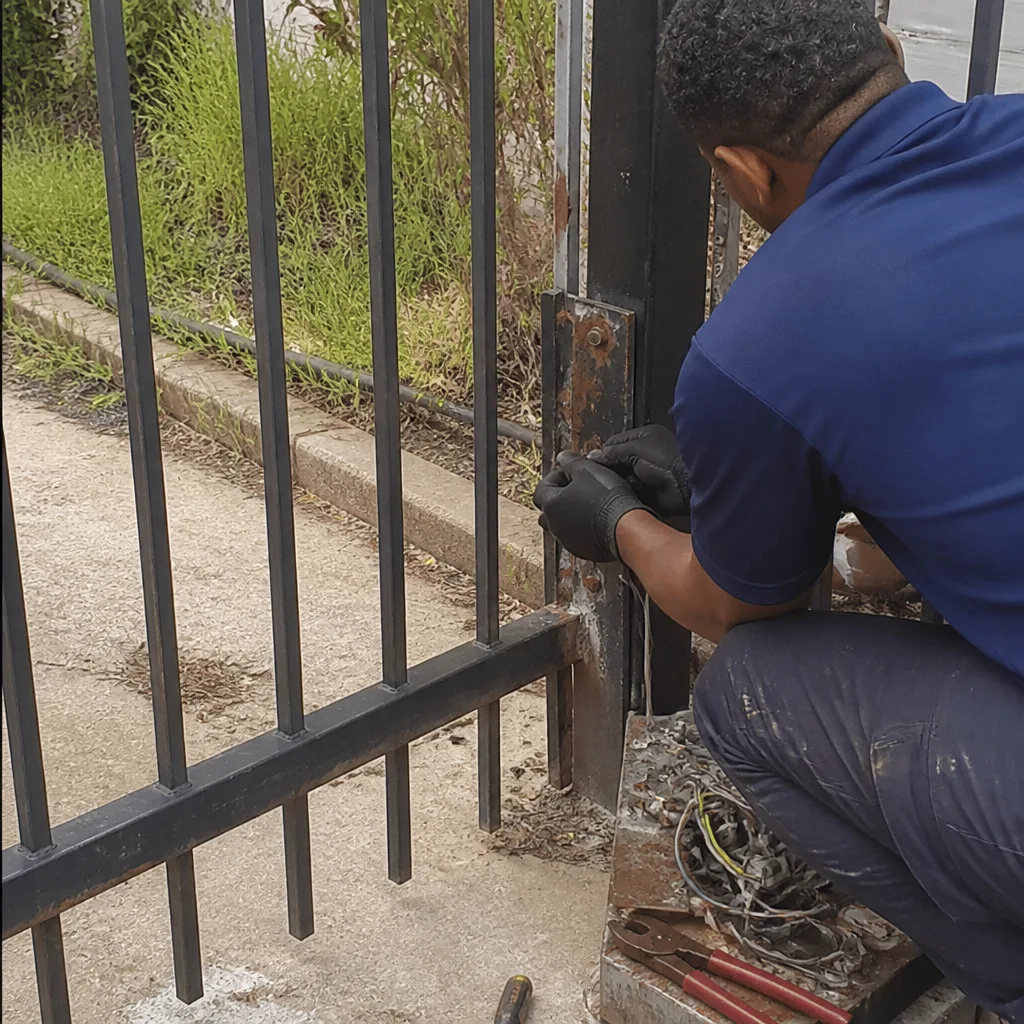 Before
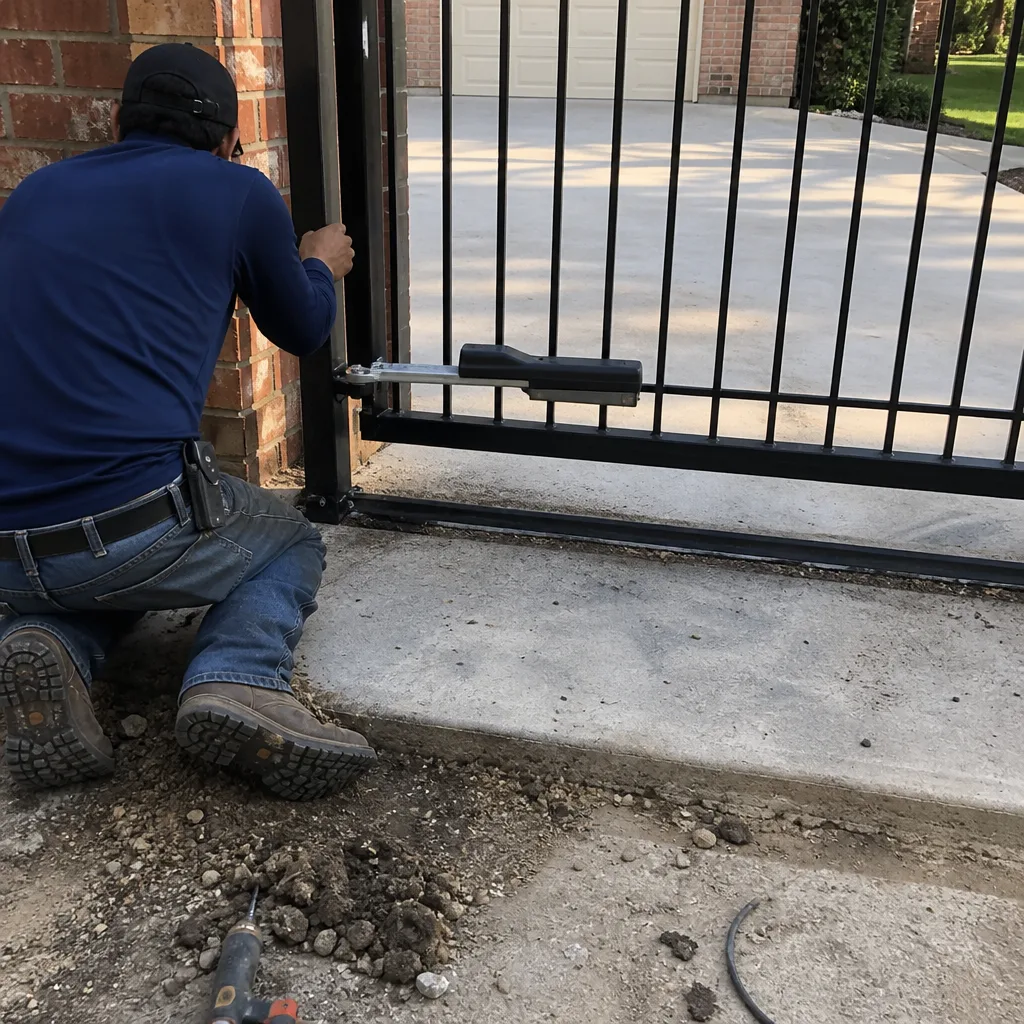 After
AfterWhen to Call a Professional
Most Houston homeowners should bring in a gate professional when the job involves any of the following: a new electrical service run to the gate location, a post footing replacement or enlargement, a gate over 6 feet tall, a swing direction change, or a new pedestrian opening in a masonry wall. For help choosing the right professional, read How to Hire a Gate Repair Contractor in Houston: A Step-by-Step Guide. These are the exact conditions that separate a like-for-like repair from a permitted alteration, and a licensed contractor’s permit is the cleanest route through the city’s inspection process. The same logic applies when a gate has sagged out of square and the fix requires resetting posts in new concrete, a task that sounds simple but involves excavation, pour, and cure time that most DIY homeowners underestimate.
For Houston homeowners who want a straight answer on whether their gate project needs a permit, Portcullis Gate Repair Houston home offers free estimates in Houston. We’ve been doing this since 2008, and our technicians arrive already knowing the zoning rules and the permit triggers for the specific property. Call (325) 378-0676 for a written price before any work starts. We’ll also point you to the right city desk when the honest answer is “yes, this one needs an electrical permit.”
Frequently Asked Questions
Most like-for-like gate repairs in Houston require no permit, including hinge replacement, wheel replacement, track realignment, and swapping out an operator for a new unit of the same voltage and similar capacity. A permit is required when the repair becomes an alteration: new electrical service to the gate, a new concrete post footing, a gate height increase over 6 feet, or a swing direction change that affects a public right-of-way. When in doubt, describe the scope to the City of Houston Permitting Center, and if you’d rather not make that call, our team at Portcullis Gate Repair Houston can give you a straight answer during a free estimate at (325) 378-0676. You can also browse our more guides & resources for additional help.
In Houston, an electrical permit for gate automation typically costs $150 to $400 depending on the circuit scope, and a building permit for gate post replacement or a gate rebuild typically runs $100 to $300. Homeowner permits are lower cost, but the fee is only part of the picture: an unpermitted installation flagged later carries a double-fee penalty plus re-inspection costs and possible code enforcement fines. Call (325) 378-0676 for a written price on your gate work; we’ll tell you plainly whether the project needs a permit and what it will cost.
Yes, a Texas homeowner can pull a permit for work on their own primary residence, and the City of Houston honors that right for gate repairs a homeowner will perform or directly supervise. That said, the homeowner’s name is on the permit record, certifying code compliance, and for any work involving new electrical service or new concrete footings, the smarter move is to have a licensed contractor pull the permit so the code liability rests with the licensed party. We regularly advise Houston homeowners to keep the permit clean and the record address-matched, because that’s what a title company will pull at resale.
If the gate work should have been permitted but wasn’t, the City of Houston can levy a double permit fee, require re-inspection, issue a code enforcement citation, and leave an open violation on the address until the work is retroactively permitted. The work also becomes a disclosure item on a future home sale under Texas Property Code, and a buyer’s lender may refuse to fund the transaction until the permit record is clean. The cost to fix an unpermitted gate alteration after the fact in Houston usually runs $800 to $2,500 when you include penalties, electrician time, and inspection coordination, far more than doing it right the first time.
In Houston communities with active deed restrictions, a gate automation upgrade, a gate height change, or a new gate installation typically requires HOA architectural review BEFORE the city permit is pulled. The HOA’s design guidelines often specify maximum gate height, approved materials, and swing direction, and the city will not override an HOA rejection. We’ve seen deals stall when a homeowner pulled the city permit first and then the HOA rejected the gate height; the correct order is ACC approval, then city permit, then build.
A City of Houston electrical inspector checks the circuit protection feeding the gate, the conduit depth and grounding for underground runs, the UL listing on the operator and safety photo-eyes, and the bonding of the gate frame to the electrical ground in a fault condition. On a building inspection for a new gate, the inspector checks post embedment depth, hardware grade for corrosion resistance, gate height against the approved plans, and driveway visibility clearance on corner lots. The inspection is the paper trail that protects you at sale; when it’s missing, the buyer’s inspector will treat it as an open question.
The Bottom Line
Houston gate repair does not start with a permit, but it sometimes ends there. Like-for-like repairs stay permit-free; new electrical service, new post footings, taller gates, and swing-direction changes are alterations that need a city permit and often an HOA approval first. The cost of skipping a required permit compounds fast, from the double-fee penalty to the re-inspection and potential disclosure obligations on a future sale. At Portcullis Gate Repair Houston, we’ve handled every version of this Houston-specific puzzle since 2008, from gate repair in Houston to gate installation in Houston to electric gate repair in Houston. Every job includes a written price before any work starts, a real arrival window, a clean job site, and a written guarantee on the repair, because that’s the Kingswell Guarantee on every independently owned location. If your gate needs work or you want a straight answer on whether your project needs a permit, call (325) 378-0676.
Written by Dean Prescott, Owner at Portcullis Gate Repair Houston, serving Houston since 2008.