
Last updated October 16, 2026
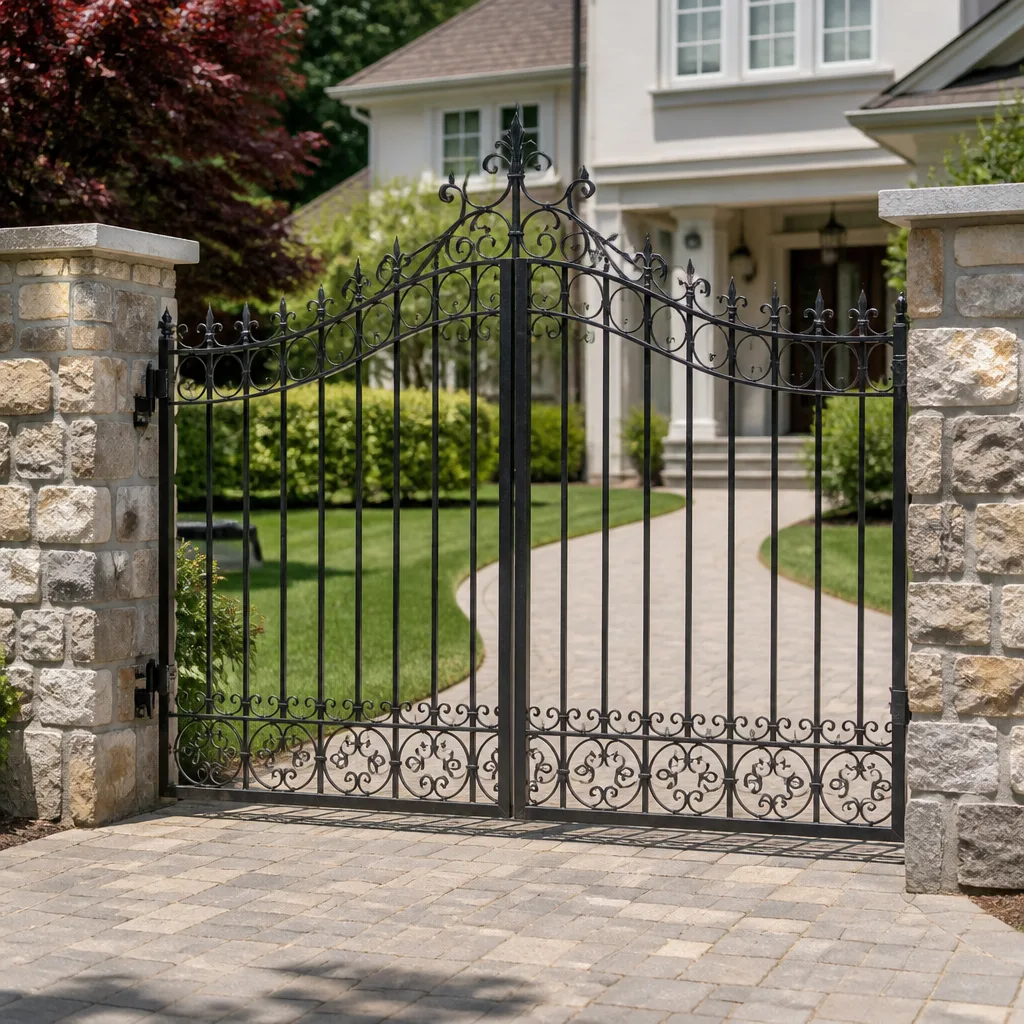 Wrought iron
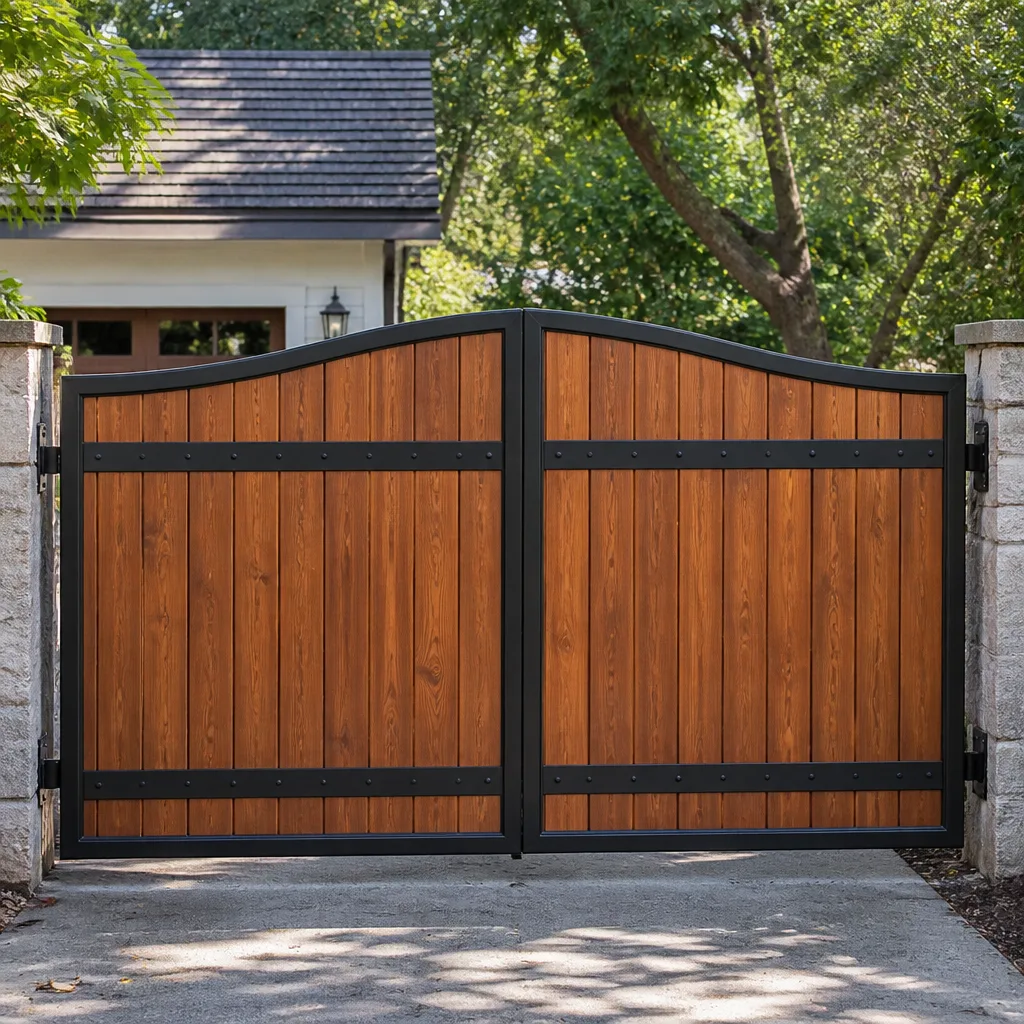 Wood & steel frame
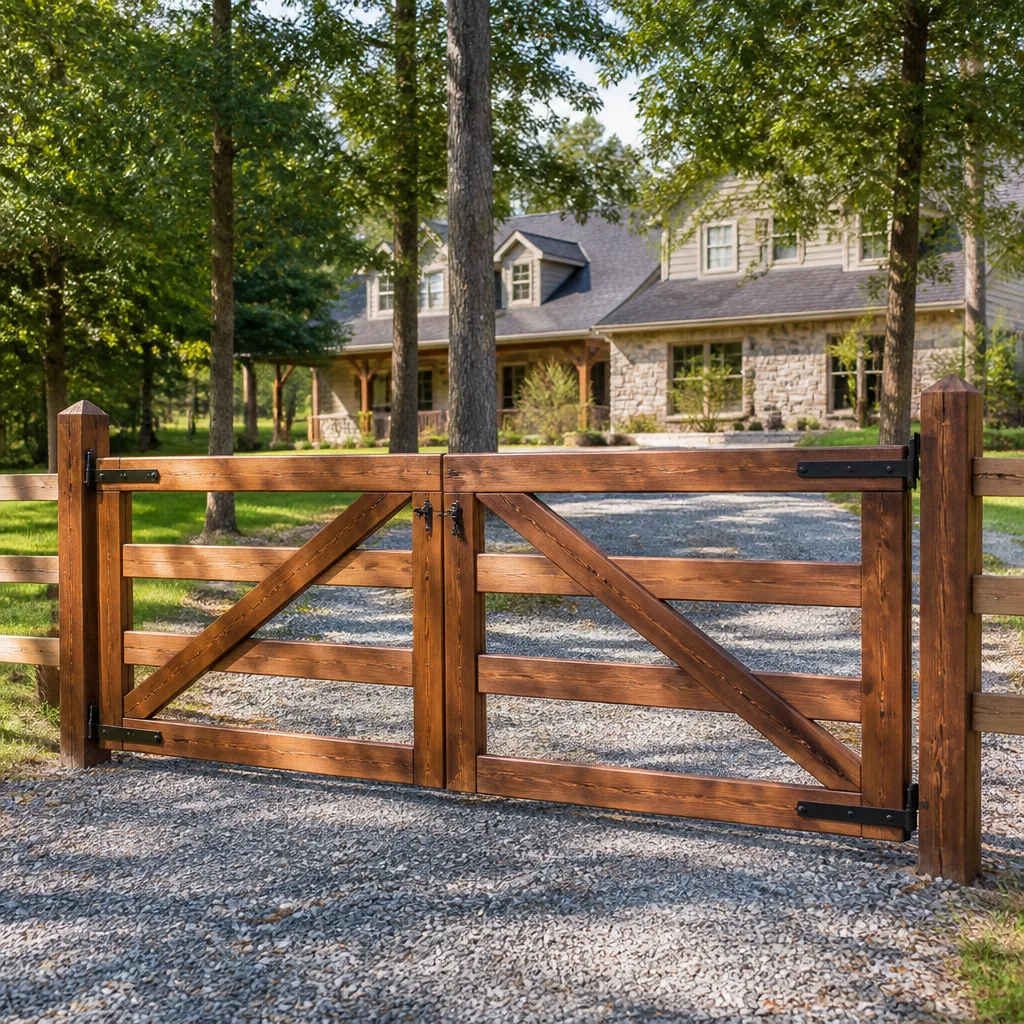 Farm & ranch
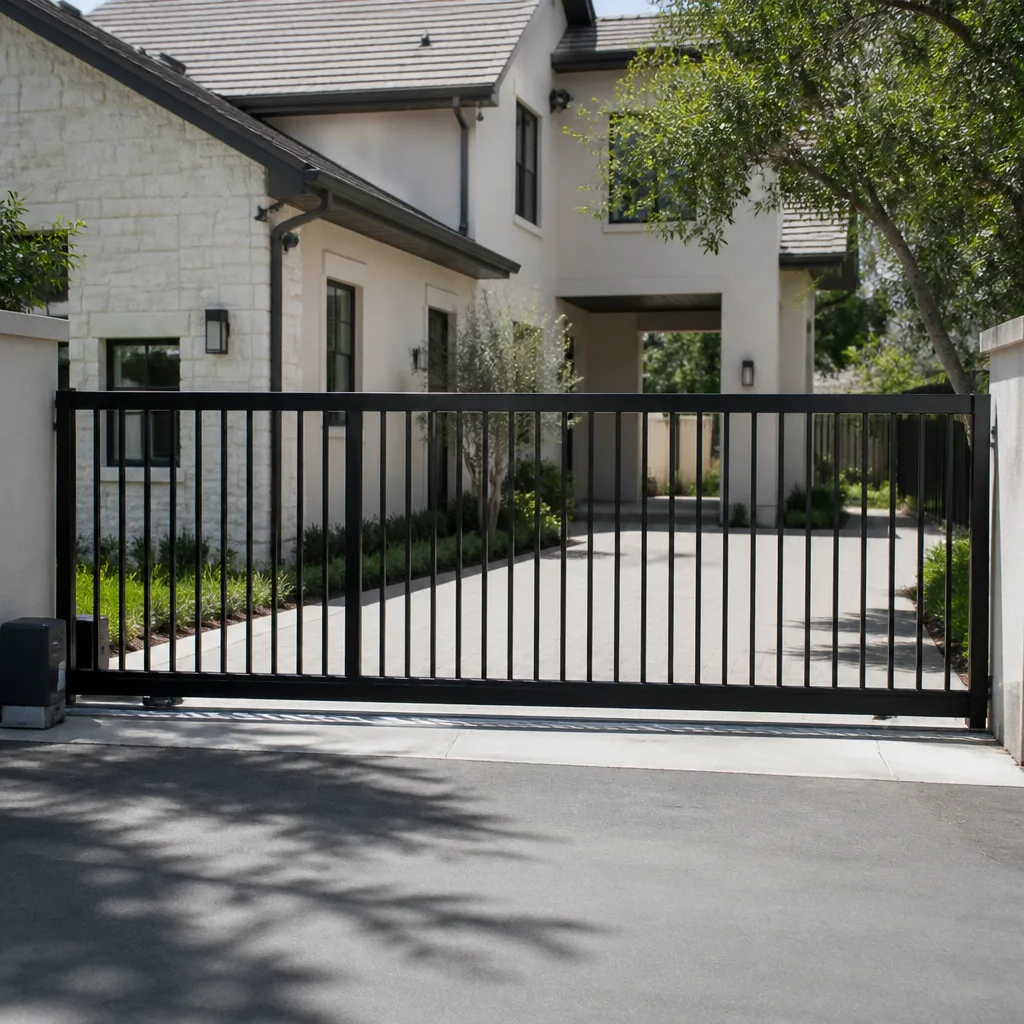 Sliding driveway gates
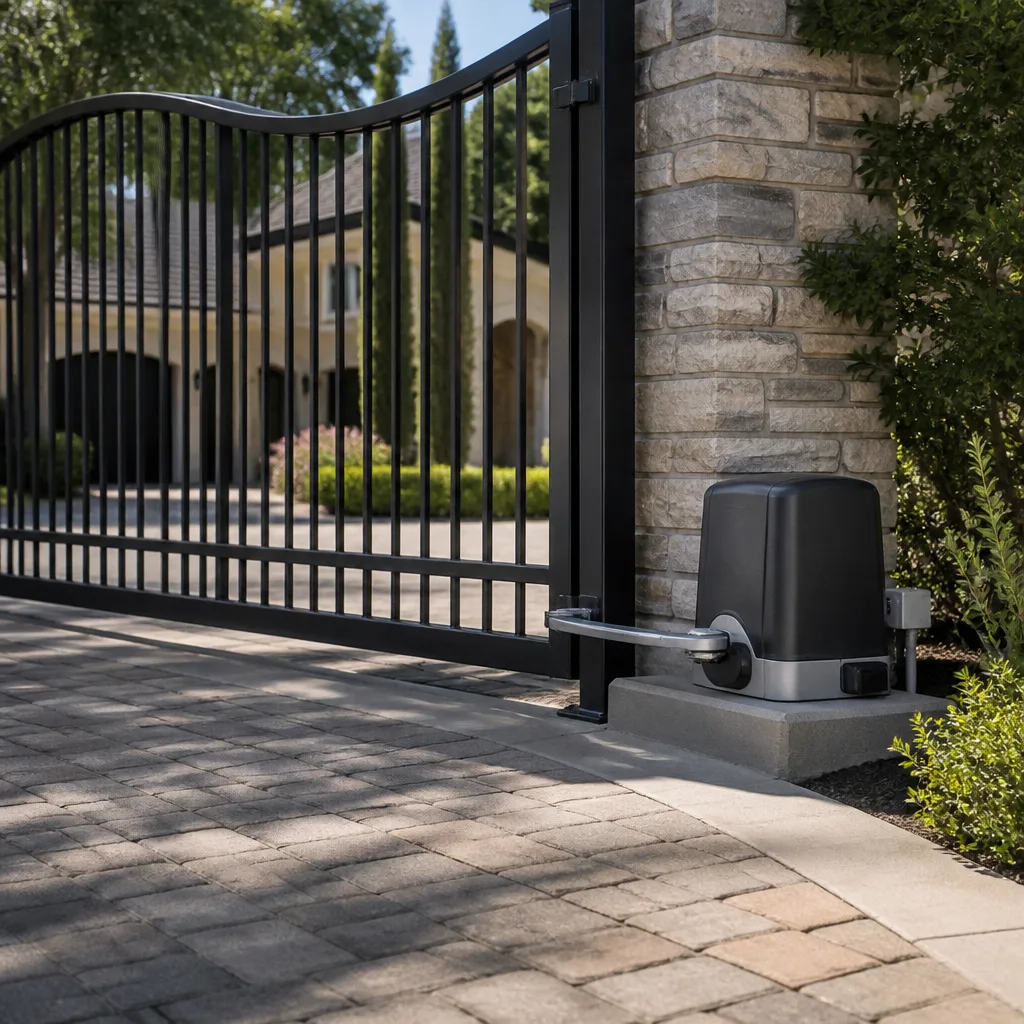 LiftMaster operators
Free on-site gate assessment - hinges, posts, and your LiftMaster or Nice gate operator checked before anything is quoted
The assessment is free and the quote is the invoice.
Get your free estimateGate Repair Warning Signs: A Houston Homeowner’s Reference Guide
A grinding noise from a slide gate and a grinding noise from a swing gate operator are caused by completely different failures. The slide gate is usually dragging across a track full of Houston clay and gravel. The swing gate is almost always announcing worn gears inside the operator. Diagnose them the same way and you’ll replace the wrong part, pay for the wrong repair, and still have the noise next month. This guide breaks warning signs down by gate material and mechanism so you can identify the actual problem before you pick up the phone, or explore our How to Hire a Gate Repair Contractor in Houston: A Step-by-Step Guide if you need professional help.
Quick Answer
Most gate failures announce themselves weeks or months before the gate actually stops moving. The warning signs to watch for are a gate that moves slower than it used to, a new noise during operation, visible rust or paint bubbling, a gate that sags or drags, and an operator that hesitates, reverses, or doesn’t respond to the keypad the first time. In Houston, the two most common culprits behind these warnings are humidity-driven corrosion on the gate frame and heat-driven wear inside the operator motor.
Styles & brands we work with
Table of Contents
- Warning Signs by Gate Material: Iron, Aluminum, and Steel in Houston’s Humidity
- Audible Warning Signs Decoded by Gate Type
- When a Gate Drifts Out of Alignment: Hinges, Posts, or Welds
- Electrical Warning Signs in Automatic Gate Operators
- Urgent Safety Risk vs. Maintenance Item: How to Triage
- What Houston’s Climate Does to Gates That Other Cities Don’t Deal With
- What Repair Costs Look Like in Houston
- Common Mistakes to Avoid
Warning Signs by Gate Material: Iron, Aluminum, and Steel in Houston’s Humidity
Houston’s humidity averages above 70 percent for most of the year, and gates here corrode differently than gates in Dallas or Austin. The material your gate is made from determines which warning signs are urgent and which are cosmetic. Here’s what we look for on each.
Wrought Iron Gates
Rust streaking on wrought iron is the earliest and most reliable warning sign Houston homeowners get. It typically appears first at the bottom rail, where morning dew collects, and at every weld joint, where the protective coating was compromised during fabrication. Orange streaks running down a black iron gate mean water has penetrated the finish and the steel underneath is oxidizing.
What rust means on iron: cosmetic if caught early, structural if ignored. The iron in a driveway gate is hollow tube or solid bar stock, and once rust pits the surface, moisture works inward. A gate that looks rusty is usually still repairable. A gate that sounds hollow when you tap it has lost wall thickness and is approaching replacement territory.
Paint bubbling on iron is a more urgent signal. The bubble means rust is forming underneath the paint from the inside, and the paint is the only thing holding the surface together visually. When we strip bubbled paint on a Houston iron gate, we routinely find pitting a sixteenth of an inch deep underneath.
Aluminum Gates
Aluminum doesn’t rust, which is why Houston builders like it. But it does corrode, and the warning sign looks different. On aluminum gates, you’re watching for white or gray powdery patches, especially at bolted joints and where the gate meets the post. That powder is aluminum oxide forming where two different metals touch, a process called galvanic corrosion, and Houston’s salt-heavy coastal humidity accelerates it.
On an aluminum gate, surface pitting is a maintenance item. Loose bolts at pitted joints are a structural warning. Aluminum’s other tell is a gate that starts flexing when it didn’t before, a sign the internal stiffeners or the weld points at the corners are fatiguing.
Steel Gates
Most steel driveway gates in Houston are fabricated from galvanized steel tube, and the warning sign to watch is rust forming at the bottom of each vertical picket. Those pickets are often capped, and the cap traps water. Once the galvanization is spent, the tube rusts from the inside out, which is why a steel gate can look fine from ten feet away and be paper-thin at the bottom rail when you get close.
For steel gates, surface pitting at the base is urgent, not cosmetic. It means the galvanized coating has failed and the structural tube is now exposed to standing water, which is exactly what Houston’s rain and humidity supply year-round.
Audible Warning Signs Decoded by Gate Type
Gates make four distinct sounds when something is failing, and interpreting the sound correctly depends on whether you have a slide gate or a swing gate. Here’s how we decode each one.
Grinding
On a slide gate, grinding is almost always mechanical contact where there shouldn’t be any. The most common cause is a V-track or roller track packed with Houston clay, gravel, or leaves. The gate wheels stop rolling and start dragging, and the sound is the steel wheel scraping packed debris across the track. The fix is usually a track cleaning and roller realignment, not a new operator.
On a swing gate, grinding is a gear failure inside the operator. Swing gate operators use a worm gear or planetary gear to convert motor speed into the slow, powerful motion that moves a heavy gate leaf. When the gear teeth wear, the mesh becomes rough and the operator grinds. That’s not a cleaning issue. That’s an internal repair, and the sooner you catch it, the difference is replacing a $40 gear set instead of a $600 operator.
Clicking
A clicking slide gate is usually a failing capacitor or a sticking limit switch inside the operator. The motor tries to start, can’t build enough energy, and the relay clicks as it resets. A clicking swing gate is almost always the same story, but it’s worth checking whether the gate is locked or blocked first, because a swing gate operator will click repeatedly when it meets resistance and can’t move the leaf.
Squealing
Squealing on a slide gate means dry or worn rollers. On a swing gate, squealing points to dry hinge pins. Both are maintenance items if caught in the first month of the noise. Both become mechanical failures if left alone, because a dry roller eventually seizes and a dry hinge pin eventually scores the hinge barrel until the leaf sags.
Humming
A low hum with no movement is the motor trying to turn a load it can’t move. On an electric gate, that means the capacitor has failed or the armature is locked. On a manual gate, a hum that turns into a scrape is a wheel or roller that has lost its bearing and is now sliding instead of rolling.
When a Gate Drifts Out of Alignment: Hinges, Posts, or Welds
A gate that doesn’t close square, drags at the latch end, or leaves a gap at the top or bottom is telling you one of three things. Knowing which one changes the repair from a $150 adjustment to a $900 structural fix, and it’s worth knowing before you talk to anyone.
Hinge Issue
If the gate leaf is hanging uniformly lower across its entire length, and the gap at the hinge post looks consistent, the problem is usually the hinge pins or hinge bushings. Worn pins let the leaf settle. The repair is typically a hinge pin and bushing replacement, and on a standard Houston driveway gate that runs $150 to $350 parts and labor. You can check this yourself by lifting the gate from the latch end. If it moves up a quarter inch and drops back down, the slop is in the hinges.
Post-Settling Issue
Houston’s soil is expansive clay, and it moves. When a gate post leans, the entire gate leaf shifts with it, usually toward the side where the post is leaning. A telltale sign of post settling is a gate that closes fine in dry weeks and binds after heavy rain, because the clay swells and the post shifts. On a swing gate, the fix is usually resetting the post in new concrete, and depending on whether the operator is mounted to the same post, expect $400 to $1,200 in Houston. The operator may need re-aligning after the post is reset.
Frame-Weld Failure
If the gate leaf itself is parallelogramming, twisting so the top corner of the latch end is further out than the bottom, the problem is inside the gate frame. A weld has cracked, usually at a top corner where the diagonal bracing meets the horizontal rail. This is a structural repair, not an adjustment. The gate leaf comes down, the weld is ground out and re-welded, and the leaf is re-hung. In Houston, a frame-weld repair on a standard single driveway gate runs $500 to $1,100. Ignoring it means more welds fail as the frame continues to twist, and the repair multiplies fast.
Electrical Warning Signs in Automatic Gate Operators
Automated gates fail electrically before they fail mechanically, and the early signs are subtle. Here’s what the operator is telling you before it stops responding completely.
Slow Open Cycles
If your gate takes noticeably longer to open than it did six months ago, the operator is working harder. The usual causes on Houston gates are a failing capacitor, low voltage at the motor, or increased mechanical resistance from a hinge or roller that’s dragging. A slow open is never normal aging. It’s an early warning that something is drawing more current than the system was designed for.
Random Reversals
An automatic gate that starts opening, then reverses and closes, or starts closing and then bounces back open, is usually a safety sensor issue. The photo eye, the edge sensor, or the loop detector is sending a false obstruction signal. In our experience, a BFT or Linear operator that reverses randomly is more often a dirty or misaligned photo eye than a motor problem, which is why we check sensors before condemning the operator. But if the reversals are consistent, every single cycle, the control board itself may be failing.
Keypad Lag
When you enter the code and the gate pauses three or four seconds before responding, the circuit board is struggling to process the signal. That’s a control board issue, not a keypad issue, and it’s the earliest electrical warning sign most Houston homeowners report. A board that’s lagging typically fails within six to nine months.
Which Signs Point to a Sensor Problem vs. a Motor Problem
- Sensor problem: random reversals, gate that won’t close all the way and reverses, gate that opens from the keypad but not from the remote, intermittent operation.
- Motor problem: slow open and close cycles, grinding from the operator, humming with no movement, an operator that trips the breaker when it runs.
- Board problem: keypad lag, random reversals that happen every cycle, no response from any input device, an operator that opens but won’t close.
Knowing which category the symptom falls into changes the repair cost significantly. A sensor realignment on a Viking or Ghost Controls operator might run $100 to $200. A motor replacement is typically $350 to $800 parts and labor. A control board is $250 to $500. These are Houston price ranges from electric gate repair work we do across the city, and the written estimate is always provided before work begins.
Urgent Safety Risk vs. Maintenance Item: How to Triage
Some warning signs mean stop using the gate today. Others mean schedule service in the next few weeks. Here’s how we divide them.
Urgent Safety Risks: Act Today
- A gate that reverses onto a car or person. If the auto-reverse isn’t working, the gate is a safety hazard. Every automatic gate operator in a residential setting is required to stop and reverse when it encounters resistance, and when that safety edge or photo eye fails, the gate becomes a threat to kids, pets, and cars.
- A gate that comes off its track. A slide gate that jumps the V-track or a swing gate that drops off a hinge is a crushing hazard. Gate panels are heavy, and one that falls can kill.
- Exposed or frayed wiring running to the operator. Houston’s humidity plus a live wire equals a shock or fire risk. Turn the operator off at the breaker and call a licensed technician.
- A post that’s visibly leaning. A leaning post means the gate’s entire weight is now hanging on partially anchored concrete, and when the post lets go, the gate falls.
These are the conditions where we recommend shutting the gate system down until a technician arrives. If you’re in Houston and you’re looking at one of these today, call our gate repair service and describe what you’re seeing. The person who answers is a live human, and they’ll tell you whether the gate needs to be locked open while you wait.
Maintenance Items: Schedule Sometime This Month
- Rust streaks on a gate that’s otherwise operating normally
- A gate that’s slightly slower than it was last season
- Dry-sounding rollers or hinges that squeak on every cycle
- Keypad lag that’s intermittent
- Paint bubbling on an iron or steel gate
None of these are emergencies, but none of them is going to fix itself either. Houston’s climate makes each one progressively worse, and the repair cost climbs the longer they’re ignored. Our Seasonal Gate Repair Care for Houston: Year-Round Homeowner’s Guide shows how to stay ahead of these issues.
What Houston’s Climate Does to Gates That Other Cities Don’t Deal With
Houston is a subtropical city with an average annual rainfall above 49 inches and summer humidity that sits above 90 percent for days at a time. Gates in Houston face conditions that gates in San Antonio or Fort Worth never see, and the warning signs are shaped by that.
Our soil is gumbo clay that expands and contracts with every rain event. That motion works gate posts loose slowly, which is why we see more post-settling repairs in Houston than in any other Texas market we work. If you’re in an older neighborhood with mature oak trees and original fence posts, the root systems are also pressing against gate footings, accelerating the lean.
The humidity also attacks electronics. Condensation forms inside operator housings when warm humid air meets cooler internal components, and that moisture eventually corrodes circuit boards and terminal strips. In Houston, an operator that lasts ten years in a dry climate often lasts six or seven.
Salt from the Gulf gets carried inland, and Houston’s coastal humidity holds it against the metal. Gates within ten miles of Galveston Bay or the Ship Channel corrode measurably faster than gates in Cypress or Katy, and a homeowner in Clear Lake or Seabrook should expect more aggressive rust prevention than a homeowner in The Woodlands needs.
What Repair Costs Look Like in Houston
Every gate repair quote in Houston will vary by gate size, material, access, and the specific operator installed. But here are the ranges we quote most often, so you have a real frame of reference before you call anyone.
| Repair | Houston Price Range |
|---|---|
| Hinge pin and bushing replacement (single swing gate) | $150 – $350 |
| Gate post reset in new concrete | $400 – $1,200 |
| Frame-weld repair on a twisted gate leaf | $500 – $1,100 |
| Slide gate track cleaning and roller realignment | $125 – $300 |
| Swing gate operator gear replacement | $200 – $450 |
| Operator motor replacement | $350 – $800 |
| Control board replacement | $250 – $500 |
| Safety sensor realignment or replacement | $100 – $250 |
| Full operator replacement (swing or slide) | $900 – $2,500 |
Every quote from Portcullis Gate Repair services includes a written price before any work starts. Not a ballpark, not “we’ll see when we get in there,” not a range that doubles at the door. The price is the price, in writing, before a single bolt is turned. That’s the Kingswell Guarantee, and it’s what separates us from the gate companies that quote low and invoice high.
Common Mistakes to Avoid
- Ignoring a slow gate. A gate that opens slower than it did six months ago is a gate with a problem. Treating it as “just getting old” means the underlying issue compounds until the repair is a full operator replacement.
- Greasing a slide gate track without cleaning it first. Grease on a track full of Houston clay turns into grinding paste and accelerates roller wear. The track gets cleaned, then the rollers get greased.
- Assuming any rust is fatal. Most rust on an iron or steel gate is repairable if caught before it eats through the tube wall. We regularly restore gates that other companies wrote off as replacements.
- Calling a general handyman for an automatic gate. Gate operators are electromechanical systems with safety sensors, and the failure modes are specific. A handyman who fixes fences won’t know a BFT board from a Ghost Controls sensor, and the mistake costs more than hiring the right tech the first time.
- Replacing the operator when the problem is the gate. We see homeowners who’ve been sold a new operator for a gate that was dragging on a misaligned track. The new operator failed the same way, because the load was never fixed.
- Waiting until the gate won’t move at all. Every dead gate we replace gave warnings for months. The homeowners who catch those warnings pay hundreds. The ones who don’t pay thousands.
See the difference
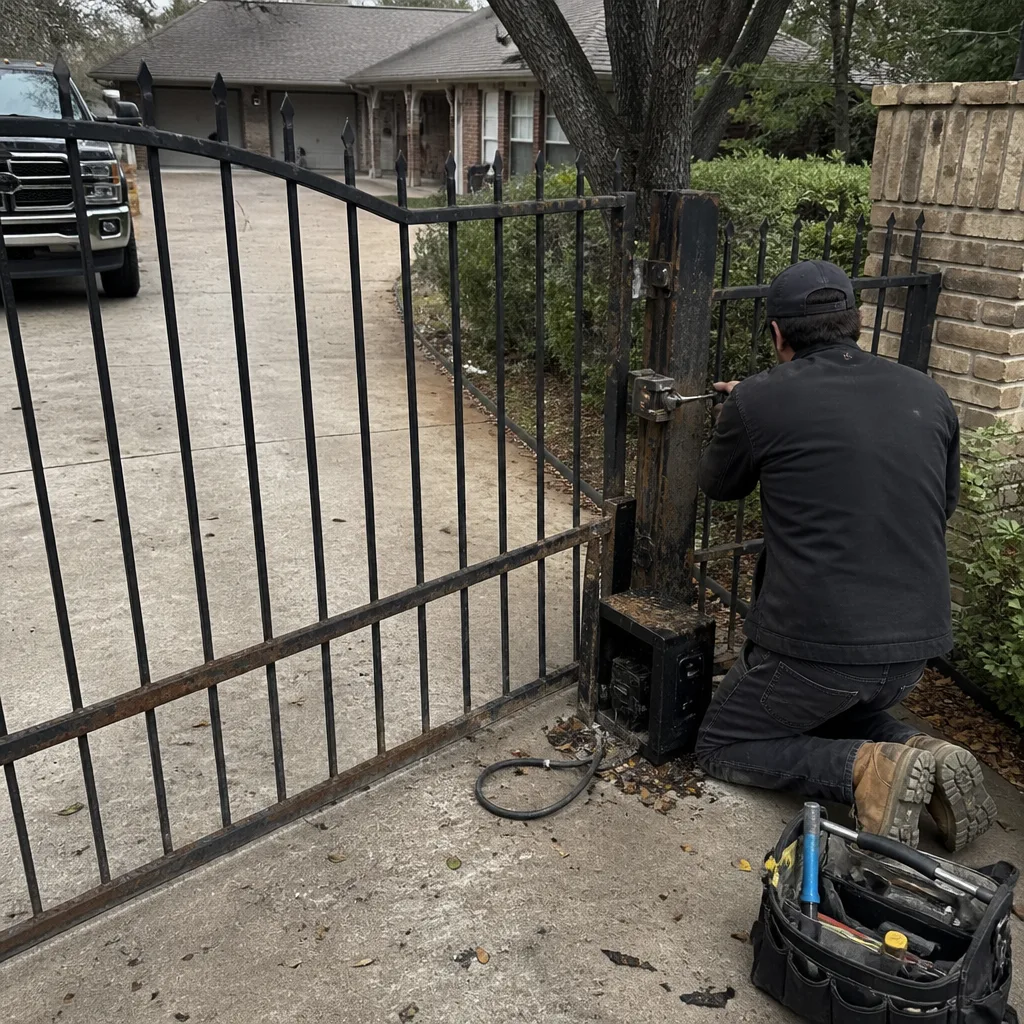 Before
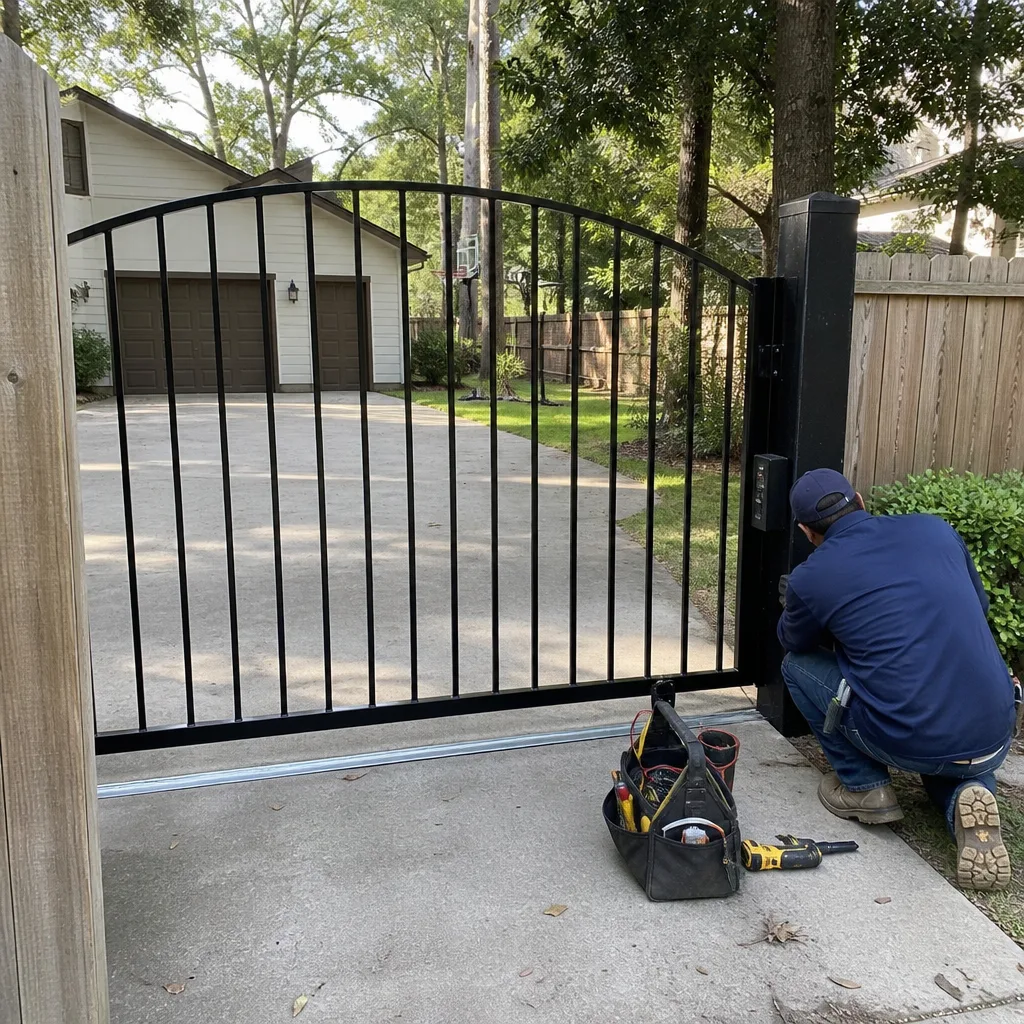 After
After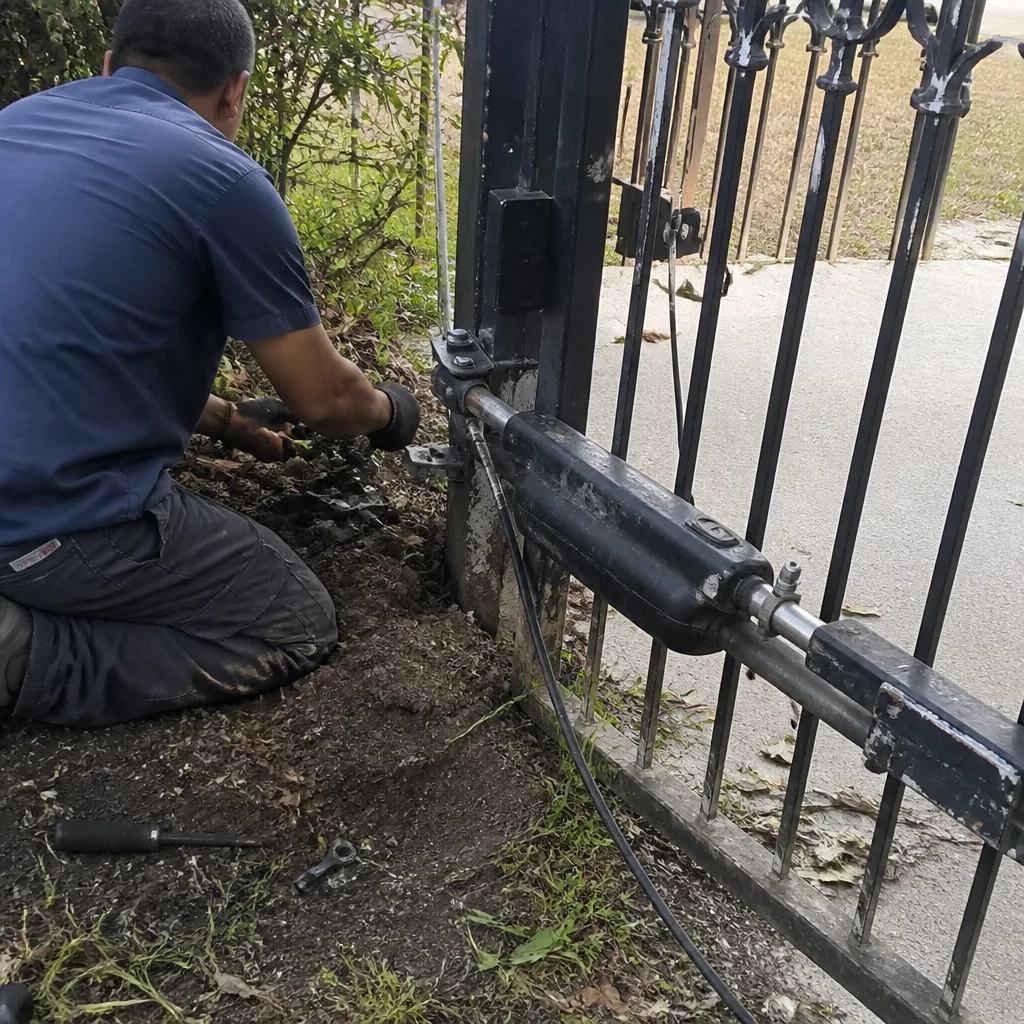 Before
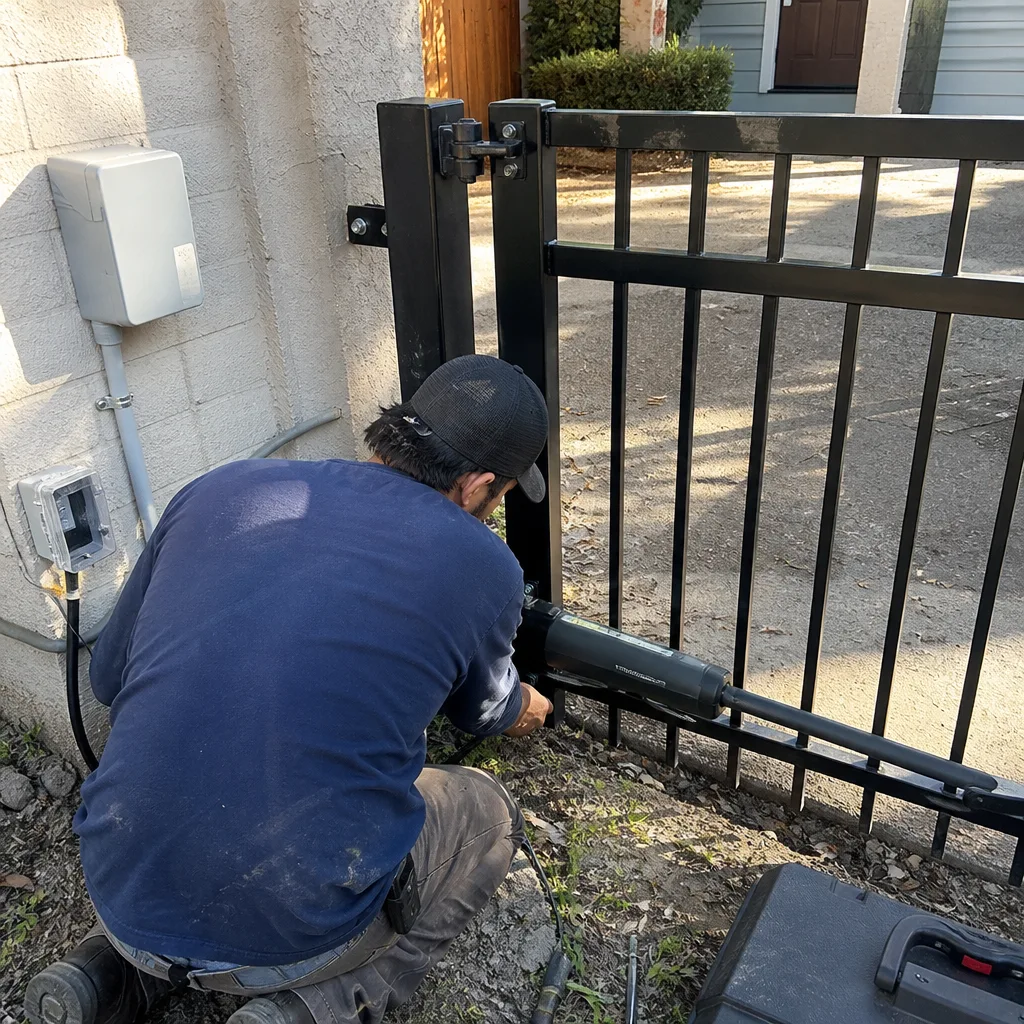 After
After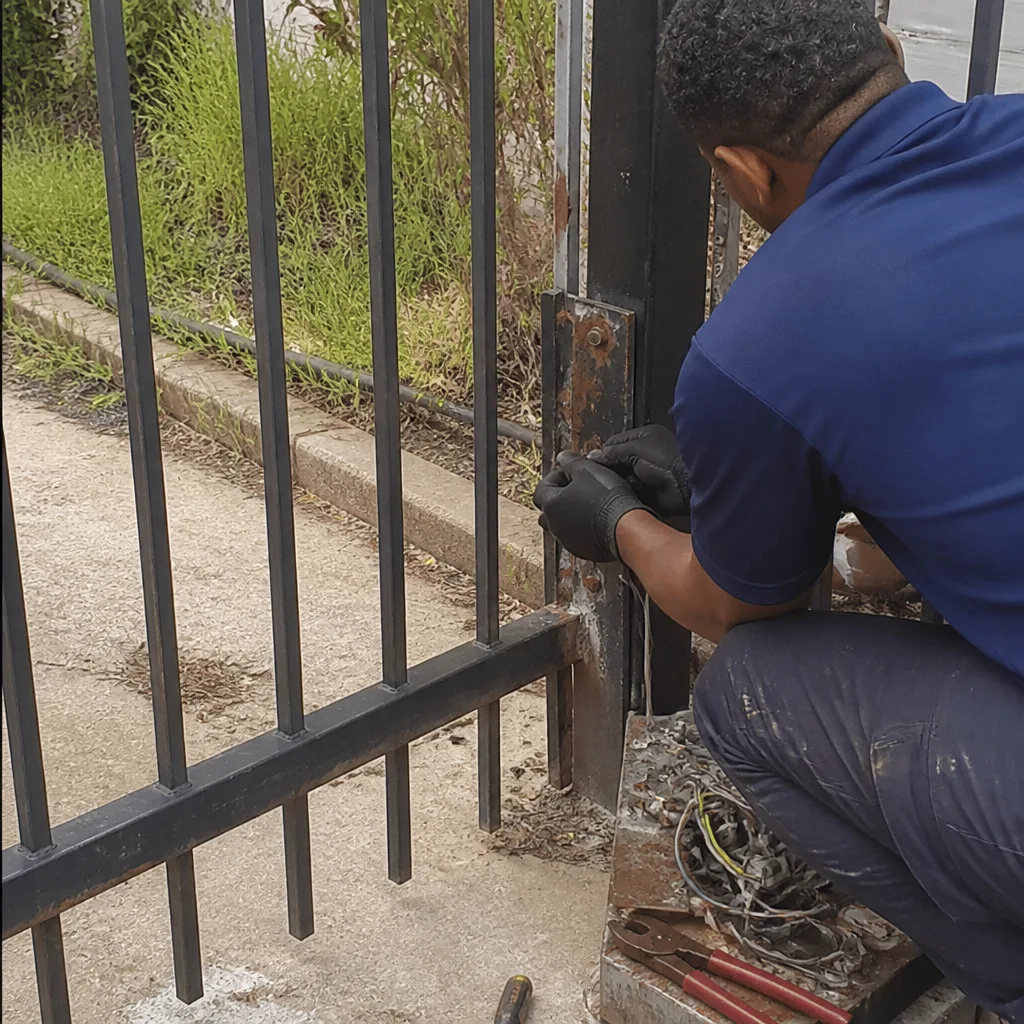 Before
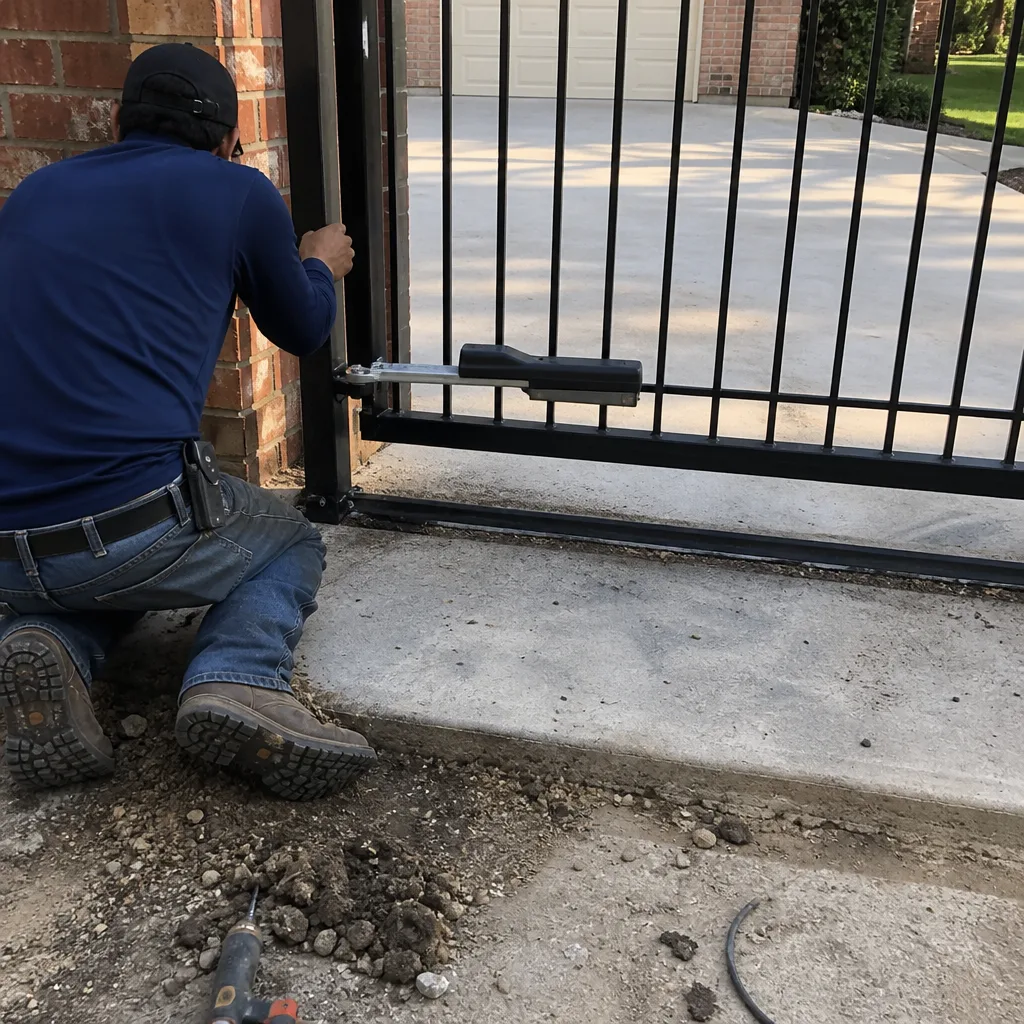 After
AfterWhen to Call a Professional
Call when the gate makes a new noise and you can’t identify the source from this guide. Call when the gate moves slower than last season, when it reverses on its own, when it sags at the latch end, or when you see rust streaking at the bottom rail. Call before the gate stops moving entirely, because the repair is always cheaper when the parts can still be saved. Portcullis Gate Repair Houston offers free estimates in Houston. Call (325) 378-0676, describe what you’re hearing and seeing, and we’ll tell you honestly whether it needs a technician today or can wait. That conversation costs nothing.
Frequently Asked Questions
A gate needs repair when it moves slower than it used to, makes a new noise, sags or drags at the latch end, or responds inconsistently to the keypad or remote. Any one of those is an early warning that a component is failing, and catching it now prevents a full replacement later. If you’re not sure what you’re hearing, call (325) 378-0676 and describe it, we’ll help you triage over the phone.
A grinding slide gate in Houston usually means the track is packed with clay or gravel and the wheels are dragging. A grinding swing gate usually means the gears inside the operator are wearing. The fixes are different, which is why identifying the gate type before diagnosing the sound matters. Our technicians see both every week across Houston.
Gate repair in Houston typically runs $150 to $500 for common issues like hinge pins, track adjustments, sensors, and gear replacement. Structural repairs like post resets and frame welds run $400 to $1,200, and full operator replacements run $900 to $2,500. Every Portcullis Gate Repair Houston job includes a written price before work starts, so the quote you get is the price you pay.
For urgent safety issues like a gate that won’t reverse or a gate off its track, we prioritize same-day service in Houston. For maintenance repairs, we schedule a real arrival window and show up in it. Call (325) 378-0676 and the person who answers will tell you exactly what’s available.
A full gate installation in Houston includes the gate leaf or leaves, the posts set in concrete, the hinges or track system, the automatic operator if it’s an electric gate, and all wiring and safety sensors. The price is written before we start, and the installation carries the same written Kingswell Guarantee as our repairs.
Yes, we handle the full electrical scope on automatic gates, including the power run to the operator, the photo eyes, the safety edges, and the control board. A gate operator is a safety system, not just a motor, and every installation we do in Houston includes operational safety sensors that stop the gate when something is in its path.
The Bottom Line
Gates fail loudly before they fail completely. A gate that grinds, drags, slows, sags, or hesitates is giving you the exact information you need to catch a repair before it becomes a replacement. The key is reading the sign correctly: the same noise means different things on a slide gate and a swing gate, and the same rust means different things on iron, aluminum, and steel. For more guides & resources on keeping your gate running, visit our blog. Houston’s humidity and soil make every warning sign progress faster here, which means acting early saves more money in this city than almost anywhere else in Texas.
Written by Dean Prescott, Owner at Portcullis Gate Repair Houston, serving Houston since 2008.